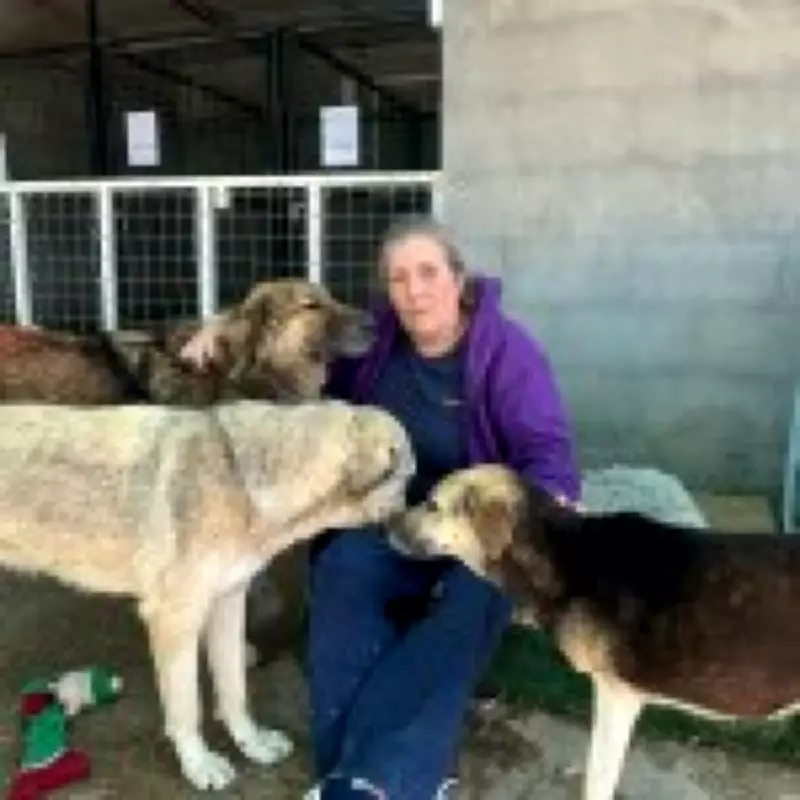
British Dog Shelter in Iraq Confronts Heartbreaking Decision to Euthanize 700 Animals
A British-operated dog shelter in Iraq is grappling with a devastating crisis, as government orders to vacate their land may force the euthanasia of approximately 700 animals. War Paws, located in Erbil in northern Iraq, currently provides care for 130 stray dogs within its facility and an additional 700 dogs living outside its walls. The shelter has become a lifeline in a region plagued by conflict and harsh conditions.
Shelter Battles Conflict and Extreme Conditions
Staff at War Paws have endured immense challenges, including extreme heat, lack of electricity, and unreliable water supplies. Recently, they have witnessed drones being intercepted overhead, with CEO Louise Hastie reporting nine out of ten explosions occurring just above them in a single morning. The ongoing conflict has further complicated operations, as Iraq's airspace closure since Operation Epic Fury began on February 28 has stranded international staff who typically rotate between the UK and Iraq.
Louise Hastie, 53, originally from Wednesbury in the West Midlands, explained that what was meant to be a two-week visit has extended to five weeks due to travel restrictions. "Even if I was able to leave, I couldn't face leaving my team and the dogs," she stated, highlighting the dedication of shelter personnel.

Government Eviction Threatens Shelter's Existence
The Iraqi government has informed War Paws that their land is needed for warehouse development, though the specific purpose remains unclear. Relocating and rebuilding the shelter would cost approximately $300,000—equivalent to their annual operating budget—making the move financially and logistically impossible. "We have been here for six years, we logistically cannot move," Louise emphasized.
Established in 2018, the shelter has provided critical services including spaying and neutering hundreds of animals (including donkeys and cats), offering protection from extreme temperatures, and ensuring regular feeding. Before the shelter's creation, animals survived on meat scraps from nearby butchers dumped at a landfill site, which has since been converted to warehouses.
Potential Euthanasia Looms as Only Option
If forced to evacuate, the shelter faces the grim prospect of euthanizing 700 dogs who cannot survive as strays in the area. Louise described the animals' likely fate: "We are looking at a situation where they will likely starve to death. So it would be kinder to put them down." This decision stems from the dogs' dependence on shelter resources and the disappearance of their former food sources.
When Louise first arrived at the shelter, originally founded by two local women, she encountered dire conditions: no shade, no water, and scorpions covering the ground. "It broke me walking through for the first time," she recalled. "Dogs dropped dead at my feet as I walked past them." Through determined efforts, her team established a veterinary clinic, installed water tanks, and even built swimming pools to help dogs cope with the heat.
Funding Challenges Compound the Crisis
The shelter's financial situation has worsened due to changing donation patterns following the cost-of-living crisis, reducing their funding. Despite these obstacles, Louise remains resolute: "We won't give up. We are here for a reason." The shelter continues to seek support to maintain its operations and avoid the tragic outcome of mass euthanasia.
This situation underscores the broader challenges faced by animal welfare organizations in conflict zones, where political decisions and economic pressures can have life-or-death consequences for vulnerable creatures.