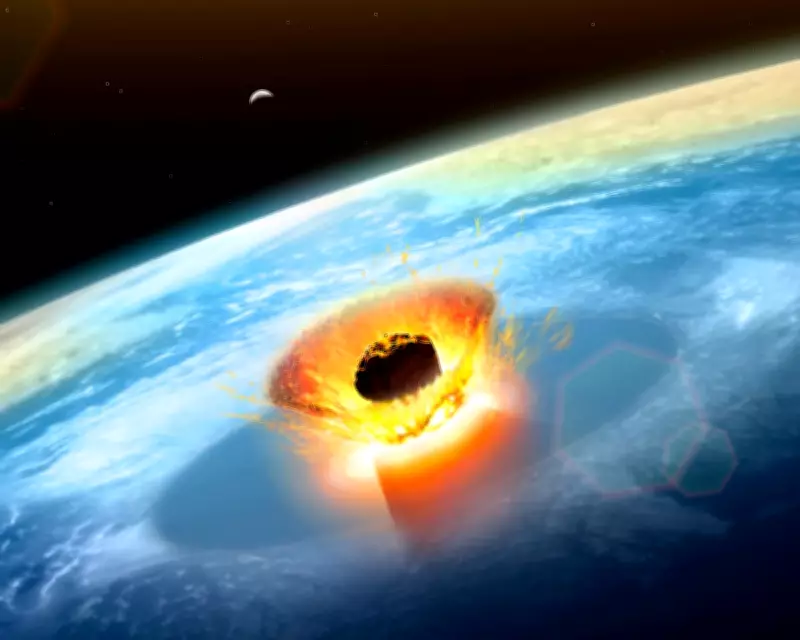
Two scientists have described the bright fireball, crackling noise and sonic boom of the impact 66 million years ago that wiped out the dinosaurs. Writing in the Conversation, Michael Benton of the University of Bristol and Monica Grady of the Open University provide a vivid account of what it might have felt like to live through the meteorite impact.
The First Signs
The first sign that something was amiss would have been a new star visible for about a week before the event. Upon its arrival, all living creatures near the impact site would have seen the bright fireball, heard its crackling noise and experienced a sonic boom before being swiftly incinerated.
Immediate Aftermath
Five minutes later, 100-metre-high mega tsunamis rolled across the Gulf of Mexico. Combined with overheating, earthquakes, hurricanes and fires, these events wiped out everything within a 1,200-mile (2,000km) radius.

Global Devastation
Dinosaurs roaming forests on the other side of the world were still oblivious, but not for long. Within an hour, dust had circled the planet and skies had darkened. Within a day, global temperatures were dropping, and by the end of the week the world was 5C cooler. A ferocious winter lasted for more than a decade, eliminating about 75% of all species.
Lessons for Today
Our ancestors were some of the lucky survivors but, sadly, Benton and Grady suggest our penchant for burning carbon is setting the scene for a similar scale of planetary catastrophe. The scientists warn that human-induced climate change could lead to comparable mass extinction events if left unchecked.