The Foraging Fantasy: Can You Really Live Off Wild Food Alone?
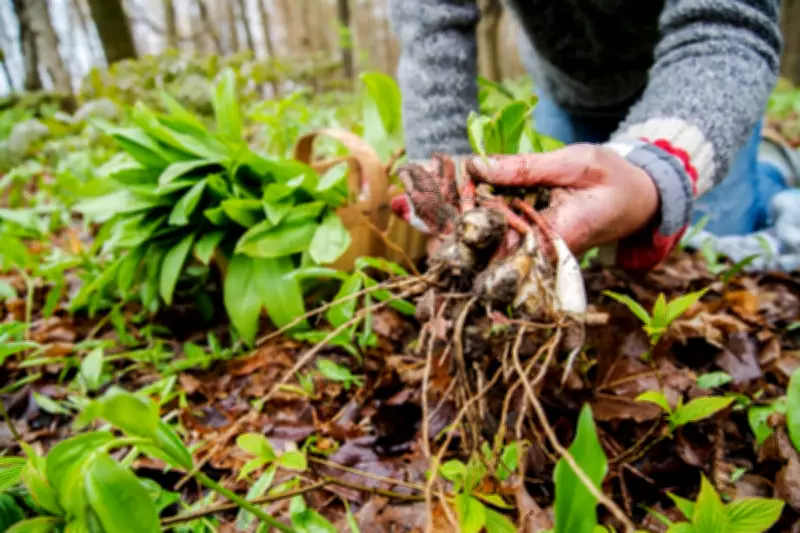
When environmental activist Robin Greenfield delayed a scheduled interview because he was harvesting wild onions, it highlighted a central truth about foraging as a lifestyle: wild food waits for no one. Greenfield, author of "Food Freedom" documenting his year of growing and foraging 100% of his food, represents the extreme end of a growing interest in wild food harvesting as grocery prices soar and food recalls multiply.
The Full-Time Commitment of Foraging
"I would say it's in the realm of a full-time job to harvest all of my food and medicine," Greenfield revealed during our conversation. His experience ranges from 20 to 80 hours weekly, depending on seasonal availability and preservation needs. Currently traveling a seasonal route from Maine to Georgia, Greenfield maintains a traveling pantry of mason jars containing wild rice, venison, wild yams, and ocean salt.
"The only way to live off a fully foraged diet," he explained, "is to harvest the abundance when you find it and then preserve that abundance." His preparation involved three months of intensive planning, resulting in 75 pounds of wild rice, 200 pounds of mushrooms, and 42 quarts of applesauce, though gaps remained in fish and vegetable stores.

The Community Imperative
Linda Black Elk, an ethnobotanist and education director at North American Traditional Indigenous Food Systems, challenges the solitary foraging narrative. "I do not believe that whole idea of every man for himself homesteading out in the middle of the woods," she stated firmly. "I believe it requires community, especially now, when we have to increase land access and we have to increase knowledge."
The Black Elk family demonstrates this community approach in practice. When unable to harvest wild rice themselves one year, they traded prairie turnips with an elder from Red Lake Reservation and purchased additional rice, recognizing that "people have bills to pay." Their family dedicates one hour daily, all five members, to food sovereignty work, sometimes helping others with their harvesting needs.
The Knowledge Gap and Time Constraints
Foraging demands specialized knowledge that takes years to develop. Recognizing crow garlic's specific shade of green or harvesting stinging nettles bare-handed requires nearly a decade of observation and practice. Most urban and suburban residents lack both the botanical knowledge and the time required for sustainable foraging.
The Black Elks use their vacation and paid time off for harvesting expeditions: June in South Dakota for prairie turnips, July in North Dakota for chokecherries, August for wild plums, and October in southern Minnesota for wapato (wild potatoes). "That's our vacation time, that's our PTO time," Luke Black Elk acknowledged. "But it's a necessity for our family food system, and so we make time for it."
Nutritional Realities and Sustainability Concerns
Registered dietitian Jessica Brantley-Lopez offers a clinical perspective on foraging's limitations. "While a foraged diet can be nutrient-dense, it's not realistically viable for the average person in the long term," she explained. "It requires a high level of knowledge to safely identify foods and significant time and effort to meet basic calorie, protein and fat needs."
Seasonal availability creates nutritional gaps, particularly for essential nutrients like B12, vitamin D, iodine, and iron. Greenfield currently experiences this firsthand, having no fruit available until he returns to his Wisconsin pantry in April.
Building Relationships with Land
Linda Black Elk emphasizes that sustainable foraging requires reciprocal relationships with the land. "You can't take and take and take and expect things to be healthy. It has to be reciprocal, and it has to be sustainable." This philosophy extends beyond environmental concerns to encompass social sustainability and community interdependence.
The Black Elk family maintains approximately 50% wild food in their diet through careful planning and budgeting. "When we go out to get timpsila, we know the number we need to hit for our family," Luke described. "When we're putting away bison meat, we know we go through about a pound and a half of ground bison per meal."

Starting Small: The Incremental Approach
For those intrigued by foraging but overwhelmed by the commitment, Linda Black Elk recommends starting with addition rather than elimination. "Sometimes you have to be gentle with yourself and with others," she advised, reflecting on her own evolution from what she describes as a "militant stance" against processed foods to a more balanced approach.
Practical beginnings include mapping daily food consumption, identifying what can be replaced with wild-harvested alternatives, and consulting seasonal calendars. Trading with community members, like exchanging venison with a nephew, represents a realistic entry point into wild food systems.
Well-stocked foraging pantries and supportive communities don't materialize overnight. The Black Elks have spent 15 years developing their system. As the article's opening observation notes: "What's missing for most of us isn't access to the woods. It's time, knowledge and community." Foraging as a primary food source remains a labor-intensive, knowledge-dependent, and community-reliant practice that challenges modern notions of food independence and convenience.