Miami's Innovative Flood-Resilient Park Transforms Urban Landscape
As the climate crisis intensifies storms and sea level rise across south Florida, Miami Beach has transformed flooded streets into innovative solutions. The recently opened Bayshore Park represents a groundbreaking approach to urban design that simultaneously addresses flooding concerns while creating vibrant community spaces.
From Golf Course to Climate-Resilient Sanctuary
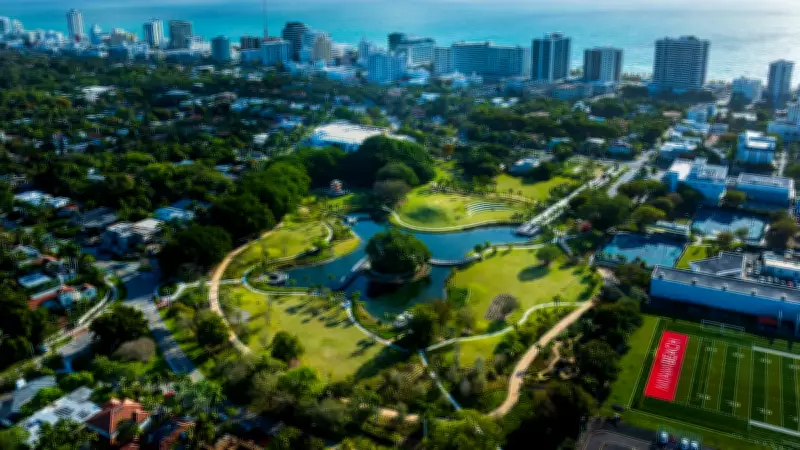
Masterfully designed by local landscape architecture firm Savino & Miller Design Studio, this 19.4-acre green space replaces a former golf course with a multi-functional environment. "We asked ourselves, how can we save this land for both community benefit and ecological benefit?" explained Barry Miller, principal landscape architect at the firm.
The park centers around an artificial lake featuring a century-old banyan tree, with hills constructed from soil dredged during the lake's creation. This strategic design allows runoff from an 85-acre watershed to flow directly into the lake during heavy rains, preventing street flooding while protecting nearby Biscayne Bay from pollution.

Engineering Meets Ecology
Beneath the park's surface lies an intricate system of pumps and filtration mechanisms that maintain water quality while managing flood capacity. The lake can hold an impressive 65.62 acre-feet of flood waters—equivalent to a three-day storm event—and is stocked with mosquito-eating fish for natural pest control.
Nearly every element of the park serves dual purposes. Permeable pavers fabricated locally in Naples, Florida, allow water absorption while reducing carbon footprint. Coconut sand lines walkways, enhancing water absorption while creating natural pathways. Even the parking areas are designed to absorb water rather than contribute to runoff.
Community-Centered Design Elements
The park balances multiple community needs through thoughtful zoning. A linear water feature connects to the central lake, providing cooling effects on hot days while maintaining natural aesthetics. "We wanted the park to feel more natural," emphasized Adriana Savino, architect and principal at Savino & Miller.
Six tennis courts, requested by community members, are strategically placed near a public works building to contain noise pollution. These courts are powered by rooftop solar panels on the adjacent tennis center, demonstrating the park's commitment to renewable energy integration.
Ecological Preservation and Enhancement
The designers preserved mature trees that provide essential shade while introducing flood-resistant vegetation including bald cypress trees, sago palms, and leather ferns. A dedicated butterfly garden attracts monarch, yellow sulfur, and atala butterflies—the latter being a native southeastern Florida species once near extinction but now returning through conservation efforts.
An elevated metal boardwalk protects the ancient banyan tree's fragile root system while allowing visitors close access. "They have a buttress root structure that keeps growing outward," Miller described. "We call it the cathedral."
A Model for Sustainable Urban Development
The park's hilly topography not only manages water flow but also provides residents with unprecedented sunset views over water—a rarity in east-facing Miami Beach. Grass fields serve as natural rainwater containers while creating recreational spaces.
"We think it's a sustainable model of development," Miller stated regarding Bayshore Park's broader impact. "This demonstrates that even a relatively small plot of land can yield benefits for a much greater area. We're adding recreation and community programming while simultaneously holding water and preventing pollution of our waterways."
The project represents successful community advocacy, with the design firm participating in neighborhood groups that advocated for transforming the golf course into this naturalistic space. "It's incredibly rewarding to see how people are enjoying the park and how it has changed the culture of the entire area," Savino reflected.
As climate challenges intensify, Bayshore Park stands as a testament to how urban spaces can be reimagined to serve both human communities and environmental needs, creating resilient landscapes that protect against flooding while fostering deeper connections with nature.