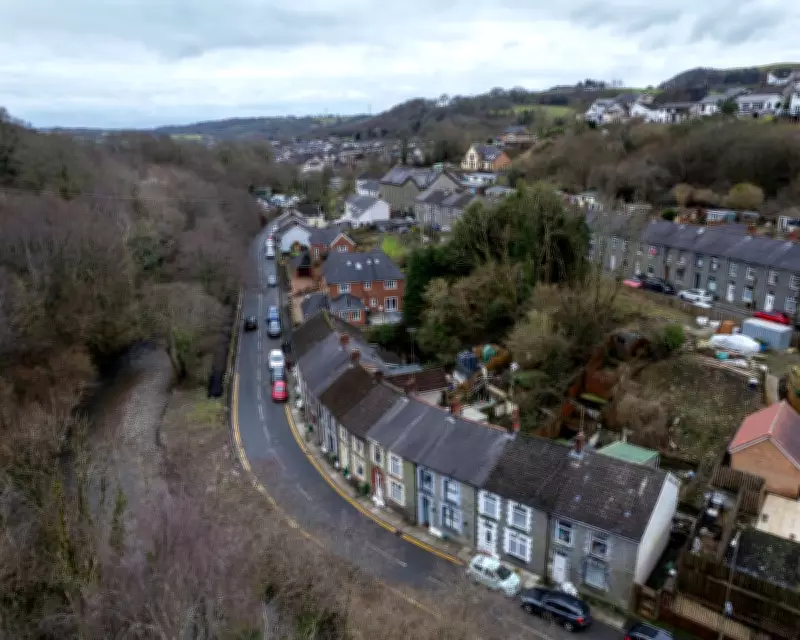
South Wales Council Takes Unprecedented Action on Flood-Prone Properties
In a landmark decision addressing the escalating climate emergency, a local authority in south Wales has committed to purchasing and demolishing an entire row of homes that have become increasingly vulnerable to devastating flooding. The move represents what is believed to be the first time a UK council has acquired such a significant number of inland properties specifically to protect residents from climate-induced flood risks.
Relief for Terrified Residents After Years of Trauma
Residents of Clydach Terrace in the former mining village of Ynysybwl have expressed profound relief following the council's decision, after enduring years of anxiety and repeated inundations. The community of approximately 4,700 people, located four miles north of Pontypridd, has watched helplessly as their homes have been repeatedly overwhelmed by floodwaters from the adjacent Nant Clydach river.
"It's been horrifying," said Paul Thomas, a resident of over forty years. "You only get a few months of rest in the summer. When the winter comes, you're just waiting for disaster." Thomas revealed that his insurance premiums had become "astronomical," and he considered himself fortunate to secure any coverage at all.

The psychological toll on residents has been severe, with many describing living in constant fear during rainy periods. Children have reportedly been too frightened to sleep when storms approach, while elderly residents have feared being trapped by rapidly rising waters. Several residents have developed post-traumatic stress disorder following particularly devastating flood events.
Storm Dennis: The Turning Point
The catastrophic flooding during Storm Dennis in 2020 proved to be a watershed moment for the community. Waters rose with such alarming speed that some residents were forced to swim to safety, while ground floor rooms were submerged under nearly two metres of water. The existing retaining wall separating the terrace from the river proved completely inadequate against the force of the climate-charged deluge.
Local councillor Amanda Ellis described how residents now enter "fight or flight mode" whenever rain is forecast. "This is no way to live, glued to the weather forecasts," she stated during the council meeting that decided the properties' fate. "This is no longer a one in 100 or 200 years event. It happens every few years."
Economic Realities Force Radical Solution
Following Storm Dennis, Natural Resources Wales conducted extensive investigations into potential flood defence solutions. The construction of a raised defence wall was considered, but was ultimately deemed economically unviable under current UK and Welsh government funding regulations. With climate projections indicating increasingly frequent and severe flooding events, temporary measures were judged insufficient for long-term protection.
Council leader Andrew Morgan explained that building a new flood wall would have cost approximately £9 million, with no guarantee of providing adequate protection. "Storm Dennis had hit the terrace hardest, but homes had been repeatedly flooded since," he noted, highlighting the escalating nature of the problem.
Unprecedented Council Intervention
The Labour-led Rhondda Cynon Taf county borough council will spend over £2.5 million acquiring the sixteen properties, covering legal expenses, and assisting with resident relocation. While the council acknowledges it has no statutory obligation to purchase the homes, chief executive Paul Mee emphasised that the authority is acting within its powers due to the escalating risk to both life and property.
The decision comes as communities across western Britain continue to experience repeated bouts of extreme weather, with some experts warning that more properties may need to be abandoned as climate breakdown accelerates. The council's cabinet voted unanimously to proceed with the purchase and demolition, which will be funded through existing flood management and capital programme resources.
Community Bonds and Bittersweet Farewells
For residents like Rebecca Chadwick, the decision brings mixed emotions. "We've lived too long under the shadow of danger," she said, fighting back tears. "Every weather warning triggers panic. We've had six long years trying to get this sorted."

Chadwick, who has lived her entire life in Ynysybwl, hopes to find alternative accommodation nearby to remain part of what she describes as a "lovely, strong community." Similarly, Paul Thomas voiced sadness that his extended family, including two grandchildren who live nearby, would likely be separated by the relocation, though he acknowledged the necessity of the move.
The council has engaged in extensive negotiations with owner-occupiers, tenants, and landlords, reaching an agreement in principle for the £2.5 million purchase. An additional £150,000 has been allocated for relocation assistance and associated costs. The demolition of Clydach Terrace will create a floodplain that may help protect remaining properties in the area, while providing former residents with the security they have desperately sought for years.