Large-Scale Evacuation Underway as Flooding Ravages Northern Australia
Hundreds of residents from remote Northern Territory communities are being airlifted to safety as major flooding triggered by tropical lows sweeps across the Top End and northern Queensland. Northern Territory police incident control commander Shaun Gill described the situation as a "major flood level event" affecting various communities, with emergency operations in full swing to relocate vulnerable populations.
Critical Situation in Katherine and Daly River Regions
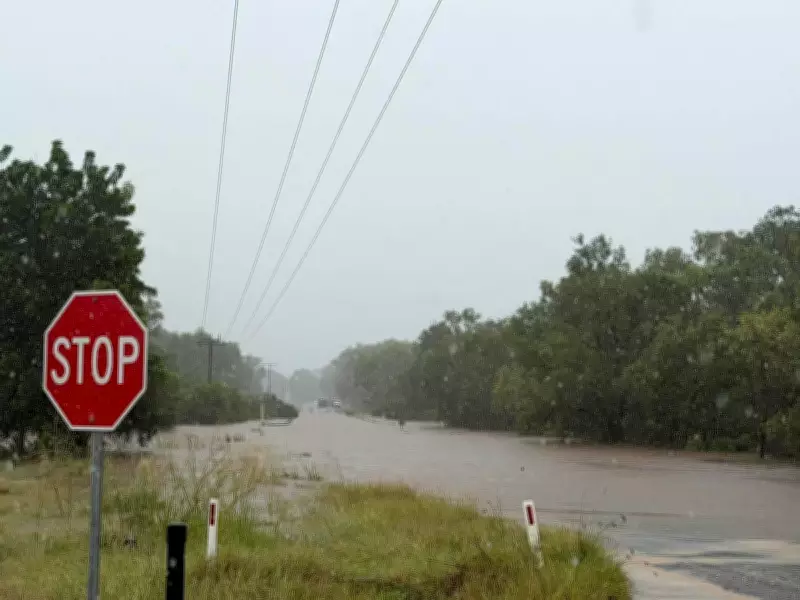
The Katherine River at Katherine Bridge reached 18.61 metres just after 10am on Saturday and continued rising, according to the Bureau of Meteorology's major flood warning alert. The river was predicted to peak at 19.2 metres on Saturday afternoon, with major flooding expected to persist through the weekend. "The whole of Katherine is under threat," Gill emphasized, noting that the town's main road was already affected by flooding and both north and south highway access was cut off.
Approximately 600 people from two remote communities were being evacuated to Darwin via airlift operations. A large-scale helicopter retrieval of 400 residents from Daly River (Nauiyu) community was underway, while six aircraft assisted in evacuating about 200 people from Palumpa, where road access had been completely severed by flood waters.

Emergency Measures and Rescue Operations
Gill reported that two flood rescues were performed overnight in Katherine where people were trapped in their houses, and 200 people had already sought shelter in designated safe locations by Saturday morning. Authorities urged all Katherine residents to shelter immediately, warning that flood conditions "are only going to get worse in the short term." For the first time in recent memory, the local levee system was being enacted to protect the community.
Preparations had begun on Friday with sandbagging operations, shelter openings, and hospital patient evacuations. Twenty pregnant women were among those evacuated from the local hospital as the crisis escalated.
Queensland Faces Widespread Flood Threat
Meanwhile, major flood warnings remained active across Queensland as tropical low 29U tracked southeast toward the Wide Bay Burnett region. Senior Bureau of Meteorology meteorologist Dean Narramore warned that "showers, rain and thunderstorms" would spread across northern and eastern Queensland over the weekend with moderate to locally heavy falls.
Up to 150mm of rain was recorded overnight from Georgetown to Normanton and between Townsville and Gladstone. A flood watch covered most of Queensland, with the Bureau warning of "widespread minor to moderate flooding possible across much of the state." Major flood warnings continued for various western Queensland rivers including the Georgina and Thomson rivers, and the Eyre and Cooper creeks.
Climate Context and Historical Significance
The climate crisis is making Australia increasingly vulnerable to extreme weather events and natural disasters, including intense rainfall patterns. In 2025, which marked the third-hottest year on record globally, surface air temperatures averaged 1.48°C above preindustrial levels. Scientific research indicates that for each 1°C of global heating, the atmosphere can hold approximately 7% more moisture, contributing to more severe precipitation events like those currently affecting northern Australia.
Emergency services across both territories remain on high alert as they coordinate response efforts and monitor river levels, with particular concern for communities in low-lying areas and those with limited access routes that could become impassable as waters continue to rise.