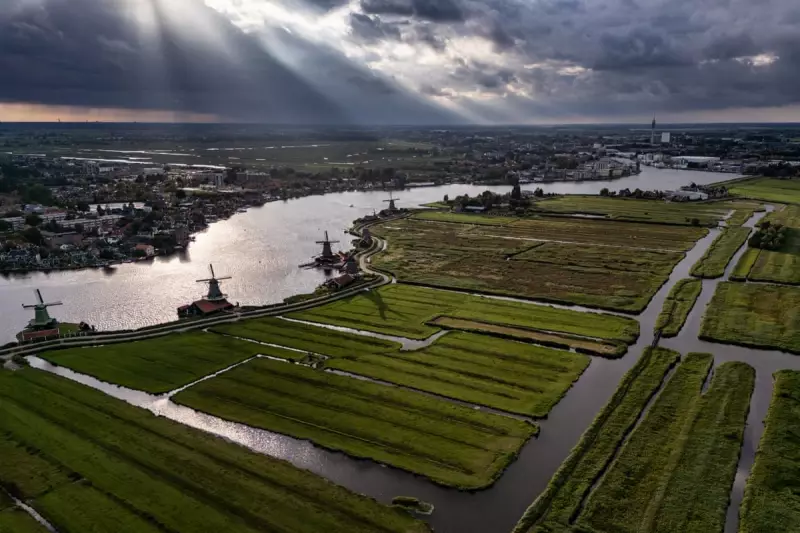
From Ancient Struggle to Modern Innovation
The Netherlands' relationship with water has been forged over two millennia. As the Roman scholar Pliny the Elder once described it, this was a 'pitiful land, flooded twice a day' where inhabitants battled perpetually against the elements. Today, nearly a third of the country lies below sea level, with half considered flood-prone and one-fifth actually being water.
This historical struggle reached a tragic peak in January 1953, when severe gales and a spring tide caused the North Sea to breach dikes, resulting in more than 1,800 deaths during the Watersnoodramp disaster. This catastrophe prompted the creation of the colossal Delta Works, the world's largest flood protection system.
The Philosophy of Meebewegen: Learning to Live With Water
Following another near-disaster in 1995 that required the evacuation of 250,000 people, Dutch water management philosophy underwent a profound shift. The government introduced the 'Room for the River' programme in 2006, marking a move from resisting water to adapting to it.

Researcher Carolien Kraan explains this represents growing awareness that 'not all climate impacts can be prevented, nor all risks calculated.' The focus now is on meebewegen - literally 'moving with' the water rather than fighting against it.
Floating Neighbourhoods: Sustainable Solutions for Housing and Climate
The Netherlands is now pioneering next-generation floating homes that differ significantly from traditional houseboats. Developments like Schoonschip and IJburg in Amsterdam represent entirely new waterborne neighbourhoods featuring architect-designed homes with solar panels, heat pumps, and advanced sewage systems.
IJburg spans more than 10,000 square metres with 158 floating homes, making it Europe's largest floating district. Unlike traditional houseboats, these structures are fixed to steel columns connected to sewer and grid systems, rising with floodwaters and descending as they recede.
This innovation comes as the Netherlands faces a dire housing shortage, lacking 400,000 homes with an estimated one million needed by the mid-2030s. Floating neighbourhoods could provide solutions both for housing shortages and climate adaptation.
The concept extends beyond housing. Rotterdam now hosts the world's largest floating office block, a floating farm, and event space. Coastal defences have also embraced the meebewegen philosophy through projects like the Zandmotor, which used 21.5 million cubic metres of sand to create an artificial peninsula that strengthens coastlines through natural wave and current action.
As former water affairs envoy Henk Ovink stated: 'Water is the enabler - if we understand its complexity, value it comprehensively and manage it inclusively. Then, water becomes the leverage for sustainable development.' The Dutch experience offers valuable lessons for coastal nations worldwide facing rising sea levels.