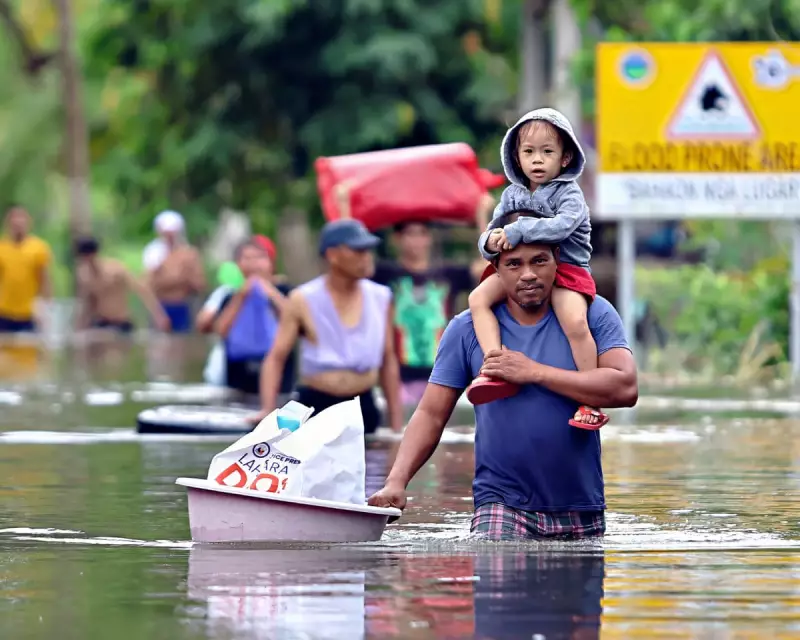
More than 100,000 residents across the Philippines have been forced to flee their homes as Tropical Storm Fung Wong rapidly intensified into a devastating super typhoon. The powerful weather system has triggered one of the largest emergency evacuations in recent years as authorities race against time to protect vulnerable communities.
Rapid Intensification and Widespread Impact
The storm, which initially formed as a tropical depression, underwent explosive strengthening over warm Pacific waters. Fung Wong's maximum sustained winds have now reached 150 miles per hour, placing it in the category of super typhoon according to the Philippine weather bureau PAGASA. The rapid escalation caught many communities by surprise, forcing emergency services to accelerate evacuation plans.
Evacuation efforts have been concentrated across multiple regions, with the Bicol area and Quezon province among the hardest hit. More than 98,000 people have sought refuge in emergency shelters established in schools, churches, and government buildings. An additional several thousand have moved to stay with relatives in safer areas, bringing the total displaced to well over 100,000 individuals.

Emergency Response and Preemptive Measures
Philippine authorities have activated their comprehensive disaster response protocol, with the National Disaster Risk Reduction and Management Council coordinating relief operations. Coast guard operations have been suspended in multiple regions, while airlines have cancelled dozens of flights anticipating the typhoon's impact.
Emergency teams have been prepositioned in high-risk areas with rescue equipment and relief supplies. The social welfare department has prepared food packs and emergency kits for distribution to evacuation centers. "We are dealing with a very powerful weather system that continues to intensify," stated a senior disaster agency official during a press briefing. "Our priority is ensuring people move to safety before the worst conditions hit."
The timing of the typhoon has complicated evacuation efforts, with many residents initially hesitant to leave their homes and livelihoods. Agricultural communities face particularly difficult decisions, with farmers attempting to secure livestock and protect crops before the storm's arrival.
Regional Implications and Climate Context
Meteorologists are monitoring the typhoon's potential impact on neighboring countries, though current projections show the storm remaining over Philippine territory. The intensification of Fung Wong follows patterns observed in recent years, where warmer ocean temperatures have contributed to more rapid strengthening of tropical systems.
The Philippines experiences approximately 20 typhoons annually, with the current season proving particularly active. Climate scientists have noted increasing intensity of storms affecting the archipelago nation, which comprises over 7,000 islands vulnerable to extreme weather events.
International weather agencies continue to track Fung Wong's progression, providing regular updates to regional governments. The cooperation between Philippine meteorological services and international partners has been crucial in providing accurate forecasts that enable timely evacuations.
As emergency preparations continue, authorities emphasize that the window for safe evacuation is closing rapidly. Residents in affected areas have been urged to complete their movements to safer ground before tropical-storm-force winds begin impacting coastal regions.