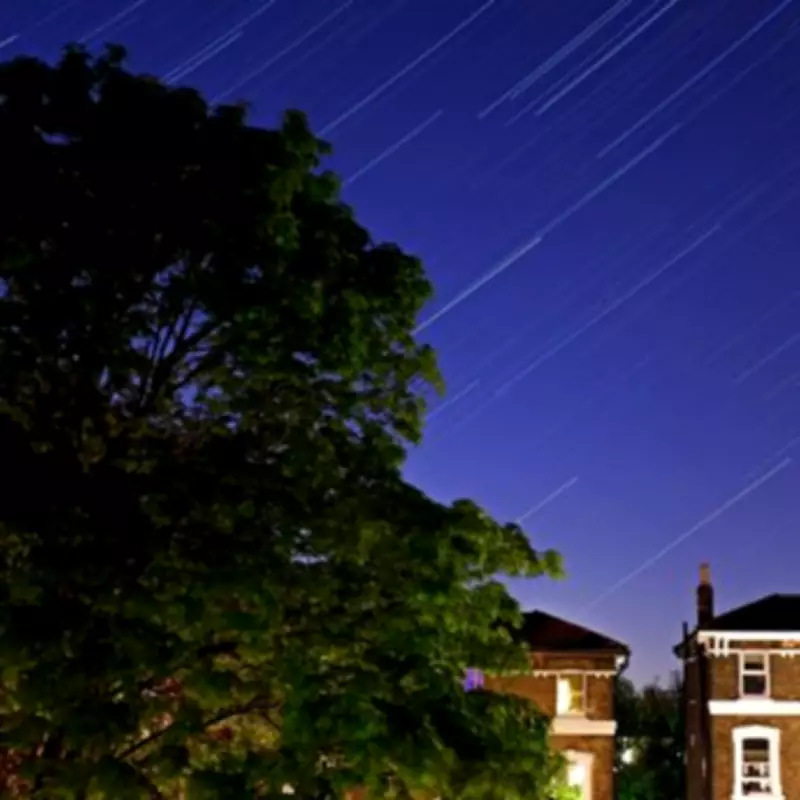
Lyrid Meteor Shower to Grace London Skies This Week
The Lyrid meteor shower is poised to dazzle night skies across London, commencing this week. Renowned for its bright and swift meteors, some featuring luminous trails, this astronomical phenomenon originates from the debris of Comet Thatcher. The shower will initiate on Thursday, April 16, with its peak intensity expected during the night of Wednesday, April 22. According to Royal Museums Greenwich (RMG), the spectacle will continue to captivate observers until Thursday, April 25, offering multiple opportunities for viewing.
Viewing the Lyrids Amid London's Light Pollution
London residents may question whether the city's pervasive light pollution will hinder visibility of the meteor shower. Fortunately, astronomy experts confirm that spotting the Lyrids from urban areas is feasible, though optimal conditions are essential. Jessica Lee, an astronomy specialist at Greenwich Observatory, emphasized in a 2025 interview that while viewing from London requires patience and timing, it is achievable. She advised, "It's a bit more faint and there's more of an element of chance because you have to be looking up at just the right time, but you can see meteor showers from cities. If you can go somewhere darker like a park or a back garden and let your eyes adjust to the darkness, you have more of a chance than if you're just looking up on your way home."
Prime Locations for Stargazing in London
To enhance the viewing experience, selecting elevated and darker spots can mitigate light interference. Excellent vantage points across the capital include:

- Primrose Hill in West London, offering panoramic views of the night sky.
- One Tree Hill Park in South East London, known for its superb elevated perspectives.
- Shooters Hill in South East London and Greenwich Observatory, both ideal for astronomical observations.
- Blythe Hill Fields in Lewisham, recommended by GoStargazing and DarkSkyLondon for its prime stargazing conditions, providing a clear view southwards away from central London's lights towards Kent and Surrey.
Optimal Viewing Times and Techniques
The Lyrid meteor shower derives its name from the constellation Lyra, where its radiant point is located. Lyra, also known as the Lyre or Harp, will appear above the northeastern horizon around 8-9 pm, climbing higher into the eastern sky. It is easily identifiable by its brightest star, Vega, the fifth brightest star in the sky and second brightest in the Northern Hemisphere. For the best viewing, allow your eyes to adjust to darkness by staying in a dark location for 10-15 minutes, avoiding light sources like mobile phones.
The peak viewing window occurs in the early morning hours of April 22, when Lyra reaches its highest position in the East, minimizing horizon obstruction. RMG notes that after the moon sets at 2 am on April 23, lunar light pollution diminishes, creating perfect conditions to witness the peak. Observers should avoid waiting too long, as sunrise can interfere with visibility through increased light pollution.
Understanding the Lyrid Meteor Shower
Meteor showers occur when Earth intersects with debris trails left by comets, such as Comet Thatcher. Annually, Earth's orbit synchronizes with these debris fields, causing meteors to appear from the same sky position. Traveling at approximately 50 kilometers per second, the Lyrids are the oldest recorded meteor shower still observable today, with historical records dating back to 687 BCE. RMG explains that as these meteors enter Earth's atmosphere, rapid compression and heating cause their surfaces to reach temperatures up to 1600°C, producing the characteristic bright streaks of light.
RMG further clarifies the visual effect: "All of the meteors are coming in approximately parallel to one another, like lanes of traffic on a straight motorway. Our perspective makes them appear to travel sideways across the sky. Just as a person standing on the central reservation of the motorway will have cars pass on either side of them, the meteors will appear to diverge from the so-called radiant point in Lyra and streak across the sky in all directions."

Weather Considerations for Viewing
Weather conditions play a critical role in observing the Lyrid meteor shower, as cloud cover can obscure the view. At the time of reporting, the Met Office forecasts patchy cloud for Wednesday, April 22, so dedicated stargazers should monitor updates and hope for clear skies. For more detailed information, visit the Royal Greenwich Observatory website.