As the spectacular Geminids meteor shower fades into memory, stargazers across the United Kingdom are turning their attention to the year's final celestial performance: the Ursids meteor shower. This often-overlooked display promises a quiet but beautiful conclusion to 2025's astronomical calendar, peaking in the early hours of Monday, 22 December.
A Modest but Reliable Year-End Display
The Ursids meteor shower is active each year between approximately 17 and 26 December, with its peak of activity centred on the night of 21-22 December. Unlike its more prolific predecessor, the Geminids, the Ursids are a relatively modest affair. Under ideal, dark-sky conditions, observers might expect to see a maximum of around 10 meteors per hour at the shower's peak.
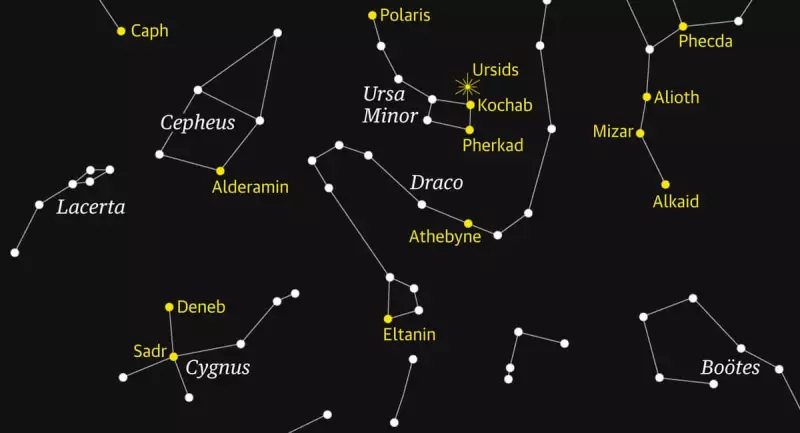
This shower gets its name from the constellation Ursa Minor, also known as the Little Bear, from which the meteors appear to radiate. This radiant point is conveniently located close to the famous star Polaris, the North Star, making it a circumpolar constellation that never sets from UK latitudes. This means the shower is theoretically visible all night long, offering a long window for observation.

How to Maximise Your Chances of a Sighting
For the best chance of spotting Ursids meteors, observers should plan their watch for the hours after midnight on the peak night, heading into the early morning of Monday, 22 December. The waxing crescent moon will set in the early evening, leaving dark skies that are perfect for meteor watching. This favourable lunar condition is a significant advantage for this year's display.
To watch, find a location as far away from light pollution as possible. Allow your eyes at least 20 minutes to fully adapt to the darkness. Rather than staring directly at the radiant point in Ursa Minor, look slightly away; this often provides a better view of the longer meteor trails. Patience, warm clothing, and a reclining chair are essential tools for any meteor observer.
The Icy Origin: Comet 8P/Tuttle
Like all annual meteor showers, the Ursids are caused by Earth ploughing through a stream of dusty debris left behind by a comet. The parent body for this shower is comet 8P/Tuttle, a periodic comet that orbits the sun every 13.6 years. As the comet's icy nucleus approaches the sun, it sheds particles of dust and rock.
When these tiny particles, often no larger than a grain of sand, collide with Earth's atmosphere at tremendous speeds, they vaporise due to friction, creating the brief, bright streaks of light we call meteors or shooting stars. The Ursids are known for their generally slow-moving meteors, which can sometimes appear as colourful fireballs.
While the Ursids may not match the hourly rates of the Perseids in August or the Geminids earlier in December, they hold a special place as the last scheduled major meteor shower of the year. They offer a serene and reflective opportunity for one final bit of cosmic wonder as the winter solstice arrives and the year draws to a close.
For astronomy enthusiasts, it marks a poignant finale before the celestial calendar resets, with the next major shower—the Quadrantids—not due until the first week of January 2026. So, wrap up warm, find a dark spot, and look up this weekend to catch the quiet, graceful farewell of the Ursids.