The iconic tidal island of St Michael's Mount in Cornwall has been left scarred and transformed after being brutally assaulted by Storm Goretti earlier this month. The violent weather event, which brought unprecedented winds, has stripped the beloved beauty spot of an estimated 80% of its tree cover, changing its profile forever.
A Landscape Transformed Overnight
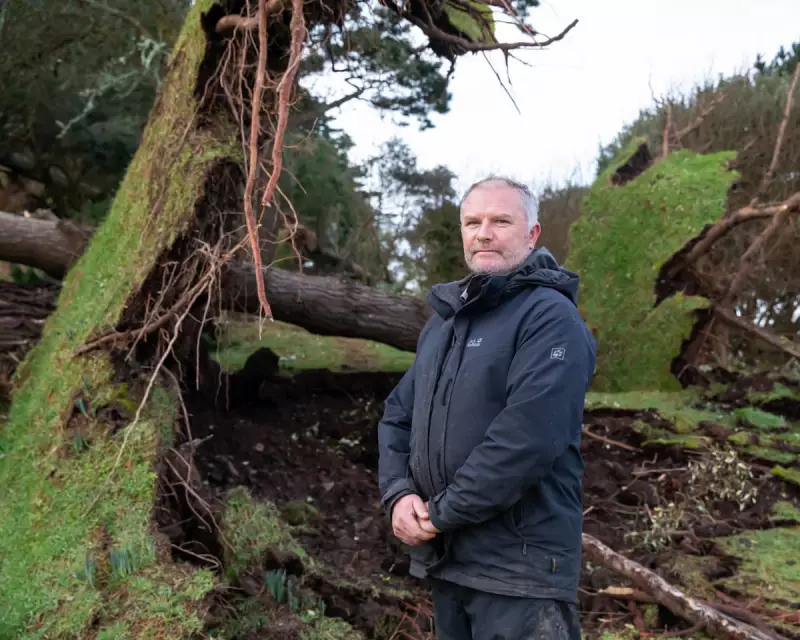
For head gardener Darren Little, who has lived and worked on the island for 25 years, the scale of the destruction was heart-breaking. "When I got out here the next morning, it was still dark but I could see the tree line had changed," he recounted. "As dawn broke, the scale became clear – it's devastating. In a few hours it destroyed years of work."
The final count reveals that 119 large, mature trees were toppled by the ferocious gales. The casualties include towering holm oaks, hollies, sycamores, and Monterey pines that reached the size of four-storey buildings. The island's weather station recorded a staggering gust of 111.8 mph (180km/h) on the night of 8 January.

Little emphasised that such destruction is unheard of, stating, "We're used to one or two trees falling in storms but nothing like this." The storm's unusual north-westerly direction and exceptional strength made the island's arboreal population particularly vulnerable.
Shallow Roots and a Salty Blow
The devastation was exacerbated by the island's unique geology. The trees are rooted in shallow soil atop a granite outcrop, making it impossible for them to anchor firmly against extreme winds. A poignant loss was a holm oak planted in 1984 to mark the birth of Prince Harry, which was completely uprooted.
Further damage may yet emerge. A major concern for the gardening team is the salt water spray that engulfed the island at the storm's peak. This corrosive blanket may have compromised other trees, meaning more could fall or require felling in the coming months.
Some species demonstrated remarkable resilience. Elms, which Little believes "whip with the wind," fared better, and a famously twisted sycamore on the eastern side – a favourite for photographers – miraculously survived.
Broken Horizons and a County in Mourning
The impact stretches far beyond the mount itself. Henry Mathews of St Aubyn Estates, which manages the island with the National Trust, estimated the loss of 500 large trees across 5,000 acres of its Cornish land. "The loss of trees and habitats is immense," Mathews said. "There's a feeling of great sadness."
The changed vistas are stark. Mathews pointed out that cars heading to Penzance are now visible from the mount, a view previously shielded by dense woodland. "Trees have quietly helped shape the landscape and suddenly it's changed," he lamented.
Other significant losses include:
- Bog Plantation near Penzance, a belt of pines popular with birdwatchers, which has been razed.
- Friendship Woods, an important roost for starlings and rooks and a popular walking spot.
- Beloved individual trees, including one on the Isles of Scilly that featured a popular rope swing.
Ian Marsh, the National Trust's assistant director for the south-west, warned the total number of trees lost on Trust properties could reach tens of thousands. He highlighted the profound personal loss for communities: "If you walk your dog and pass a particular tree every day, it becomes part of your landscape... It's impossible to replace that."
Looking Ahead: Replanting and Resilience
In the face of this ecological disaster, the spirit of Cornwall remains defiant. Across the county, there are vows to replant and restore. However, the shadow of the climate crisis looms large, with experts warning of stronger storms, wetter winters, and drier summers in the UK.
Darren Little is already contemplating a future-proof redesign. "We'll have to bear that in mind when we rethink and redevelop," he said, finding a sliver of historical perspective in the Cornish name for the island, 'Karrek Loos yn Koos' (grey rock in a wood), which suggests it was once less wooded.

This forward-looking attitude is echoed at Tremenheere Sculpture Gardens, which lost magnificent trees including a walk of mature beeches. Polly Bolitho from the gardens struck a philosophical note: "Even in this moment of loss, this garden always evolves. From storm to story, we look ahead to the next chapter."
The clean-up operation on St Michael's Mount is massive and ongoing, but the journey to recovery for Cornwall's battered landscapes will take decades, a stark reminder of nature's power and the increasing vulnerability of our environment in a changing climate.