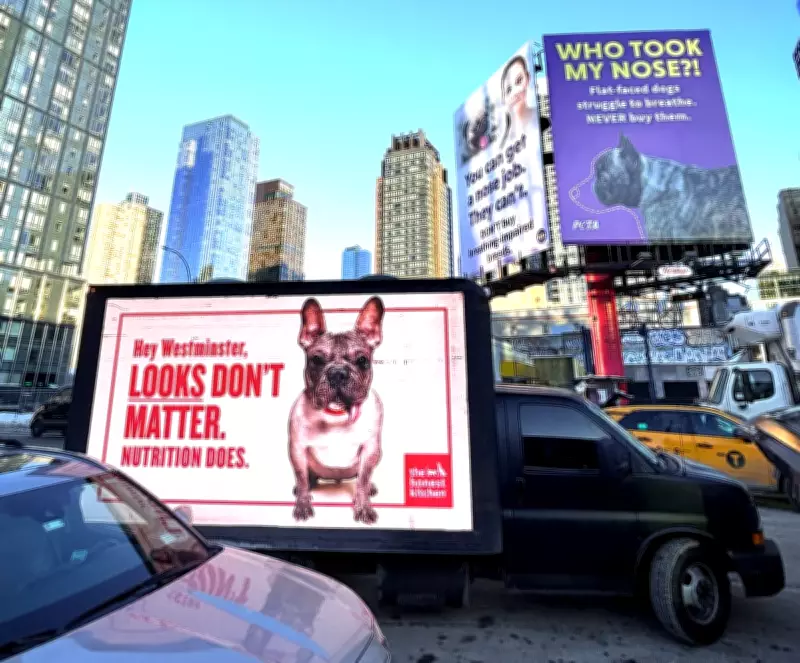
PETA Stages Protest at Westminster Dog Show Over Breeding Practices
Animal rights organisation PETA has made headlines with a high-profile protest at the prestigious Westminster Kennel Club Dog Show, targeting what they describe as harmful breeding practices in the dog industry. Activists gathered outside the event, holding signs and distributing leaflets to raise awareness about the health issues faced by purebred dogs due to selective breeding.
Concerns Over Canine Health and Welfare
The protest focused on the ethical implications of dog breeding, particularly for show dogs. PETA representatives argued that breeding for specific physical traits, such as flat faces in breeds like Bulldogs and Pugs, can lead to severe health problems, including breathing difficulties, eye issues, and joint disorders. They called for a shift towards adopting rescue animals and promoting mixed-breed dogs to improve overall canine welfare.
This action at Westminster, one of the most famous dog shows globally, aimed to spark public debate and encourage changes in breeding standards to prioritise health over aesthetics.

Advocacy for NYC's Trap-Neuter-Return Program for Cats
In a related move, PETA has also been actively supporting New York City's Trap-Neuter-Return (TNR) program for feral cats. This initiative involves humanely trapping stray cats, neutering or spaying them, and then returning them to their original locations to control the population without euthanasia.
PETA advocates for TNR as a compassionate and effective method to manage cat colonies, reduce overpopulation, and improve the lives of these animals. They highlight that TNR helps decrease nuisance behaviours, such as fighting and spraying, while providing veterinary care to prevent disease spread.
Broader Animal Rights Campaigns and Public Response
These efforts are part of PETA's broader campaign to address animal welfare issues across different species and settings. The organisation emphasises the importance of legislative changes and public education to foster more humane treatment of animals.
Responses to the Westminster protest have been mixed, with some attendees and breeders defending responsible breeding practices, while others support PETA's call for reform. Similarly, NYC's TNR program has garnered praise from animal advocates but faces challenges in implementation and funding.
Overall, PETA's actions underscore ongoing tensions between traditional animal industries and modern animal rights perspectives, pushing for a reevaluation of how society interacts with companion animals.