It has been an exceptionally challenging winter season for many reasons. Profound personal loss, multiple global crises, surgery to remove a portion of my thigh affected by melanoma, and a perimenopausal body and mind that no longer recover as swiftly as they once did have left me feeling not completely broken, but undeniably fragile and vulnerable.
Finding Solace in Nearby Nature
Much like during the Covid lockdown periods, I have been deliberately shifting my focus toward the nearby natural world for both distraction and deep comfort. After spending several days confined to bed, followed by a few more propped up in the kitchen window seat that I wisely insisted upon when we rebuilt our home years ago, I gradually extended my limited walking range to the front garden area.
This constrained mobility has allowed me to experience the arrival of spring in ways that are simultaneously limited in scope yet infinite in their emotional and observational depth. By focusing my attention more closely on small details, I have rediscovered that seemingly minor natural phenomena expand precisely in proportion to the amount of attention and contemplation you dedicate to them.

The Marvel of Seasonal Transition
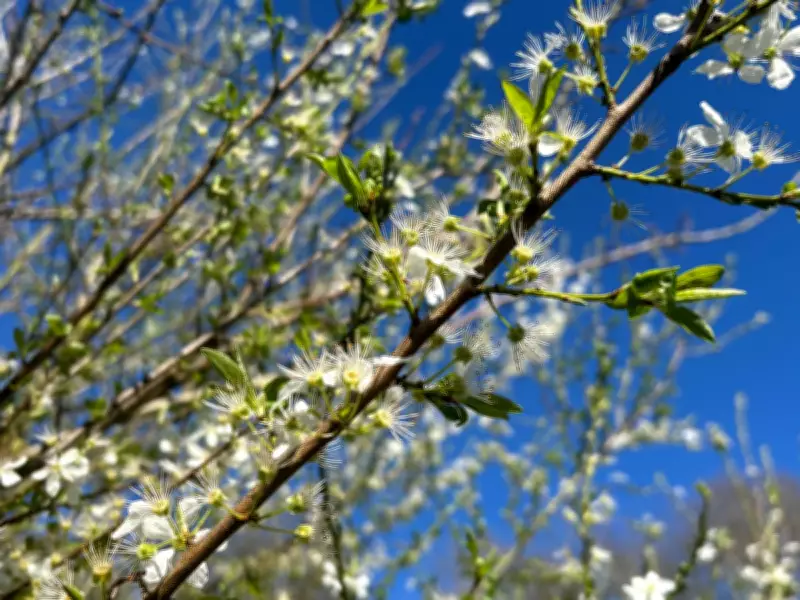
This particular week, I have been thoroughly enjoying the appearance of early butterflies, wild garlic emerging in sudden and abundant patches, the first arrivals of migrant bird species, and the extraordinary reverse origami process of bud burst unfolding before my eyes. The full greening of the woodland canopy directly opposite our house remains several weeks away, but there is a remarkable Frankenstein tree situated on our lawn that put out delicate blossom a fortnight ago and is now coming into full leaf.
This tree was originally intended to be a greengage variety, but following a minor horticultural accident a couple of years back, the blackthorn rootstock to which it must have been grafted successfully escaped its constraints. Now, there are distinct stems of both species growing vigorously from a single shared base. Sloes and greengages from one unified tree is perfectly acceptable to me, and I cannot help but deeply admire an organism so remarkably determined to express its own unique identity and resilience.
The Astounding Force of Bud Burst
Bud burst represents one of the most powerful and unstoppable forces observable in the natural world. Once those emerging leaves have broken free, there is absolutely no possibility of them ever returning to their former confined state. The hydraulic pressure, scientifically referred to as turgor, inside the epidermal cells of an unfurling leaf can exceed the inflation pressure of a standard car tire by several multiples.
This phenomenal pressure is surpassed only by that generated within the growing tips of roots and shoots, which possess enough raw force to burst through solid materials like tarmac and concrete. These slightly absurd yet utterly arresting comparisons have long been staples of children's reference books and natural science literature.
Hidden Superpowers in Fragile Things
Consider these remarkable examples: spider silk possesses tensile strength comparable to high-grade steel; a common ant can carry objects up to fifty times its own body weight; a leaping froghopper insect generates and survives acceleration forces approximately five hundred times that of Earth's gravity, whereas fighter pilots typically black out at just ten times gravitational force.
It is profoundly beneficial to remember that fragile things often harbor hidden superpowers and immense inner strength. The natural world continually teaches us that resilience and power can emerge from the most delicate and unassuming sources, offering lessons in perseverance and adaptation that resonate deeply with human experience.