Australia's Energy Transformation: Solar Power Challenges Coal Dominance
Australia's electricity grid is undergoing a remarkable transformation that has accelerated beyond many experts' predictions. As climate journalist Adam Morton observes, "Solar energy is incredibly cheap. It costs much more to burn coal." This economic reality is reshaping the nation's power landscape in fundamental ways.
Heatwave Reveals Solar's Growing Dominance
During a recent oppressive heatwave that swept across southeastern Australia, rewriting temperature records, solar power demonstrated its increasing significance to the national grid. The country's main electricity network, which supplies five eastern states and the Australian Capital Territory, witnessed solar providing 30% of all electricity over a seven-day period.
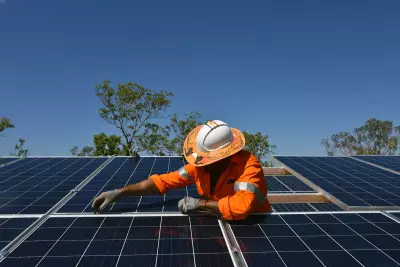
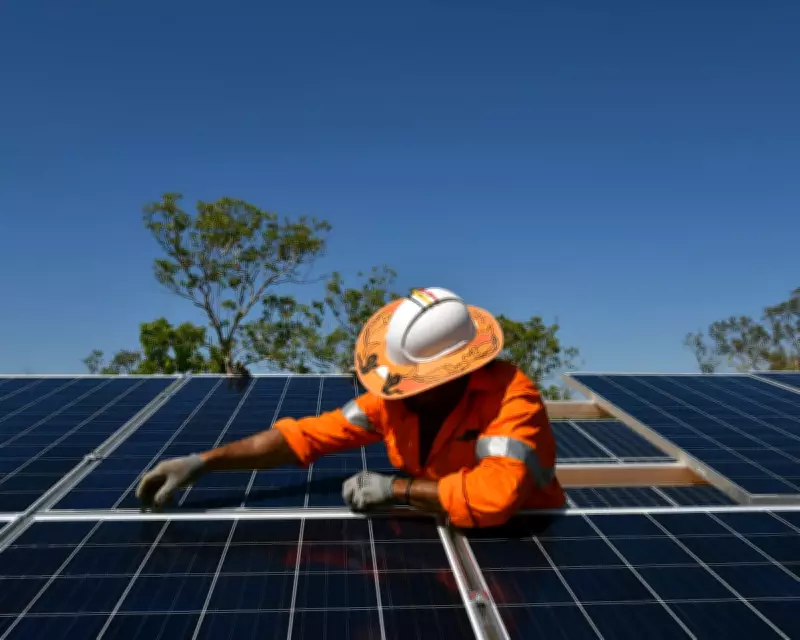
The figures become even more impressive when examining daylight hours specifically. Between 9am and 6pm, solar energy met 59% of electricity demand, with more than half of this contribution coming from approximately 4 million rooftop systems across Australian homes and businesses.

Coal's Diminishing Role in the Modern Grid
Coal-fired power stations, once supplying nearly 90% of Australia's electricity, have seen their role dramatically reduced. During peak solar hours, the ageing coal fleet contributed barely a quarter of lunchtime electricity needs, reduced to filling gaps in generation rather than providing baseload power.
Dylan McConnell, a senior research associate at the University of New South Wales, notes that solar output peaked at 67% of consumption between 12pm and 1pm, reaching more than 70% in New South Wales and South Australia. This represents a fundamental shift in how Australia generates and consumes electricity.
Renewables Reach Parity with Traditional Power Sources
The most significant development is that Australia's grid now relies on renewable energy as much as it does on coal, with each providing nearly half of the annual electricity that powers homes, businesses, and increasingly, electric vehicles. During the last quarter of 2025, renewables' share exceeded 50% for the first time, described by the Australian Energy Market Operator as a "landmark moment."
This transition has brought tangible benefits, including a 44% reduction in wholesale electricity prices compared to the same period in 2024. Battery storage output, essential for managing intermittent renewable generation, tripled in just one year.
Grid Stability During Extreme Conditions
Perhaps most surprisingly, the electricity system coped remarkably well during the recent heatwave, when temperatures in parts of Melbourne exceeded 45°C and air conditioner use pushed demand to extreme levels. McConnell observed that despite some evening volatility, "Things could have gone wrong, but they didn't. There were really very few issues."
This performance challenges previous assumptions that grids couldn't function reliably with high renewable penetration, disproving predictions that systems would struggle beyond 10-20% solar and wind contribution.
The Path Forward: Challenges and Opportunities
Australia finds itself at a crossroads in its energy transition. While embracing renewables at what McConnell describes as a "historic pace," investment in new developments may not be occurring rapidly enough to meet climate targets or replace retiring coal plants adequately.
The transition faces significant challenges, including:
- Building synchronous condensers and other grid stability devices
- Managing political opposition from some state governments
- Ensuring sufficient replacement capacity as coal plants close
Despite these hurdles, the transformation is undeniably underway and proving successful. From providing less than 2% of generation a decade ago to now matching coal's contribution, renewable energy has fundamentally altered Australia's electricity landscape in what represents one of the most significant infrastructure transitions in the nation's history.