While world leaders gather for COP30 this week, a remote district in southeastern Laos has become an unexpected stage for global power politics, demonstrating China's growing dominance in renewable energy markets.
The Monsoon Wind Power Project: Engineering Marvel in Unlikely Location
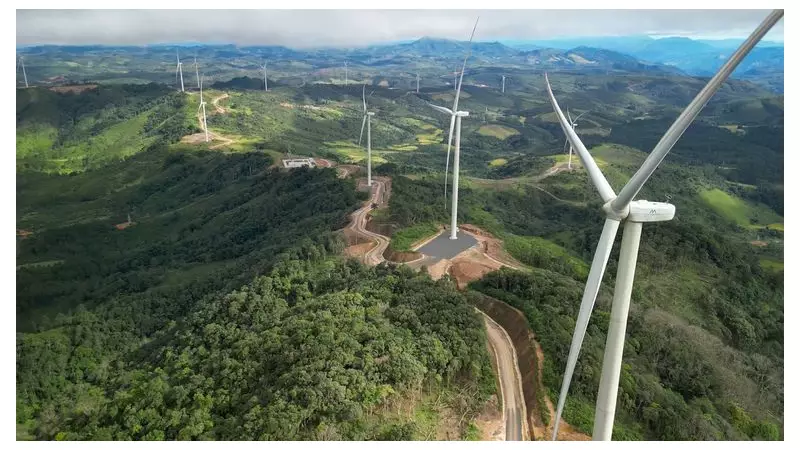
Dak Cheung, one of the poorest regions in Asia where 15% of residents remain illiterate and homes are simple wooden structures, now hosts Southeast Asia's largest wind power installation. The Monsoon Wind Power Project spans an area twice the size of the Isle of Wight with 133 turbines towering over complex terrain.
Site general manager Narut Boakajorn, who leads the Thai consortium operating the plant, acknowledged the project's ambitious nature. "Lots of people said it wouldn't be possible," he told Sky News. "We'll be able to deliver power to around a million households annually."

The generated electricity travels over 70km by cable to Vietnam, creating a remarkable cross-border energy solution that represents both an engineering achievement and a geopolitical statement.
China's Unbeatable Green Technology Advantage
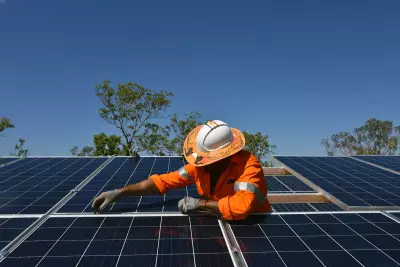
Despite Thai leadership, the project heavily relies on Chinese involvement. Built by a state-owned Chinese company using Chinese technology, the combination delivered unbeatably low costs, advanced technology and ultra-fast construction.
"It makes the project viable," Mr Boakajorn explained. "Otherwise we cannot get project financing and the project would not have been feasible."
This Laos installation exemplifies China's extraordinary global reach in green technology. What began as domestic initiatives has exploded into international market domination. According to International Energy Agency data, China now manufactures over 60% of the world's mass-produced green technologies, including more than 80% of global solar panels and over 75% of electric vehicles.
Analysis for CarbonBrief reveals that Chinese clean energy exports in 2024 alone are expected to reduce global carbon emissions by 1%.
Strategic Influence Through Renewable Investments
China's renewable expansion doesn't stem from climate leadership ambitions - the nation continues building coal-fired power plants at remarkable rates, with more constructed last year than in any previous decade. However, early aggressive investment in renewables appears as a strategic masterstroke as experts increasingly view such facilities as the energy future.
In the first half of this year alone, China's green tech exports exceeded US oil and gas exports by over 50% in value.
The majority of China's green technology export growth has targeted developing nations, raising questions about long-term influence. Many global Chinese infrastructure projects have burdened host countries with unmanageable debt, though the privately-financed Monsoon Wind Project avoided such issues.
Mr Boakajorn emphasized the project's high social and environmental standards, suggesting these might not have been maintained if the Chinese contractor operated independently.
The historical context adds symbolic weight: the hills around Dak Cheung endured relentless US bombing during the Vietnam War, making China's constructive presence where America once destroyed particularly meaningful for Laotians.
While short-term influence remains difficult to measure and long-term energy stakes challenging to predict, China currently holds the advantage in both climate technology and geopolitical positioning as COP30 deliberations begin.