

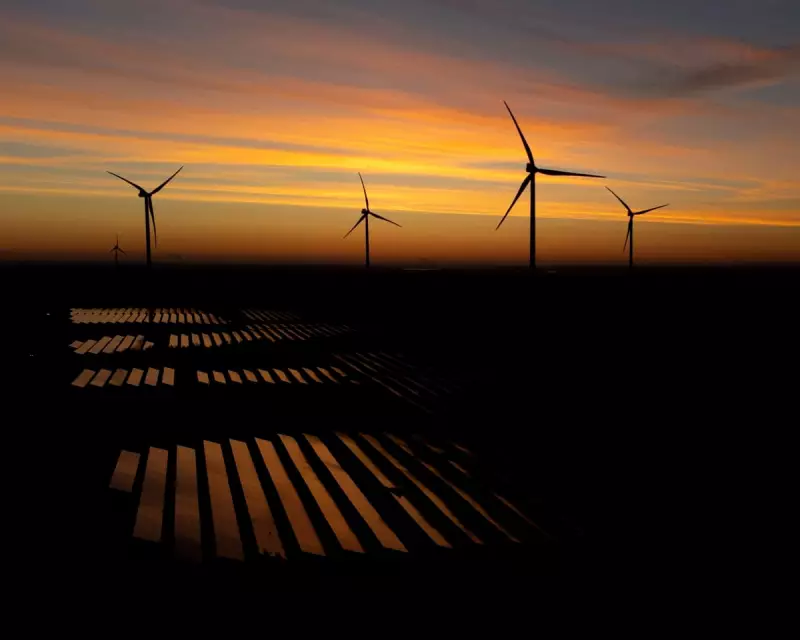
Wind and Solar Power Surpass Fossil Fuels in EU Electricity Generation for First Time
A groundbreaking report has revealed that wind and solar energy have overtaken fossil fuels in the European Union's power generation for the first time, marking what researchers describe as a major tipping point for clean energy. According to the annual review, turbines and photovoltaic panels generated 30% of the EU's electricity in 2025, while power plants burning coal, oil, and gas produced 29%.
A Strategic Shift in Energy Dependence
Beatrice Petrovich, an analyst at the Ember thinktank and lead author of the report, emphasised the strategic importance of this milestone. "The importance of this goes beyond the power sector," she stated. "The danger of relying on fossil fuels looms large in destabilised geopolitics." This shift comes as the EU grapples with growing concerns over energy reliance on other nations, particularly amid escalating tensions with the United States.
At a recent Davos summit, US Commerce Secretary Howard Lutnick criticised Europe's rapid adoption of solar and wind energy, warning that a lack of domestic battery factories could make the continent "subservient" to China. "If you are going to be dependent on someone, it had better be your best allies," he argued, promoting an "America first" approach.

Solar Boom Drives the Transition
The report highlights that this historic trend is primarily driven by an unprecedented boom in solar power, which generated a record 13% of EU electricity. Remarkably, in five countries—including the Netherlands, not traditionally known for abundant sunshine—solar provided more than 20% of power. Wind energy, while generating slightly less than the previous year, remained the second-largest source at 17%.
Key findings from the report include:
- Fossil gas use increased by 8%, largely due to weather-related drops in hydropower, but remained below its 2019 peak.
- Coal burning fell to a historic low, accounting for less than 10% of EU power, with most usage concentrated in Germany and Poland.
- Solar power alone grew by over 20% in a single year, demonstrating rapid scalability compared to conventional technologies.
Challenges and Future Prospects
Petras Katinas, an analyst at the Centre for Research on Energy and Clean Air, noted that solar and wind are "becoming the backbone" of Europe's power system. However, he pointed out that the primary challenge now lies not in generation but in infrastructure deployment. "The challenge now is not generation, but how quickly Europe can deploy grids, batteries, and flexibility," he explained.
European countries have been slow to modernise electricity grids to accommodate the variable nature of renewable energy. Despite this, the report identifies early signs of progress, with batteries beginning to meet evening peak demand—traditionally met by costly gas burning. Italy, hosting one-fifth of the EU's operating battery capacity, may follow California's trajectory, where batteries cover 20% of evening peaks and reduce reliance on gas.
Petrovich suggested this could help smooth price spikes and urged policymakers to reconsider plans for new gas plants. "If I were a policymaker or investor, I would seriously start questioning if plans for new gas plants are inflated—and act to avoid a burden for taxpayers and risk of stranded assets," she advised.
This transition underscores a broader shift toward a carbon-free economy, with climate scientists emphasising that most future electricity will come from renewable sources. As Europe navigates this transformative period, the report serves as a critical benchmark in the global clean energy movement.






