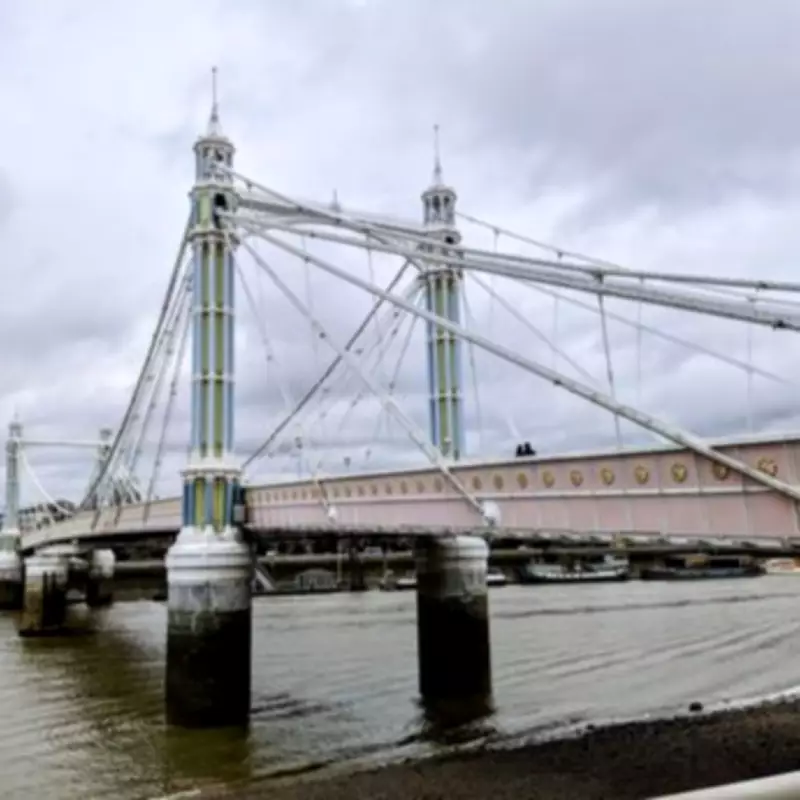
Albert Bridge Could Remain Closed Until 2027 for Major £8.5 Million Repair Project
The iconic Albert Bridge, a vital Thames crossing in West London, faces a potential closure extending into 2027 as authorities undertake a comprehensive £8.5 million repair initiative. This historic structure was abruptly shut down to all motor traffic in February following the discovery of significant structural damage, necessitating urgent stabilization efforts.
Massive Traffic Disruption with 15,000 Vehicles Diverted Daily
With the bridge out of commission, approximately 15,000 cars and light vans are being forced to seek alternative routes across the River Thames each day. This substantial diversion is causing considerable congestion and logistical challenges throughout West London, impacting commuters and local businesses alike. The closure's duration is estimated to last up to a full year due to the bridge's exceptionally intricate and aged design.
The repair costs are projected to reach a staggering £8.5 million, with funding anticipated to come primarily from Kensington and Chelsea Council's capital programmes fund. Additionally, the council has submitted applications for partial financial support from Transport for London and the Department for Transport to help cover these extensive expenses.

Complex Repairs Required for 153-Year-Old Grade II* Listed Structure
A detailed report presented to the Environment Select Committee highlighted the unforeseen damage resulting from prolonged wear and tear. "Due to unforeseen damage arising from wear and tear, the 153-year-old Albert Bridge requires significant repairs to firstly stabilise it and secondly to enable it to be reopened to motor traffic," the document stated.
The report further praised the bridge's enduring legacy, noting, "Bearing in mind that it opened 13 years before the motor car was invented, it’s a testament to the skill and ingenuity of successive generations of civil engineers that the beautiful Grade II* listed building that is Albert Bridge not only still spans the River Thames, but is capable of carrying motor vehicles."
Specific Damage and Ongoing Costs Detailed
Engineers identified a cracked cast-iron component and a seized rocker axle at the north-eastern toll booth as the primary issues leading to the closure. While the bridge remains accessible to pedestrians and cyclists, maintaining this limited access is costing Kensington and Chelsea Council £56,000 per month. The initial emergency response measures alone have already incurred costs of £550,000.
Essential repair work includes fixing the rocker bearing plate—a heavy-duty steel bridge component designed to support structural loads—and unseizing the axle within the rocker mechanism that caused the initial damage.
Broader Discussions on Thames Bridge Responsibility
During the Environment Select Committee meeting, councillors engaged in discussions regarding the equitable distribution of responsibility for maintaining Thames crossings among London boroughs. Currently, only six of London's 32 boroughs are tasked with overseeing the eight bridges that span the river. Kensington and Chelsea Council is actively negotiating with the London Assembly to address concerns about the fairness of this allocation, seeking a more balanced approach to future maintenance and funding.