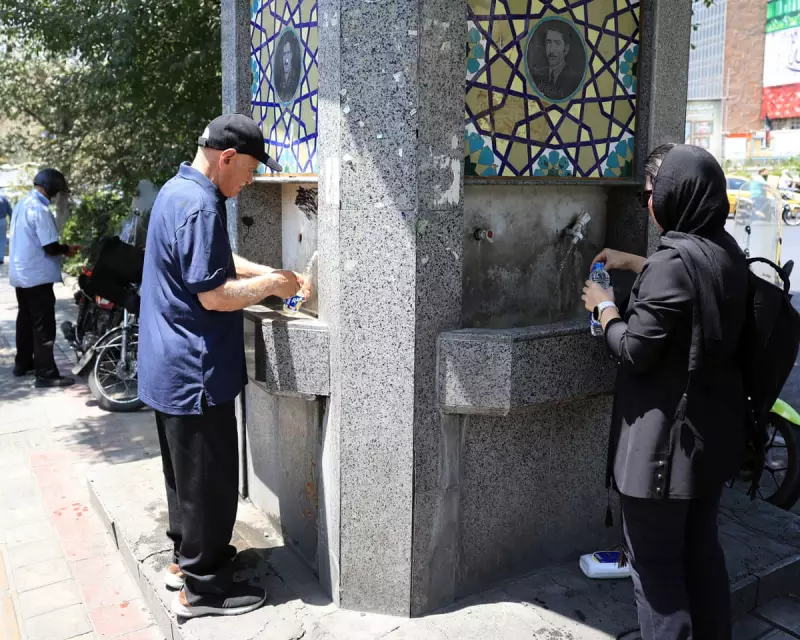
Iran's Second City Faces Water Catastrophe as Reservoirs Run Dry
Iran is confronting an unprecedented water emergency as storage levels in dams supplying Mashhad, the country's second-largest city, have plummeted to critically low levels. Recent reports indicate water reserves have dropped below 3%, creating an alarming situation for the metropolitan area of approximately 4 million residents.
Hossein Esmaeilian, chief executive of Mashhad's water company, delivered the sobering assessment to the ISNA news agency, stating unequivocally that water management has transitioned from recommendation to necessity. "The current situation shows that managing water use is no longer merely a recommendation – it has become a necessity," he warned.
Capital City Also Under Threat
The crisis extends beyond Mashhad, with authorities in Tehran issuing warnings over potential rolling water cuts during the weekend. Officials describe the situation as the worst drought in decades, with President Masoud Pezeshkian cautioning that Tehran could face evacuation if rainfall doesn't arrive before winter.

In the capital, the situation appears equally dire. Five major dams supplying drinking water have reached critical levels, with one completely empty and another operating at less than 8% capacity. The water shortage has become so severe that authorities previously announced public holidays in Tehran to reduce water and energy consumption during summer heatwaves that caused almost daily power outages.
Consumption Crisis and Potential Solutions
According to Esmaeilian, Mashhad's current water consumption stands at approximately 8,000 litres per second, with dams supplying only 1,000 to 1,500 litres per second of this total. The city relies on four dams for its water supply, all of which are now at risk of complete depletion.
Esmaeilian proposed a potential solution, suggesting that if residents can reduce consumption by 20%, authorities might manage the situation without implementing rationing or supply cuts. However, he warned that those with the highest consumption levels could face supply restrictions first if conservation efforts prove insufficient.
The national picture reveals an even broader crisis. In late October, Abbasali Keykhaei of the Iranian Water Resources Management Company disclosed that 19 major dams – representing about 10% of the country's reservoirs – have effectively run dry, according to Mehr news agency.
Political Dimensions of the Environmental Crisis
Local newspapers have begun questioning the government's handling of the situation, with Sunday editions criticising what they describe as the politicisation of environmental decision-making. The reformist Etemad newspaper pointed to the appointment of "unqualified managers ... in key institutions" as the primary cause of the escalating crisis.
Another reformist publication, Shargh, offered a more direct critique, stating bluntly that "climate is sacrificed for the sake of politics." These comments highlight growing public frustration with the government's response to months of drought conditions affecting the entire country.
As Iran faces one of its most severe water crises in modern history, the combination of environmental challenges and political scrutiny creates a complex emergency with potentially far-reaching consequences for urban populations and agricultural communities alike.