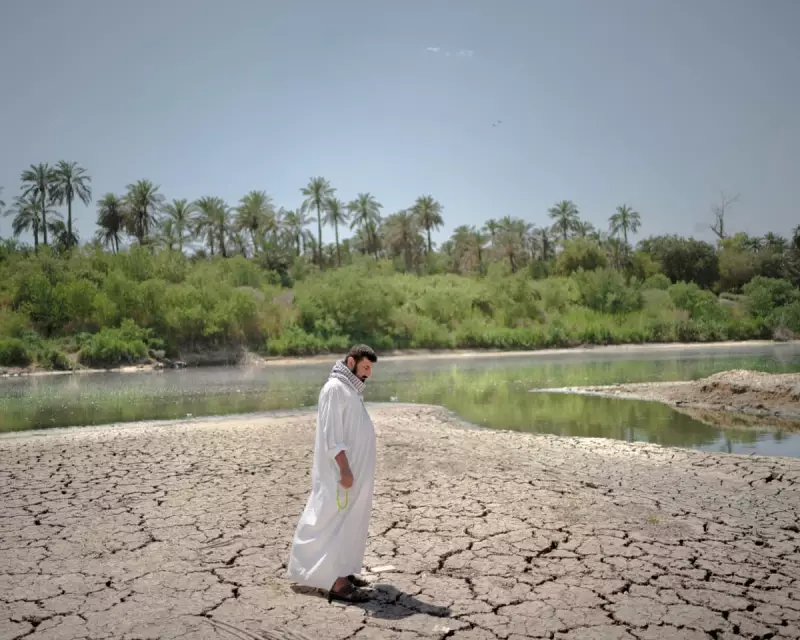
A farmer treads across the parched, fissured ground next to the Diyala River. The waterway near his homestead has, in recent years, turned into a toxic, stagnant pool, now unfit even for his livestock. This stark image symbolises a far greater crisis unfolding across Iraq: the potential death of the legendary Tigris River.
A Faith Flowing with the River
For Sheikh Nidham Kreidi al-Sabahi, a 68-year-old leader of the ancient Mandaean gnostic religion, water from a flowing river is a sacred necessity, used even for drinking. Adorned in a simple tan robe with a long grey beard, he insists that flowing Tigris water is pure. "No water, no life," declares Sheikh Nidham, who lives in Amarah on the river's banks. For Mandaeans, whose homeland is southern Iraq, water is as vital as air. Every key life event, from marriage to the final breath, requires ritual purification in the river.
"For our religion, the importance of water is like air. Without water, life wouldn't exist," he explains, linking water to the very creation of Adam. The Tigris, one of Mesopotamia's famed rivers, is where civilisation blossomed with the advent of agriculture, writing, and the wheel. Today, it sustains an estimated 18 million Iraqis, providing water for drinking, agriculture, industry, and power.

A River Choked and Diminished
However, the Tigris is in a state of severe decline. Its waters are now heavily contaminated, and its volume is shrinking alarmingly. The degradation began decades ago. During the 1991 Gulf War, advanced water treatment infrastructure was targeted and destroyed, leading to raw sewage flowing into waterways. Sanctions and ongoing conflict have prevented a full recovery. Today, only 30% of urban households in central and southern Iraq are linked to sewage treatment, plummeting to a mere 1.7% in rural areas.
Pollution is multifaceted: municipal waste, agricultural chemicals, industrial effluent, and medical refuse all poison the river. A 2022 study found water quality in Baghdad was "poor" or "very poor." In 2018, over 118,000 people in Basra required hospital treatment after drinking contaminated water.
Compounding the pollution crisis is a drastic reduction in water flow. Over the past 30 years, major dam constructions in Turkey have reduced the volume of water reaching Baghdad by 33%. Iran has also diverted water from shared tributaries. Within Iraq, agriculture consumes at least 85% of surface water, often inefficiently. The climate crisis exacerbates the situation, with Iraq suffering a 30% decline in precipitation and its worst drought in a century. Demand is projected to outstrip supply by 2035.
Salman Khairalla, founder of the NGO Humat Dijlah, warns that dwindling flow concentrates pollutants. "The water quality depends on the quantity," he states.
A Controversial Deal and an Uncertain Future
In a bid to address the crisis, Iraq and Turkey signed a cooperation mechanism in November. Dubbed an "oil-for-water" deal, it proposes tackling pollution, modernising irrigation, and improving governance, with Turkish companies undertaking projects funded by Iraqi oil. The Iraqi foreign ministry hailed it as groundbreaking.
Yet, the agreement faces fierce criticism from experts and the public for its lack of detail, perceived ceding of control to Ankara, and non-binding nature. Former water resources minister Mohsen al-Shammari dismissed it as "election propaganda," noting it was signed just nine days before Iraq's general election. The Iraqi government did not respond to requests for comment on the deal.
For the Mandaean community, the dying Tigris poses an existential threat. Their global population is between 60,000 and 100,000, with fewer than 10,000 remaining in Iraq. Many have already fled abroad or moved to Kurdistan. A river that once gave them spiritual and physical life may now seal their fate in their ancestral home, fundamentally altering an ancient way of life forever.