A Tale of Two Extremes: Africa's Elephant Dilemma
A profound and contrasting crisis is unfolding for African elephants, split across the continent's north and south. In South Sudan, the struggle is one of survival against near-total disappearance, while in southern Africa, nations like Zimbabwe grapple with the consequences of conservation success: too many elephants leading to intensified conflict with people. This stark divide highlights the complex, region-specific challenges of wildlife management in the 21st century.
The Lonely End in South Sudan
The story in South Sudan is one of tragic decline. During the dry season in January, conservationists in a single-engine aircraft searched the vast, smoky grasslands of Badingilo National Park, an area covering nearly 9,000 square kilometres. Their target was the park's last known elephant, a 20-year-old bull so isolated it moved with a herd of giraffes. His GPS collar provided coordinates, but hope was thin.
This scene is a shadow of the past. In the early 1970s, ecologist Dr Murray Watson estimated some 133,500 elephants roamed what is now South Sudan. Today, according to US conservationist Mike Fay, that number has plummeted to about 5% of its former total. Fay, now African Parks' landscape coordinator for the Great Nile migration landscape, helps manage a protected area the size of Nepal, calling it "the greatest conservation opportunity on Earth, but also one of the greatest challenges."

In villages like Maruwa in Boma national park, elephants have virtually vanished. A local hunter admitted to killing one six years prior for food and a meagre profit from ivory. The sentiment on the ground is brutally pragmatic. "Who cares about an elephant when you're losing your brothers?" asked David Liwaya, an African Parks community officer, capturing the dire choice between survival and conservation. Tragically, in late 2025, news confirmed the Badingilo bull and a giraffe companion had been killed by suspected poachers.
Overpopulation and Conflict in Southern Africa
Roughly 3,200 kilometres south, the narrative flips. Outside Victoria Falls airport in Zimbabwe, road signs warn of elephants on the move. In townships like Mkhosana, stories of deadly encounters are common. Fransica Sibanda was recently widowed when an elephant trampled her husband near their home. "I now live in fear," she said, demanding the park install a fence. Neighbour Ireene Nyathi witnessed a man being crushed by an elephant against her wall.
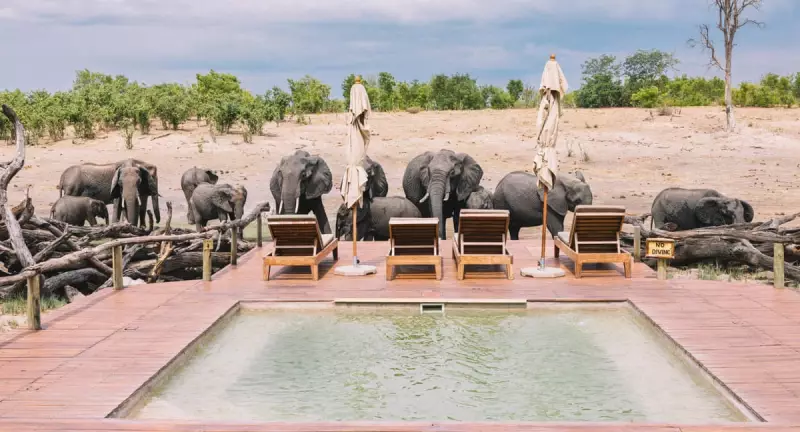
This conflict is exacerbated by climate breakdown and drought, driving elephants into human settlements in search of food and water. The issue is particularly acute in the Kavango Zambezi (Kaza) transfrontier conservation area, where successful law enforcement and conservation have led to booming elephant numbers. In Zimbabwe's Hwange National Park, an estimated 60,000 elephants congregate in the dry season—about double the regional carrying capacity, according to guide and conservationist Rob Janisch.
The park's artificially pumped water holes, created in 1928, disrupted natural migration patterns. Now, the ecosystem cannot replenish itself. The result is a landscape stripped bare by foraging herds and littered with carcasses. In response, Zimbabwe and Namibia announced significant new elephant culls in late 2024, often involving big-game hunters for revenue, a move that sparked international debate.
Searching for Solutions on a Divided Continent
Across Africa, communities and conservationists are testing a patchwork of solutions. Deterrents like chilli fences, solar-powered electric fencing, and noise whips are deployed. In some cases, translocation is an option, exemplified by African Parks moving 500 elephants across Malawi in 2016. However, shrinking NGO budgets make large-scale relocations challenging.
The core issue remains space. Ancient migration routes are blocked by human settlement, squeezing elephants and people into unsustainable proximity. As taxidermist Godwill Ruona in Victoria Falls stated, "You can't sit in Paris and tell us what is happening in Zimbabwe."

Despite the polarised situations, from the empty landscapes of South Sudan to the overcrowded parks of Zimbabwe, the underlying truth is shared. In an age of mass extinction, finding a balance for Africa's elephants—whether there are too few or too many—is a monumental challenge where failure cannot be an option. Each local victory in coexistence matters, but there is no single, continent-wide solution.