

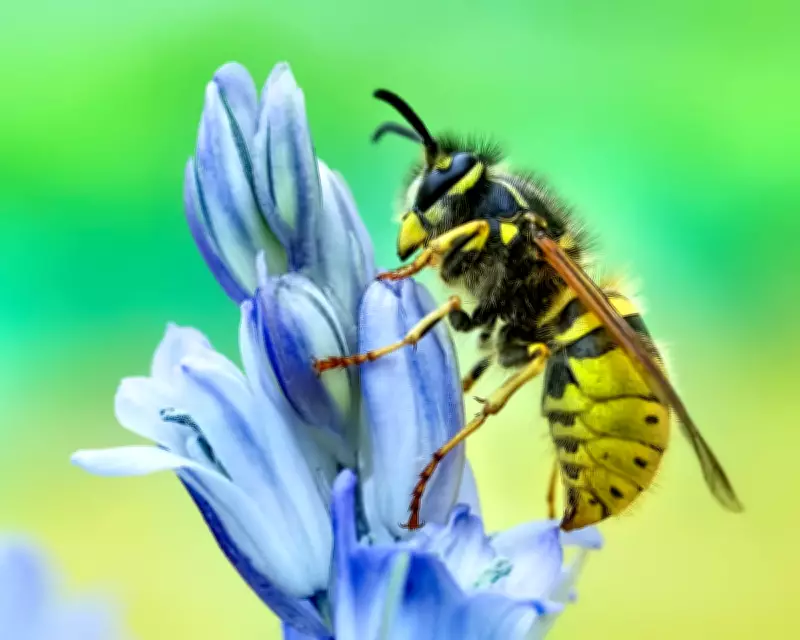
Reconsidering Nature's Most Misunderstood Creatures
Picture a wasp flying into your kitchen. Do you panic and reach for a swatter, or calmly open a window to guide it outside? Now imagine the same scenario with a bee. Most people would react differently, despite both insects being capable of stinging and both serving as important pollinators. This emotional disconnect highlights our often irrational perceptions of the animal kingdom.
The Unfair Reputation of Wasps
While bees enjoy positive associations with honey and pollination, wasps suffer from negative stereotypes centered on stings and annoyance. This prejudice persists even though wasps are evolutionarily linked to bees and perform similar ecological functions. Social wasps, including the familiar striped varieties, serve as generalist predators that control aphids, caterpillars, and moth populations. Parasitic wasps act as specialized assassins already deployed in agricultural settings for natural pest control.
Were we to eliminate wasps entirely, any temporary relief from picnic disruptions would be dramatically outweighed by long-term ecological consequences. These insects provide free, chemical-free pest management while contributing to pollination networks that sustain plant life.

Sharks: Predators in Peril
The global fear of sharks far exceeds the actual risk they pose. Last year recorded 65 unprovoked shark bites worldwide, resulting in 12 tragic fatalities. While each incident deserves serious attention, the sensationalized media coverage surrounding sharks distracts from their critical conservation status. Sharks and their ray relatives represent the second-most threatened group of vertebrate animals, with over 30% of species facing extinction.
These ancient creatures have survived for nearly 500 million years, enduring five mass extinction events. They range from the gentle, plankton-feeding whale sharks to the uniquely shaped hammerheads. Yet human activity now presents their greatest challenge, with approximately 100 million sharks killed annually through fishing and habitat destruction.
Beyond Human Morality
Animals like snakes, mosquitoes, and wasps lack the cognitive capacity for malicious intent. A wasp investigates sugary substances because it detects food, not because it seeks to annoy humans. When threatened, these creatures defend themselves instinctively—a response any animal would demonstrate in similar circumstances.
Venomous snakes typically avoid confrontation, following what herpetologist Clifford Pope described as a sequence of "first cowards, then bluffers, and last of all, warriors." Female mosquitoes require blood proteins for egg development, not because they harbor ill will toward humans. Understanding animal behavior through their own biological imperatives, rather than human moral frameworks, reveals their true natures.
Ecological Interdependence
We cannot selectively preserve only the animals we find attractive or useful. Ecosystems function through complex interconnections where every species plays a role. Eliminating "pest" species like aphids or slugs would ultimately harm the hedgehogs and birds that depend on them for food. Nature operates as an integrated web where nothing survives in isolation—including humanity.
Many overlooked animals demonstrate surprising cognitive complexity and social behaviors. Snakes protect their offspring, vultures utilize tools, alligators perform mating dances, and rats assist their companions. Recognizing these capabilities alongside their ecological contributions fosters greater appreciation for nature's diversity.
As we continue encroaching on animal habitats, conflicts inevitably arise. Yet framing these encounters as battles against "intruder" animals overlooks our own role in creating these situations. Conservation requires valuing all species for their intrinsic worth and ecological functions, not just those we personally favor.






