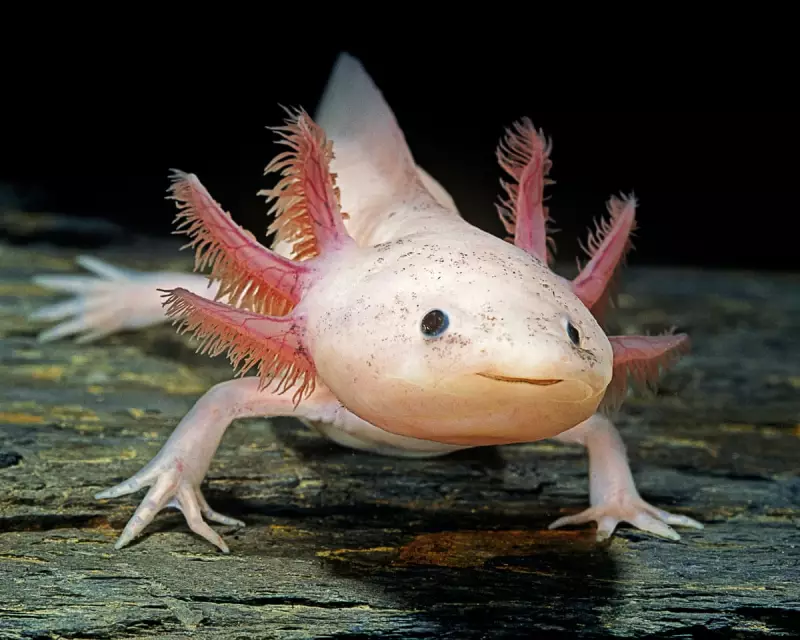
The Global Phenomenon of Smiling Salamanders
In the floating gardens of Lake Xochimilco, southern Mexico City, a remarkable creature faces an uncertain future. The axolotl, a type of salamander with an otherworldly appearance and permanent smile, has become what The Economist calls a "global megastar" in popular culture while teetering on the brink of extinction in its natural habitat.
From Obscurity to Ubiquity
These unusual amphibians have undergone a remarkable transformation in public consciousness. Nicole Rowe, who runs an axolotl rehoming centre from her West Midlands home, recalls that when she acquired her first axolotl eight years ago, they were so rare that her pet shop had to order one specially. "Every time I look at one, I can't help but smile back," she says, describing their captivating effect.
Today, axolotls have proliferated across global culture. More than 1,000 axolotl-themed products grace Walmart's website alone. They appear on US Girl Scouts patches, in McDonald's Happy Meals, and even on Mexico's 50-peso bill – a design so popular that the Bank of Mexico reported 12.9 million people were hoarding the notes last year.

The Perfect Storm of Appeal
Several factors have contributed to the axolotl's extraordinary rise. Joe Evans, a buyer at Selfridges, observes that "they have exploded as a must-have character for gen Alpha, with brands such as Squishmallows, Lego and Posture Pals adding them to their ranges." Their soft, squishy shapes and expressive faces tap into contemporary desires for feelgood comfort.
The animal's anthropomorphic qualities make it particularly appealing. "They've got baby-like features, wide-set eyes," notes Professor Luis Zambrano, an ecologist studying wild axolotl populations in Mexico. Their human-like hands and feet, combined with that distinctive smile, create instant connection. On social media platforms like TikTok, axolotls only need to yawn or "dance" to generate viral content.
Scientific Marvel Meets Cultural Icon
Beyond their appearance, axolotls possess remarkable biological capabilities. Aida Rodrigo Albors, who leads a research group at the University of Edinburgh's Centre for Regenerative Medicine, explains their extraordinary regenerative powers: "If they lose their tail, they can regrow a whole new spinal cord within a new tail. Any tissue that you name, they can regenerate it."
This scientific fascination has paralleled their cultural ascent. Unlike most salamanders, axolotls reach adulthood without metamorphosing, remaining as tadpoles throughout their 20-year lifespan. In an era obsessed with longevity and regeneration, these qualities add to their mystique.
A Stark Conservation Reality
While axolotls flourish in popular culture, their wild counterparts face dire circumstances. Professor Zambrano's census work reveals alarming declines: from 6,000 axolotls per square kilometre in Lake Xochimilco in 1998 to just 36 by 2014. Drainage, urban development, and introduced predatory fish have pushed the species to critically endangered status.
"The wild axolotl is completely different to the pet one," Zambrano notes. "It's brown or grey, and it rarely smiles. Of course not – they don't like you. Because they are wild..."
Cultural Celebration Versus Conservation
The upcoming World Cup, co-hosted by Mexico City, will feature a bipedal axolotl as the city's official mascot. While this brings visibility, Zambrano expresses concern: "I am a little bit afraid of what is going to happen... People will arrive with garbage and noise, and everybody will want a mariachi in the boat."
He contrasts Mexico's approach with China's panda conservation success: "About 30 or 40 years ago, their popularity pushed the government to create protective areas in China – nature reserves, investment in the bears' habitats." In Mexico, he believes local government has acted "contrary to their preservation."
The Digital Disconnect
Zambrano worries about a growing separation between digital representation and biological reality: "TikTok, Instagram, Minecraft, all these things, have created a parallel world. So it doesn't matter if the real ones are going down, if I have them in two dimensions... Internationally, we are going in a very strange direction."

Yet for enthusiasts like Milena Andrzejczak, who recently acquired two axolotls from a London shop, caring for these creatures represents a meaningful connection: "I feel that by caring for them, I am connecting with an animal that I care about in the wild."
Looking Forward
The axolotl's journey from obscure amphibian to global icon presents both opportunity and challenge. Their popularity could potentially drive conservation efforts, much as panda mania did in China. Yet there remains a risk that digital representations might overshadow the urgent need to protect actual habitats.
As these smiling salamanders continue to capture hearts worldwide, their story serves as a powerful reminder of the complex relationship between cultural fascination and environmental responsibility in our increasingly digital age.