

Barnacle Geese Establish Thriving Population in Norfolk's Holkham Park
In a remarkable ecological shift, barnacle geese have transformed from occasional Siberian migrants to established breeders in eastern England. At Holkham Park in Norfolk, a flock of approximately 700 of these distinctive birds now calls the area home, creating a spectacle that continues to astonish local observers and ornithologists alike.
A Noisy and Boisterous Arrival
The presence of barnacle geese in Norfolk represents a significant departure from historical patterns. During earlier decades, only minimal numbers from Siberian populations would visit during the harshest winter conditions. Today, their breathy, barking calls echo through the landscape as they tumble noisily to land around the park's lake.
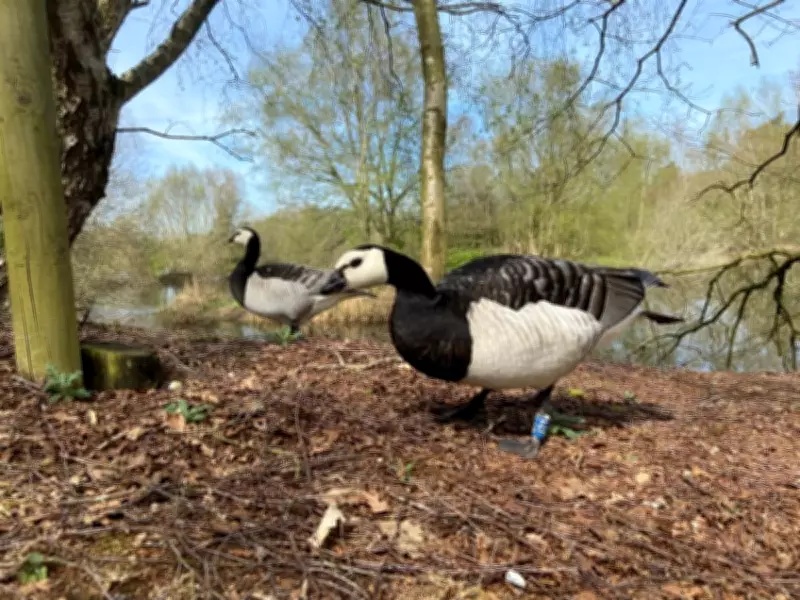
These energetic birds spill across dandelion-dappled grass in yapping groups, with ganders chasing one another in barrel-bellied displays. Their chalk-white faces and velvet-black hoods create striking visual contrast against the Norfolk landscape, while their neat black bills expertly pluck at the sweet March grass.

Tracking the Mystery Geese
The origins and movements of these Norfolk-breeding geese have fascinated wildlife experts for years. Holkham's senior warden Andy Bloomfield initially pondered their mysterious appearance and winter destinations. This curiosity led to collaborative research efforts with ornithologist Kane Brides, who studies British barnacle geese of captive origin.
In July 2021, a comprehensive ringing operation took place at dawn. The flightless, moulting flock was carefully herded onto the lake, where canoeists guided them into a corral. Approximately 400 birds received both standard rings and numbered Darvic rings during this single session, creating what researchers humorously describe as "criminal records" for monitoring purposes.
Migration Patterns Revealed
The ringing program yielded immediate insights into the geese's movements. Within days of regrowing their primary feathers in August, the tagged birds revealed their winter destination: Southwold, located approximately 70 miles to the southeast. There, they joined the breeding flock from Pensthorpe, whose members descend from deliberate releases during the 1980s.
This migration pattern demonstrates how these transplanted birds have adapted to English conditions while maintaining seasonal movements. Their successful breeding represents what observers describe as "quiet defiance of their genes"—animals originally from Arctic tundra environments now thriving in Norfolk's comparatively mild climate.
Ecological Significance and Personal Connection
For local naturalists who remember when barnacle geese were rare winter visitors, their establishment as breeding residents represents both ecological change and personal delight. The birds' transformation from mysterious migrants to familiar neighbors illustrates nature's capacity for adaptation.
The Holkham flock continues to be monitored through their distinctive rings, providing ongoing data about their movements, survival rates, and population dynamics. Their successful establishment serves as a testament to both natural adaptation and careful conservation observation, creating a living connection between Siberian ancestry and Norfolk's contemporary landscape.






