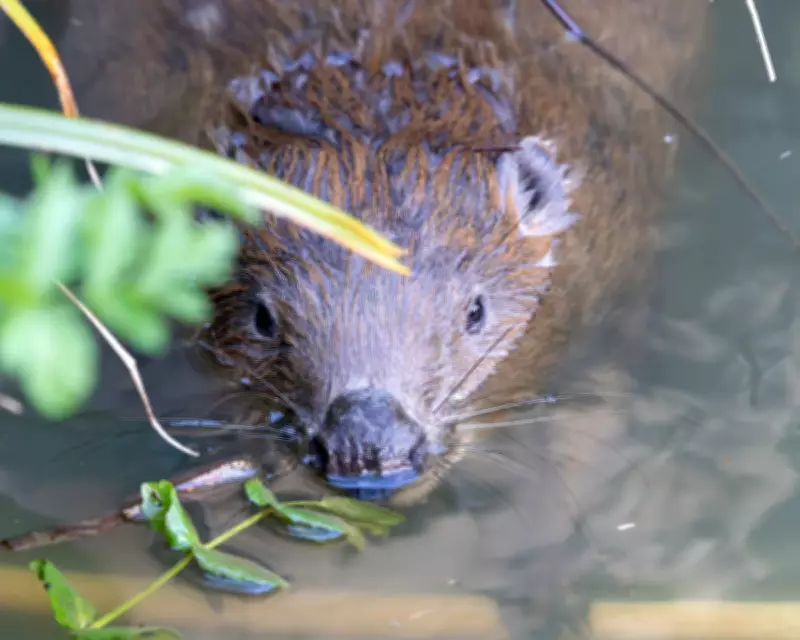
Beavers 'Breathe New Life' Into Dorset as Dams Built and Biodiversity Returns
The National Trust has delivered an enthusiastic end-of-year report on England's first official beaver reintroduction project, celebrating how these industrious mammals have transformed their Dorset home in just twelve months. Released with considerable fanfare and cautious optimism last year, the beavers represent the first official return of these semiaquatic mammals to English wildlands since they were hunted to extinction four centuries ago.
Remarkable Habitat Engineering
According to the National Trust's detailed assessment, the beavers have been remarkably busy reshaping their new environment on the Isle of Purbeck in Dorset. The mammals have felled numerous trees to construct an impressive 35-meter dam that has significantly slowed stream flow while creating a deep, wildlife-rich pool. This engineering feat has already demonstrated multiple ecological benefits.
The habitat transformation has been nothing short of astonishing, according to Gen Crisford, the National Trust's wetlands project officer. "From dense tangled woodland, the beavers have created a light and airy wetland teeming with life above and below the water," she reported. The beavers' coppicing activities have allowed more sunlight to penetrate the canopy, dramatically improving conditions for plants, insects, amphibians, birds, and bats.

Biodiversity Boom and Flood Prevention
Trail cameras monitoring the area have captured compelling evidence of the ecosystem's rapid recovery. An otter has been observed fishing in the newly created pond, while a barn owl has been documented hunting in the same area. Volunteers have spotted various bird species including redpolls and water rails taking advantage of the enhanced habitat.
Perhaps most significantly, the cameras captured footage of two beavers mating, suggesting the animals have successfully settled into their new environment. This development raises hopes for the arrival of beaver kits this summer, which would mark another milestone in the species' recovery.
The engineering work may provide practical benefits beyond biodiversity enhancement. Early indications suggest the beavers' dam-building activities could help prevent flooding on a nearby road during heavy rainfall by slowing water flow through the watershed.
Challenges and Setbacks
The reintroduction has not been without difficulties. Two pairs of beavers were originally released into Little Sea, a freshwater lake on the Isle of Purbeck. The western female beaver promptly left the area, eventually appearing in the seaside town of Swanage several miles away, possibly after swimming across Swanage Bay. She was safely captured and returned to the project area.
Later, both western beavers appeared at a Wessex Water treatment works, requiring temporary fencing to discourage their presence. They eventually settled in a wet woodland area near Little Sea, where they have been actively engineering their environment.
Tragically, the male beaver released on the eastern side was found dead in Swanage Bay, possibly from salt water poisoning. There have been no recent confirmed sightings of his female counterpart.
Gen Crisford acknowledged these setbacks as inevitable aspects of wildlife reintroduction. "You're not controlling all of the factors in the environment and wild animals do have a hard existence sometimes, especially with climate change," she explained. "But we may be having a happy ever after moment now."
Broader Conservation Context
The officially reintroduced beavers have joined another pair that arrived at Little Sea through unknown means several months before the National Trust received its government license. That established pair has already raised three kits and constructed two substantial lodges on opposite sides of the 33-hectare lake.
Ben McCarthy, head of nature conservation at the National Trust, emphasized the project's broader significance. "This reintroduction demonstrates how positive political action can result in tangible ecological recovery in a really short space of time," he stated.

The ambitious project allows for the release of 10 to 25 adult beavers, with the next release anticipated this autumn. Conservationists are eagerly monitoring the existing beavers' activities while preparing for future introductions that could further enhance ecosystem recovery across the region.
The National Trust continues to document the beavers' impact on Dorset's landscape, celebrating each new species that appears in the revitalized wetland habitat. From dragonflies and diving beetles to frogs and newts, the cascade of biodiversity returning to the area provides compelling evidence of nature's resilience when given appropriate support and protection.