War's Toxic Legacy: Black Sea Dolphins Face Extinction Amid Conflict
In the embattled harbors of Odesa, a scientific vessel named the Boris Alexander lists helplessly in its mooring. Damaged by Russian drones and shelling that have relentlessly struck this Ukrainian port city over four years of brutal conflict, the research ship remains untouched. No one can safely assess its condition, just as no one can fully monitor the catastrophic environmental damage unfolding in the Black Sea.
A Silent Ecological Catastrophe
"We can only wait," states Dr. Jaroslav Slobodnik, director of the Environmental Institute headquartered in the Slovak Republic. "The biodiversity landscape is completely altered. Numerous species appear to have vanished, but we desperately need more data. Data that the ongoing war makes impossible to collect."
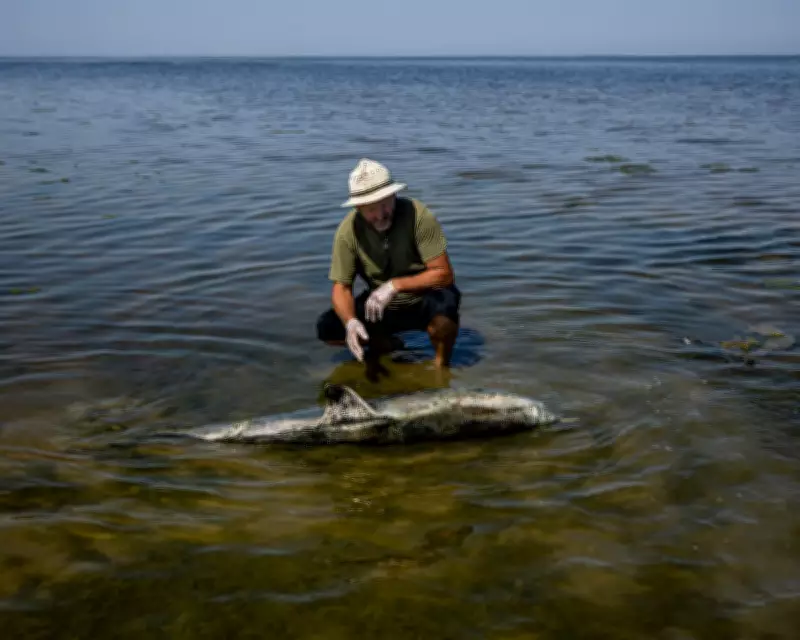
Before Russia's full-scale invasion in February 2022, three distinct dolphin species thrived in the Black Sea. Since the conflict began, poisoned dolphin carcasses have washed up with alarming regularity along Ukraine's extensive 1,729-mile coastline. Scientists documented approximately 125 bodies during the invasion's first year alone, followed by 49 more last year.

Dolphins as Environmental Sentinels
"The dolphins serve as the sentinels of the sea's ecology because they occupy the top of the food chain," explains Slobodnik. The impact of thousands of bombs, massive oil leaks, and deliberately sunk ships remains largely unknown. "All we can definitively state is that the Black Sea has reached a tipping point, perhaps even passed it, due to this devastating war."
Beyond visible pollution, acoustic disturbance from intensive military sonar presents a critical threat to cetaceans. Both ships and submarines generate sonar that likely causes dolphin strandings and deaths, particularly around strategic locations like the Kerch Bridge and Russian-controlled territories.
The Kakhovka Dam Disaster
Nearly three years have passed since the catastrophic Kakhovka dam collapse in June 2023, an event widely attributed to Russian sabotage. The disaster killed dozens of people while flooding approximately 230 square miles of land. More significantly for marine ecology, it poured massive quantities of pollutants and heavy metals from the Dnipro River directly into the Black Sea.
Toxic waste and decomposing animal carcasses settled into the river delta's sediment, creating what Slobodnik describes as "a toxic punch to the face of the Black Sea."
A Unique Ecosystem Under Siege
Before the invasion, Ukraine had made substantial progress toward achieving European Union environmental standards for its waters. In 2020, officials proudly declared the Black Sea "alive again" after decades of contamination from industrial chemicals and agricultural pesticides. Tens of thousands of euros had been invested in improving water purity and biodiversity.
"It represents such a unique ecosystem," reflects Slobodnik. "I've spent most of my life observing life gradually return to the Black Sea, watching pollution decrease and the Danube River improve, which in turn helped the Black Sea recover. This is my sea. And now this war. We believe the ecology has been radically changed and damaged."
Scientific Monitoring Amid Danger
Satellite imagery reveals dozens of Russian vessels anchored off occupied eastern shores and the Crimean peninsula. Viktor Komorin, a marine scientist at the Ukrainian Scientific Centre of Ecology of the Sea, notes: "We believe much of Russia's shadow fleet operates there. Numerous sinkings and damaged vessels, particularly near Snake Island early in the war, have produced oil spills visible via satellite. However, we cannot conduct proper work on these spills. We can only monitor multiple pollutants that are extremely aggressive and toxic."
Komorin has participated in dozens of scientific Black Sea expeditions and fears the conflict is taking an irreversible toll. "It's a uniquely vulnerable ecosystem already threatened by climate change and organic pollution," he explains. "Eighty-two percent of its volume consists of hydrogen sulphide where only bacteria can survive. Only the very top surface layer contains oxygenated water."

Building Evidence Despite Obstacles
Despite the dangers, Ukrainian scientists continue their work under extraordinary circumstances. Komorin's institute in Odesa painstakingly builds a unique environmental DNA database using samples from dolphin carcasses' stomachs. They also analyze oils and pollutants appearing along the coastline.
Proper monitoring remains severely hampered by the ongoing conflict. Fewer people are available to conduct counts, and war-weary Ukrainian citizens report fewer sightings. The Crimean peninsula, occupied by Russian forces, has become an inaccessible no man's land for researchers.
Komorin acknowledges the damaged oceanographic research ship Boris Alexander would be high-risk to deploy even if seaworthy. "We already know there are numerous dangerous objects out there—rockets, mines, drones, and other explosives," he states.
Hope for Post-War Recovery
The scientific community faces additional challenges with reduced staffing. "We retain only half our staff here," Komorin reveals. "Men have joined the army, while female staff with children have gone abroad. We trust they will return after the war concludes."
Despite the grim circumstances, Komorin maintains hope that dolphin populations could eventually recover through rehabilitation efforts once hostilities cease. For now, scientists continue their vital monitoring work, collecting whatever data they can while anxiously awaiting the day when comprehensive environmental assessment becomes possible again in the Black Sea.