On a crisp December morning along the North Norfolk coast, a familiar winter spectacle unfolds. The air fills with a chorus of low, guttural calls as thousands of dark-bellied Brent geese descend upon the shoreline, transforming a quiet pier into a bustling hub of avian activity.
A Pier Transformed into a Birdwatcher's Paradise
The scene is set at a specific pier, a structure more accustomed to human visitors seeking sea views. Yet, in the depths of winter, its primary attraction becomes a vast, shifting congregation of Brent geese. These medium-sized, black-and-white geese are not mere visitors; they are central performers in an ancient migratory ritual.
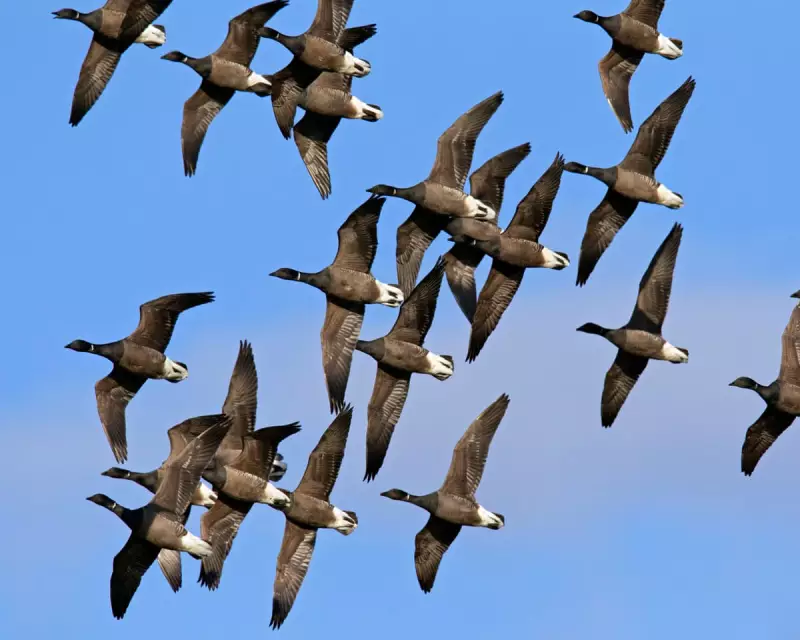
Observers note the geese's distinctive dark bellies, a key identifier for the Branta bernicla bernicla subspecies that winters here. Their arrival is not a quiet affair. The air resonates with their constant, conversational murmuring—a sound described as a rolling, guttural "rurr-rurr" that forms the soundtrack to the coastal scene.

The gathering is immense, with numbers swelling into the thousands. They carpet the mudflats and shallow waters, creating a living, breathing tapestry of movement and sound. Their presence turns the pier from a simple man-made structure into the perfect vantage point for witnessing one of Britain's most impressive winter wildlife events.
The Vital Journey of the Dark-Bellied Brent Goose
These geese are not UK residents. They are long-distance travellers on an epic annual journey. Each autumn, they undertake a arduous migration from their breeding grounds on the remote, frozen tundra of Siberia's Taymyr Peninsula. Their destination: the relatively mild estuaries and coastal marshes of the UK, with sites in Norfolk being critically important.
Their winter diet here is specialised and vital. They feast almost exclusively on eelgrass (Zostera) and green algae (Enteromorpha), which grow on the tidal mudflats. This rich, vegetative bounty fuels them through the British winter, providing the energy reserves needed for the return flight to the Arctic come spring.
This makes the preservation of these coastal habitats absolutely non-negotiable for the species' survival. The intertidal zones are their lifeline, and any threat to these areas—from pollution to development or climate change—directly threatens the geese.
More Than a Spectacle: A Sign of Ecological Health
The breathtaking sight of thousands of geese wheeling over the water at dusk is more than just a visual treat. It represents a successful, though fragile, ecological link between continents. The geese's consistent return to this specific pier and its surrounding environment is a positive indicator of the health of this particular stretch of coastline.
Their presence signifies that the mudflats are productive, the eelgrass beds are intact, and the area remains a safe haven from excessive disturbance. For conservationists and birdwatchers alike, the geese are a living barometer of the state of our coastal ecosystems.
Witnessing this event underscores a powerful truth: sometimes, the most compelling attractions are not built by human hands but arrive on the wing. The pier, for a season, ceases to be just a piece of infrastructure and becomes a front-row seat to a timeless natural drama—a reminder of the wild rhythms that persist just beyond our doorsteps.
As one observer might reflect, the true value of such a place in winter is measured not in human footfall, but in the number of geese that find sanctuary there, filling the salt-tinged air with their primordial chorus.