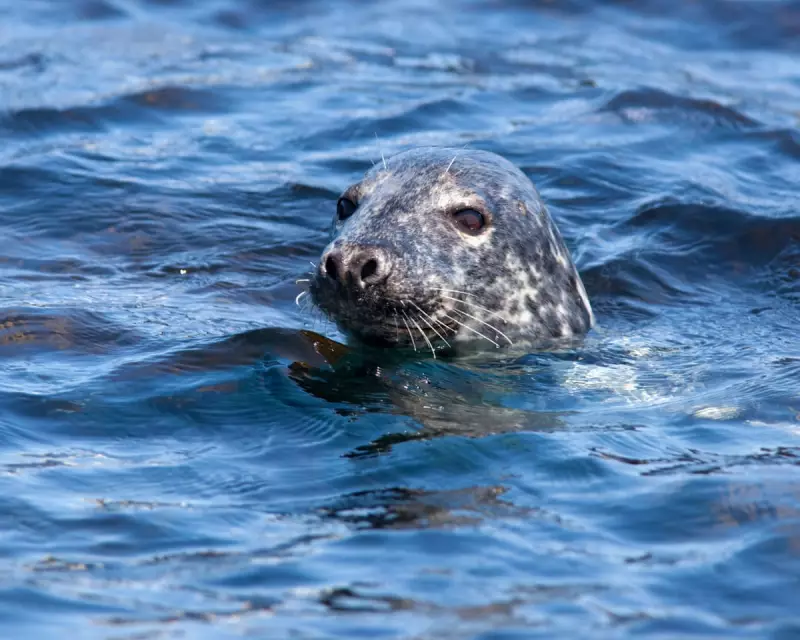
A quiet winter walk along the Norfolk coast transformed into an unforgettable wildlife spectacle for one observer, who found themselves within touching distance of a wild grey seal.
A Serene Start on the Saltmarsh
The encounter began on the morning of Sunday, 22nd December, in the expansive saltmarshes near Stiffkey, a location famed for its natural beauty. The observer was navigating the familiar, winding channels of the marshes, a landscape characterised by its creeks and samphire beds. The air was crisp, and the light held the unique, soft quality of a winter's day, casting a gentle glow over the mudflats and grasslands.
The peace of the scene was profound, broken only by the distant calls of wading birds and the whisper of the wind through the reeds. It was in this tranquil setting that a movement in one of the shallow, muddy channels caught the eye. There, resting in the murky water, was a large grey seal.

An Intimate Moment with a Marine Giant
What made this sighting extraordinary was the proximity. The seal was astonishingly close, allowing for a detailed observation rarely possible in the wild. The observer could clearly see the texture of its speckled, greyish-brown coat, wet and sleek from the water. Most striking were the creature's facial features: its large, dark eyes held a calm, almost curious expression, and the observer noted with fascination the visible flaring of its nostrils as it breathed.
The seal remained motionless for a long period, creating a silent, shared moment between human and animal. It seemed utterly at ease in its chosen resting spot, a shallow creek that would soon be filled by the incoming tide. This behaviour highlighted the seal's adaptation to the intertidal zone, using these quiet periods between tides for rest. There was no sense of alarm from the animal; it was simply a wild creature going about its daily life in its natural habitat.
The Rhythm of the Tide and Coastal Life
This intimate encounter served as a powerful reminder of the rich biodiversity supported by Britain's coastal ecosystems. The Norfolk saltmarshes are a crucial environment, acting as a nursery for fish and a feeding ground for countless bird species. For marine mammals like the grey seal, these areas provide sheltered havens.
The experience underscored the importance of the tidal rhythm that governs life on the coast. The seal's peaceful rest was timed with the low water, a temporary pause before the channel once again became navigable. The observer reflected on the privilege of witnessing such a raw and unscripted moment of nature, a scene that required nothing but patience, respect, and a little luck.
Encounters like this emphasise the value of preserving these wild coastal spaces. They are not just scenic landscapes but vital, working habitats where spectacular wildlife dramas unfold daily, often unseen. For anyone walking the British coastline in winter, it pays to move quietly and look carefully—you never know what might be resting in the next creek.