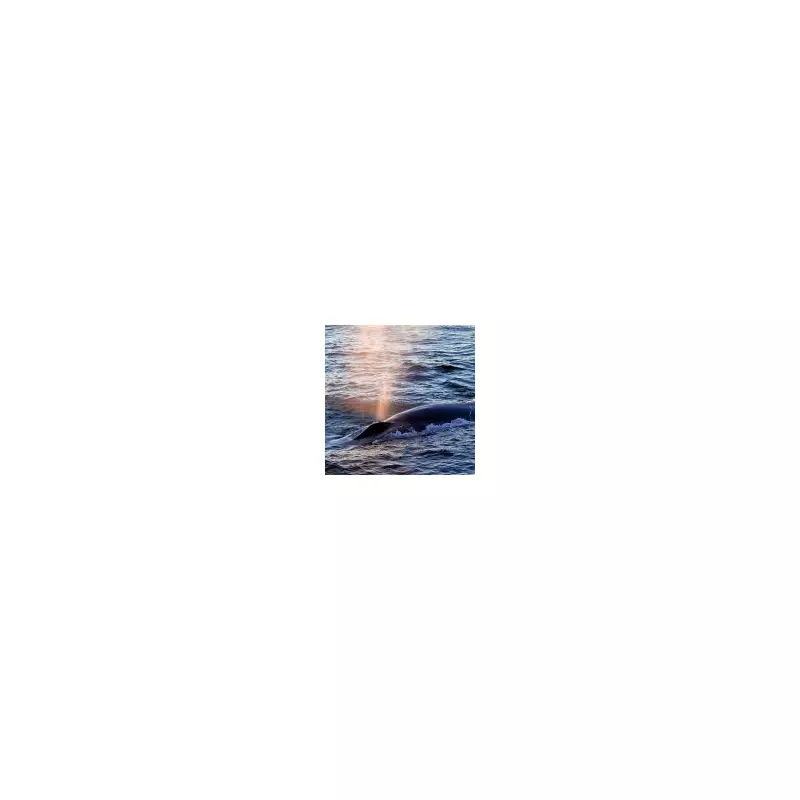
In a significant scientific breakthrough, researchers have successfully used drone technology to detect a deadly and highly infectious virus in the breath of whales swimming in the Arctic Circle.
A Game-Changer for Marine Surveillance
The pioneering study, conducted by a team from King’s College London, The Royal (Dick) School of Veterinary Studies, and Norway's Nord University, employed drones fitted with petri dishes to capture droplets from whale 'blows'—the exhaled breath released when the mammals surface. Analysis of these samples confirmed the presence of cetacean morbillivirus, a pathogen known to devastate populations of whales, dolphins, and porpoises.
Professor Terry Dawson from King’s College London heralded the method, stating it provides ‘critical insights’ into marine health without causing any harm to the whales. This non-invasive approach marks a stark contrast to traditional, more intrusive sampling techniques.

Widespread Infection and Winter Concerns
The research, with findings published on December 20, 2025, examined several species in the north-east Atlantic Ocean, including humpback, sperm, and fin whales. The virus was identified in a stranded pilot whale in northern Norway. Additionally, herpesviruses were found in humpback whales off the coasts of Norway, Iceland, and Cape Verde.
Cetacean morbillivirus, first discovered in 1987, is alarmingly contagious across species and can spread across entire ocean basins, causing mass mortality events. It is believed to be a leading cause behind the dozens of whale strandings that occur annually, with up to 2,000 cetaceans beaching themselves every year. The virus attacks the respiratory, neurological, and immune systems of its hosts.
The latest findings have raised particular concern about potential outbreaks during the winter feeding season, a time when whales, seabirds, and humans are in closer proximity, potentially facilitating cross-species transmission.
Long-Term Health Monitoring
Helena Costa of Nord University explained that this drone-based method will be deployed for ‘long-term surveillance’ to track how such viruses impact whale populations over time. Alongside the breath samples, the study also collected skin biopsies and one organ sample for comprehensive testing.
Scientists are confident that this cutting-edge equipment represents a ‘game-changer’, enabling threats to marine life to be identified and monitored long before they escalate into rapid, widespread epidemics, offering a new hope for the conservation of these majestic ocean giants.