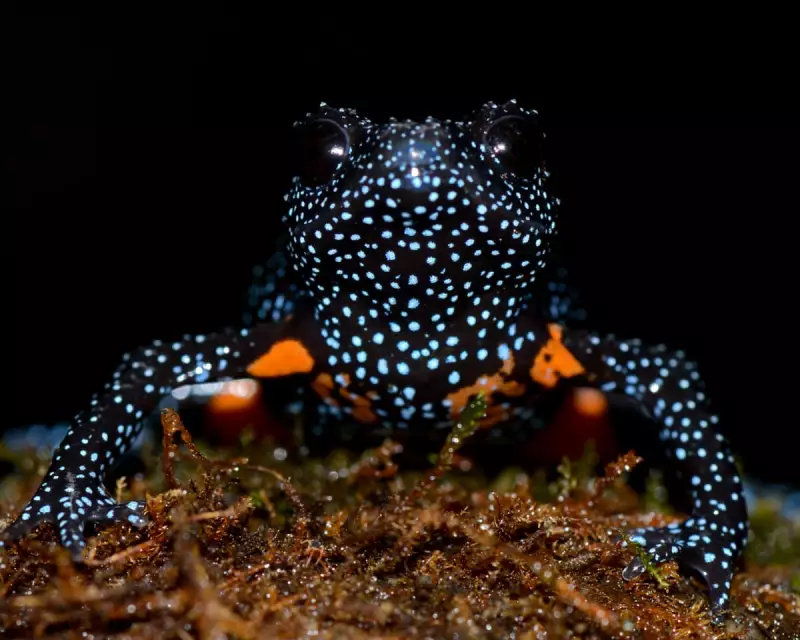
A critically endangered and "magical" species of frog, known as the galaxy frog, has vanished from a known site in India after its habitat was reportedly destroyed by photographers seeking the perfect shot.
Discovery and Disappearance of a 'Magical' Species
Rajkumar K P, a fellow and researcher with the Zoological Society of London (ZSL), first discovered seven of the tiny Melanobatrachus indicus frogs in the Western Ghats rainforest of Kerala, India, in early 2020. Each frog is only the size of a human fingertip. He was captivated by their unique appearance, describing them as jet black until light reveals a spectacular pattern of spots. "It's just magical," he said. "You feel like they're jet black in colour, but when you put them under light you can find all the stars – like galaxies on their bodies."
Unable to visit the site during the Covid-19 pandemic, Rajkumar returned later to find the frogs gone. According to a ZSL report, the large fallen log that served as their home was completely broken and misplaced, with the surrounding vegetation trampled.

Photographers Blamed for Habitat Destruction
Initially suspecting animals like brown mongooses, Rajkumar's enquiries with local trackers revealed a different story. They reported that several small groups of nature photographers had been visiting the location. The photographers were allegedly turning over logs in search of the rare frogs and, upon finding them, would capture and pose them for photographs without wearing protective gloves.
This handling is particularly dangerous for amphibians like the galaxy frog, which breathe through their sensitive skin. One tracker told Rajkumar that on one occasion, the photographers had relocated five or six frogs for better photo opportunities, and two of the delicate creatures died after being handled for too long.
An 'Irreplaceable' Loss and Calls for Ethical Action
Repeated searches of the site in the following months failed to locate any more galaxy frogs, leaving Rajkumar feeling "helpless". He also highlighted a systemic issue, stating that while forest department officers try to prevent such activities, some groups use connections to high-ranking officials to gain access.
Dr Benjamin Tapley, ZSL’s curator of reptiles and amphibians, emphasised the gravity of the loss. He described the galaxy frog, the only species in its family, as likely representing an "ancient" and "irreplaceable" branch on the tree of life. "I grimace every time I see a photo come up on my feed of a galaxy frog," Tapley said. "I just wonder what happened? How was that taken? How was the habitat impacted?"
The incident has sparked a renewed call for ethical wildlife practices. "We're really hopeful that we can encourage people to act more ethically so that incredible species like the galaxy frog can continue to thrive for millions more years," Tapley urged. The fate of this particular group of galaxy frogs remains unknown, serving as a stark warning about the impact of irresponsible human intervention on fragile ecosystems.