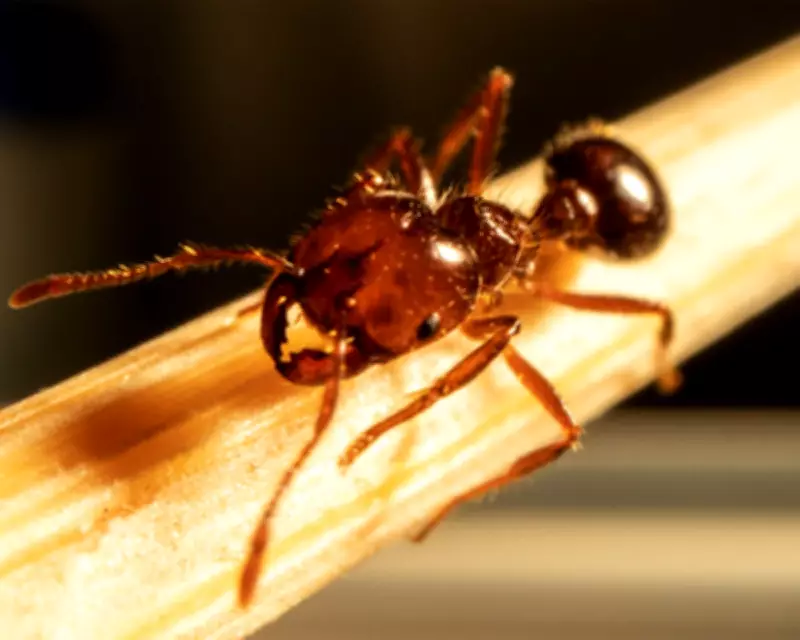
Fire Ant Invasion Escalates with Brisbane Park Discovery
The discovery of a red imported fire ant nest in Brisbane's beloved New Farm Park has sent shockwaves through the community, raising urgent concerns that containment efforts against this destructive invasive species are beginning to fail. This detection at one of the city's most iconic public spaces signals a potentially dangerous expansion of the fire ant infestation that has plagued southeast Queensland for decades.
Sports Disrupted as Ants Advance
Just hours before a scheduled women's football match between Newmarket and New Farm United, coaches received the disappointing news that the game had been postponed indefinitely. "We didn't know why," explained coach Craig Hughes, who initially assumed weather was to blame. "Later, we learned it was actually because of ants."
This cancellation represents just one of numerous recent disruptions to sporting activities across the region. From rugby league at Redbank Plains to Australian rules football at Coorparoo and soccer at Redlands United, fire ants have forced last-minute postponements of training sessions and competitive matches throughout southeast Queensland.

A Threat Beyond Simple Nuisance
Federal authorities describe red imported fire ants as "one of the worst invasive species to reach Australia," warning they could irrevocably alter the country's ecosystems, agricultural industries, and way of life. These aggressive insects swarm when disturbed and deliver painful stings that can burn and itch for up to an hour, with rare cases of fatal allergic reactions.
Reece Pianta, advocacy manager for the Invasive Species Council, emphasizes the significance of the New Farm Park discovery. "If we don't eradicate fire ants, this is going to happen everywhere in the country," he states. "Brisbane is getting a taste of it now."
Containment Efforts Under Strain
The current fire ant situation stems from an incursion first detected in Brisbane in 2001, though experts believe the ants may have arrived as early as the 1980s. Until recently, suppression efforts had contained the infestation to approximately 850,000 hectares in southeast Queensland. However, 2023 proved to be what the Invasive Species Council called "a crisis year," with fire ants repeatedly breaking containment zones.
"These are signs that the fire ant containment dam is cracking," the council warned. The infestation has now expanded to cover more than 1 million hectares—an area equivalent to greater Sydney—with nests discovered as far as 800 kilometers from the original containment zone and even in World Heritage rainforest areas.
Scientific Perspectives on Eradication
Professor Nigel Andrew, an entomologist at Southern Cross University, believes eradication using current techniques is no longer feasible. "A fire ant nest in New Farm Park was inevitable," he asserts, warning that next spring could bring an outbreak of hundreds more nests. Andrew's recent research criticizes the large-scale use of non-specific pesticides in the fire ant fight.
"Sporting fields are prime habitat for fire ants," Andrew explains. "They like those environments which we call manicured and they probably look at them as highly disturbed, which is actually perfect." He suggests Australians look to southern U.S. states, where fire ants have been established since the 1930s and cost billions annually to manage.
Funding Concerns and Future Outlook
Adding to the urgency, state funding for suppression efforts expired in July, creating uncertainty about continued containment operations. The New Farm Park discovery holds particular symbolic weight as the heritage-listed park represents one of Brisbane's most significant public spaces, featured in tourism promotions and even the popular children's program Bluey.
While Andrew remains hopeful that future research may yield breakthroughs in fire ant suppression, the immediate outlook appears challenging. As these invasive insects continue their march across Queensland, communities face not only disruptions to daily activities but also the long-term ecological and economic consequences of an established fire ant population.