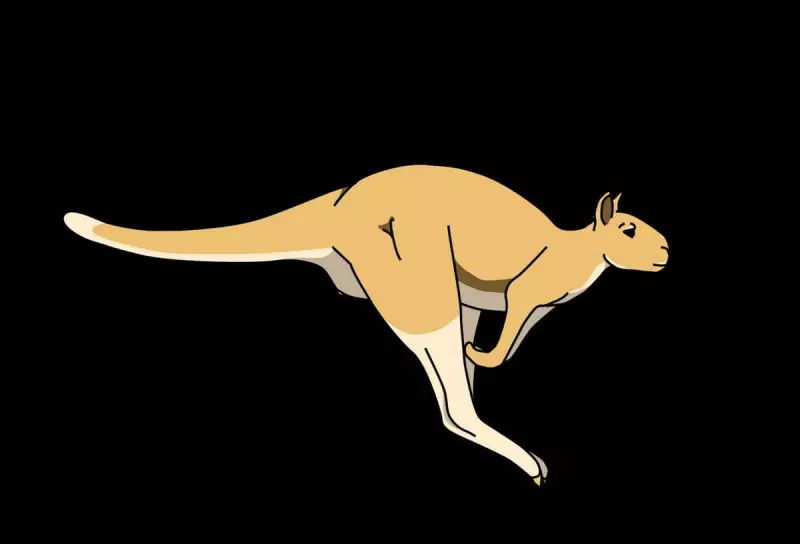
Groundbreaking research has revealed that giant kangaroos weighing up to 250 kilograms, which once roamed Australia, would probably have been capable of hopping despite their enormous size. This finding challenges long-standing debates about the mobility of these extinct relatives of modern kangaroos.
New Approach to Ancient Anatomy
Unlike previous studies that extrapolated from modern kangaroo anatomy, Dr Megan Jones from the University of Manchester and her colleagues took a novel approach. They examined fossils from various giant kangaroo species, including sthenurines – short-nosed browsing kangaroos that lived between 13 million and 30,000 years ago.
"They get up to 250kg, whereas the most we get today in the red kangaroos is 90kg at the absolute most," explained Jones, the lead researcher on the study published in Scientific Reports.

Examining Tendon and Bone Strength
The team also analysed fossils from Protemnodon species, which lived between 5 million and 40,000 years ago, and giant Macropus species that resembled larger versions of today's kangaroos. For each species, researchers estimated the strength of the Achilles tendon in the ankle – crucial for hopping – and the bone strength of the fourth metatarsal, the least robust bone in the hindlimb.
"It's no use if their tendon is fine, but their bones are going to start breaking [if they hop]," Jones noted, highlighting the importance of examining both elements.
Surprising Structural Adaptations
The results showed that all studied giant kangaroos had fourth metatarsals strong enough to support hopping. Their heel bones also had sufficient space to accommodate tendons thick enough for such movement.
While some researchers previously suggested thicker tendons might hinder hopping, the current study indicates this is unlikely. The researchers point to modern hopping creatures like kangaroo rats, which have relatively thick tendons yet use hopping to navigate difficult terrain and escape predators.
Limited Hopping Capabilities
Jones suggested giant kangaroos might have used hopping for similar purposes but emphasised they probably couldn't hop for long distances or durations. "It is entirely possible that, as well as using hopping more infrequently, or over shorter distances, the giant kangaroos may have reduced stresses by hopping more slowly," the authors added in their paper.
However, Jones clarified that the study only demonstrates hopping was feasible for these animals, not that they necessarily did so regularly. Other modes of movement remain possible, with previous studies suggesting sthenurine kangaroos might have strode on their tiptoes.
"Any kangaroo is going to be using a combination of gaits, some for going slow, some for going fast," Jones observed.
Expert Perspectives on the Findings
Dr Gilbert Price, a palaeontologist at the University of Queensland who wasn't involved in the research, praised the study's approach. "It shows that the giant kangaroos changed their proportions in ways that made hopping mechanically possible, even if it was less efficient than in modern species," he said.
Price emphasised the study's careful conclusions: "It doesn't say these animals hopped across the landscape like modern red kangaroos, just that hopping wasn't off the table, and that's an important distinction."
Implications for Understanding Extinction
This research could help illuminate why giant kangaroos went extinct. "If you want to understand why these animals went extinct, you first have to understand what they were actually like," Price explained. "Bringing the focus back to their biology and ecology isn't just extra detail, but is central to understanding what happened."
The study represents a significant advancement in palaeontological understanding, moving beyond speculation to evidence-based analysis of how these remarkable creatures might have moved through their ancient environments.