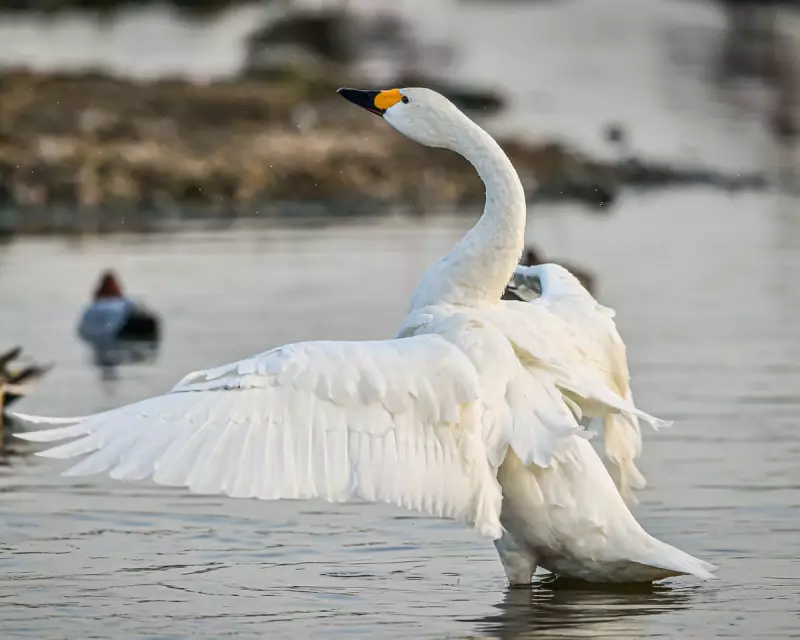
The results of a major international wildlife survey have painted a detailed picture of the health of two iconic migratory swan species visiting the British Isles. The 2026 International Swan Census, a coordinated effort across multiple countries, has provided crucial data on the populations of Whooper swans and Bewick's swans wintering in the UK and Ireland.
Census Reveals a Mixed Picture for Migratory Swans
The census, which took place on the weekend of 15-16 January 2026, involved hundreds of volunteers and experts from conservation organisations. The key focus was to count every single Whooper swan (Cygnus cygnus) and Bewick's swan (Cygnus columbianus bewickii) across their wintering grounds. This rigorous count occurs every five years, offering a vital long-term view of population trends for these protected birds.
Initial analysis of the data shows a complex and diverging story for the two species. The population of Whooper swans, which breed in Iceland and migrate to the UK and Ireland, appears to be stable or even increasing slightly. This is positive news for conservationists, suggesting that conditions in their breeding and wintering habitats are currently sufficient.

In stark contrast, the census indicates a continued and worrying decline for the smaller Bewick's swans. These birds undertake a much longer migration from the Russian Arctic tundra. Their numbers have been falling for decades, and the 2026 count suggests this trend has not been reversed. Experts point to a range of potential threats along their arduous flyway, including habitat loss, hunting, and collisions with power lines.
The Critical Role of Long-Term Monitoring
Dr. Julia Newth, a well-known swan expert involved with the census, emphasised the importance of this five-yearly snapshot. "These coordinated counts are irreplaceable," she stated. "Without this consistent, long-term data, we would be unable to detect the subtle shifts and alarming declines that inform our conservation strategies. The contrast between the Whooper and Bewick's swan fortunes is a powerful reminder of how different populations face unique pressures."
The census is not just a British effort; it is part of a wider European network. Data from the UK and Ireland is pooled with counts from the Netherlands, Germany, Denmark and other wintering countries. This international collaboration is essential because the swans use landscapes that span multiple national borders. A problem in one country can affect the entire population.
What the Findings Mean for Future Conservation
The divergent results will likely lead to tailored conservation actions. For the stable Whooper swan, efforts may focus on maintaining the quality of key wetland sites in Scotland, Northern Ireland, and parts of England. Protecting these areas from development and pollution remains a priority.
For the beleaguered Bewick's swan, the situation demands more urgent and international intervention. Conservation bodies will use the census data to lobby for stronger protections along the entire migration route, known as the East Atlantic Flyway. This could involve working with governments and energy companies to make power lines more visible to birds and safeguarding crucial stop-over feeding sites in continental Europe.
The Royal Society for the Protection of Birds (RSPB) and the Wildfowl & Wetlands Trust (WWT), both key partners in the census, have hailed the dedication of the volunteers. "Counting every swan in often remote and challenging conditions is a huge task," a spokesperson said. "This data is a testament to the power of citizen science and provides the solid evidence base needed to protect these magnificent birds for generations to come."
The full scientific report from the 2026 International Swan Census is expected to be published later in the year, providing even deeper insights into the distribution and demographics of these charismatic winter visitors.