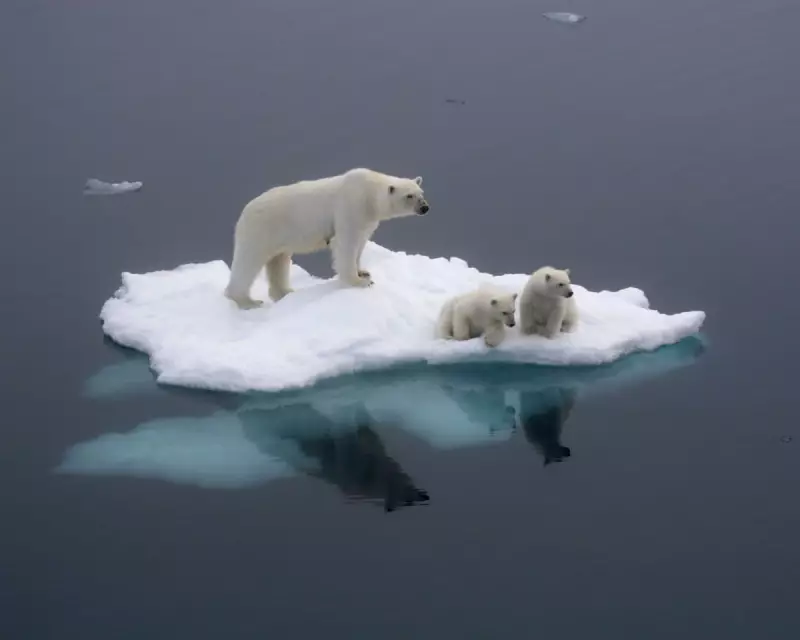
Amid the relentless tide of alarming environmental news, a recent scientific study has offered a rare and complex glimmer of possibility. Research has provided the first statistical evidence that polar bears, the iconic victims of the human-made climate emergency, are changing their DNA in response to the rapidly warming Arctic.
A Symbol Under Siege
For decades, the image of a polar bear stranded on shrinking sea ice has served as one of the most powerful visual shorthand for the devastating impacts of global heating. The Arctic, their home, is warming at a rate far exceeding the global average, making their habitat uniquely and visibly vulnerable. This context makes the new findings on genetic adaptation both striking and profoundly unsettling.
The study marks the first time a statistically significant link has been established between rising temperatures and DNA changes in a wild mammal. Helena Horton, an environment reporter, notes that while it represents "a small piece of hopeful news that animals are adapting," the reality is grim. "This shouldn't be happening," she emphasises. "DNA only changes so rapidly under extreme environmental stress."

The Broader Picture of a Changing World
This forced genetic shift is not an isolated phenomenon but part of a wider pattern of animal adaptation driven by human activity. Species across the globe are being compelled to move locations, alter their behaviours, and even change their physiology.
Reported examples include more octopuses appearing in British waters, tiger moths arriving in Jersey, and birds in Australia developing larger beaks. Bats are evolving bigger ears for more efficient heat exchange. Habitat destruction, intensified by climate change, is also forcing animals like elephants and great apes into increased conflict with humans.
The plight of the rare Tapanuli orangutan in Indonesia was highlighted last week, where population numbers have crashed due to flooding exacerbated by the climate crisis and habitat loss from expanding gold mining.
Balancing Hope with Harsh Reality
For journalists covering the environment, the challenge lies in reporting these scientific developments without downplaying the severity of the overarching crisis. Horton's approach is to let the scientists speak directly. Regarding the polar bear research, the lead researcher was measured, stating that while it offers some hope, it is "not a magic bullet" and that stopping fossil fuel burning remains imperative.
The central, unresolved question is whether wildlife can adapt genetically and behaviourally fast enough to keep pace with the breakneck speed of human-induced planetary change. Currently, the likelihood seems remote. As UK biodiversity indicators showed again last week, species continue to decline, with wild bird populations in particular distress, edging closer to local extinctions.
While moments of positive news exist—such as international cooperation on emissions, leaps in renewable technology, or the unexpected return of a wild beaver to Norfolk after 500 years—they are set against a backdrop of concerning reversals, including spikes in coal use and political rollbacks on climate commitments.
The adaptation of polar bear DNA is ultimately a testament not to resilience alone, but to the extreme pressure humanity has placed on the natural world. It is a signal from a changing Arctic that the time for systemic action is dwindling as fast as the ice.