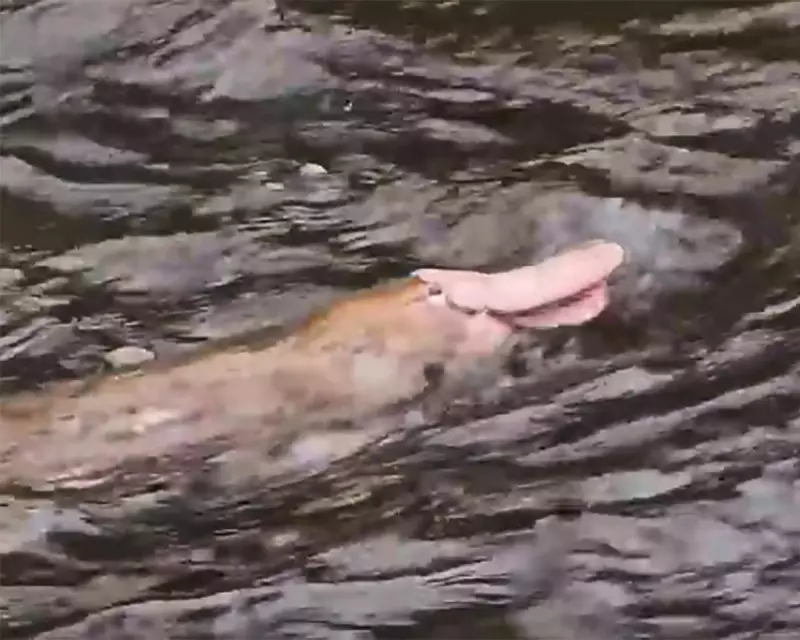
A Victorian fisherman's routine trout fishing trip in September turned into an extraordinary wildlife encounter when he spotted a remarkably pink platypus gliding through a Gippsland waterway.
An Unexpected Pink Visitor
Cody Stylianou initially mistook the creature for a large trout, but its unique movement caught his eye. As it surfaced, he was amazed to see it was a platypus with distinctly pink features. "The bill and feet are super obviously pink," Stylianou said. He managed to film the animal, which he has nicknamed "Pinky," for around 15 minutes as it fed in the tannin-stained river.
The fisherman, who regularly visits the secret Gippsland location to protect the animal, believes this may be the same individual he saw years ago, now older and larger. He noted its pink colouration made it surprisingly easy to track underwater in sunlit areas.

Expert Analysis: Unusual but Not Exceptional
After Stylianou shared his footage online, speculation arose that it could be a rare albino platypus. However, biologist Jeff Williams, director of the Australian Platypus Conservancy, provided a more measured assessment.
Williams explained that platypus colouration varies significantly, much like human hair or skin tone. The individual in the video, while at the extreme lighter end of the spectrum, does not qualify as albino or leucistic. "What I've seen and what every other leading platypus person has looked at... is that it's well within the sort of variation in colour that one would expect," Williams stated.
He described the sighting as "unusual but not exceptional" and cautioned against over-excitement, comparing it to a human genetic quirk like having extra freckles. "Let's put it this way, it's cute, but it's not a breakthrough," he added.
Conservation Context for a Vulnerable Species
The encounter highlights the elusive nature of the platypus, a species many Australians never see in the wild. The International Union for Conservation of Nature lists the platypus as near-threatened, and Williams noted concerning declines in Victorian populations historically.
"Platypus were in significant decline up until about the 1990s when all the impact of European settlement on our waterways was becoming apparent," Williams said, citing habitat destruction and altered river flows as key pressures.
There is some positive news, however. Replanting programs and greater environmental consideration for waterways are beginning to aid population recovery in some areas. "The good news at the moment is most of the survey work... is suggesting numbers are coming back," Williams noted, while emphasising that conservation efforts must not become complacent.
The story of Pinky serves as a charming reminder of Australia's unique biodiversity and the ongoing need to protect its fragile aquatic ecosystems.