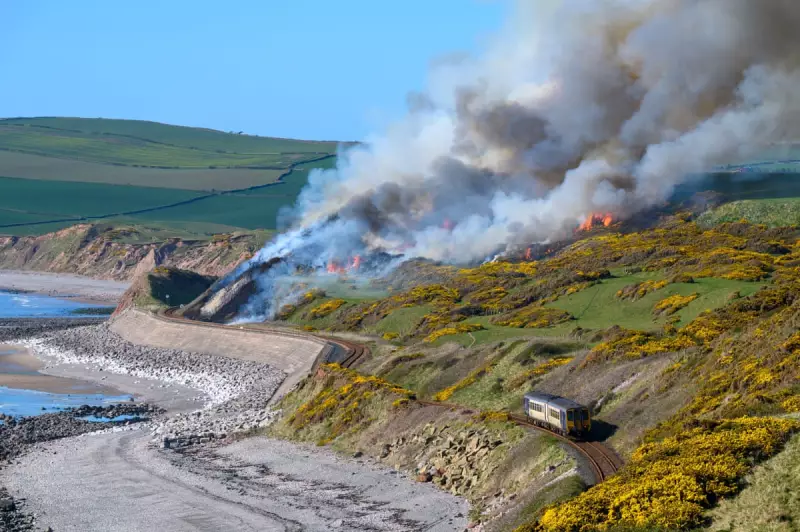
Fire and rescue services across England confronted an unprecedented wave of wildfires during the nation's hottest spring and summer on record, new data reveals.
Unprecedented Scale of the Blazes
Analysis of figures obtained through Freedom of Information requests shows that ten English fire services dealt with a record number of grassland, woodland, and crop fires in the spring of 2025. In total, crews tackled nearly 27,000 wildfires throughout the prolonged dry spell.
The data highlights a dramatic surge in incidents during the key spring period. From March to May, services recorded at least 12,454 fires in vegetation and crops. This staggering figure is more than four times the 2,621 incidents logged in the same period in 2024 and marks the highest spring total in over a decade.

Fire Chiefs Describe 'Most Challenging' Summer
The intense fire season continued into the summer months, with at least 14,448 wildfires recorded from June to August. While this was lower than the extreme summer of 2022, the relentless frequency and intensity placed immense pressure on emergency resources.
Andy Cole, Chief Fire Officer for Dorset and Wiltshire Fire and Rescue Service, stated the season was "one of the most challenging for wildfires that we've ever faced." His service recorded 298 spring incidents, its highest since 2011, followed by 459 in the summer.
"Our firefighters worked around the clock in arduous conditions, often for days at a time, to protect lives, homes, and our natural environment," Cole said. He warned that the increasing severity of wildfires is putting "a strain on resources, such as equipment and finances."
Climate Conditions Fuel the Crisis
The Met Office confirmed that 2025 brought the UK's warmest spring and summer on record, with the highest temperature reaching 35.8C in Faversham, Kent. Spring was also the driest in over a century. This combination of parched soils, minimal rainfall, and above-average heat created a tinderbox environment.
Significant outbreaks were reported nationwide. Services including Tyne and Wear (1,240 fires), Durham and Darlington (719), and West Yorkshire (1,094 spring fires) all reported record numbers. A major incident was declared for a fire on Holt Heath in Dorset in August, which burned for nearly a week, destroyed 72 hectares, and required a national response.
Mick Rhodes, the wildfire lead for West Yorkshire Fire and Rescue Service, highlighted the operational toll: "Moorland fires can burn for days and require a huge response operationally – they're also exhausting for our firefighters."
Kate Saint, Head of Prevention at Devon and Somerset Fire and Rescue Service, praised crews' "exceptional bravery" but stressed prevention is key. "Many wildfires are avoidable and are often caused by everyday activities such as discarded cigarettes, barbecues or fires not properly extinguished," she said.
The figures are believed to be an underestimate, as complete data was only available from 35 of England's 43 mainland fire services.