

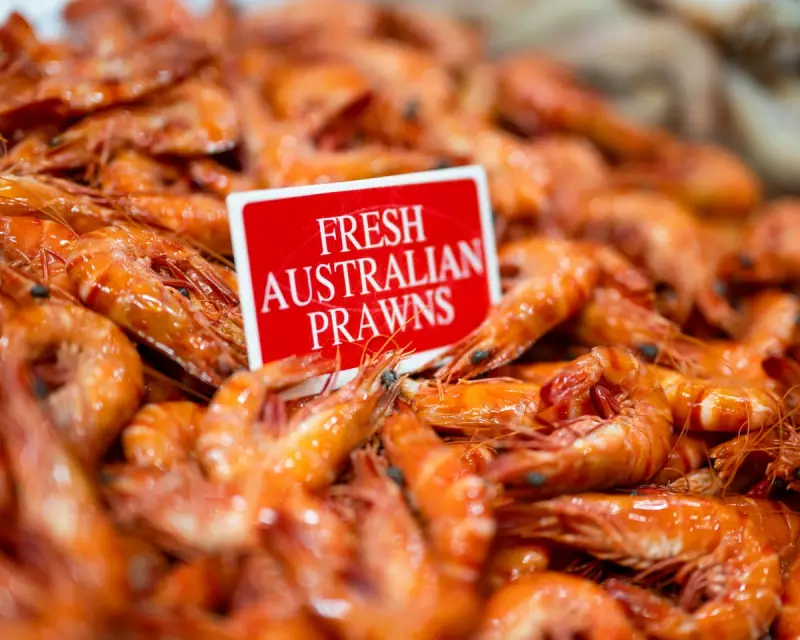
As millions of families across Australia prepare to tuck into prawns and lobsters this festive season, a growing body of scientific research is prompting an urgent ethical rethink. Experts now present compelling evidence that these hard-shelled creatures are sentient beings, capable of experiencing fear, pain, and distress.
The Science of Sentience in Shellfish
Sentience implies an animal possesses the capacity for both positive and negative experiences, can form relationships, learn new skills, and make decisions. Professor Lynne Sneddon, who leads the aquatic animal welfare group at Sweden’s University of Gothenburg, states that decapod crustaceans—the group including prawns, lobsters, and crabs—demonstrate all these traits.
Studies reveal complex behaviours that challenge our perception of these animals. Crabs can solve mazes to find food, remember the route, and use trial and error to adapt when the maze is changed. Furthermore, crustaceans form symbiotic relationships, like the pistol shrimp and goby fish, which cohabit harmoniously, with one standing guard and the other maintaining their shared burrow.

Probing the Question of Pain
The investigation into crustacean pain was spurred two decades ago by a question from seafood chef Rick Stein to Professor Robert Elwood, an emeritus professor of animal behaviour at Queen’s University Belfast. Elwood’s subsequent experiments have consistently shown behaviour and stress responses aligned with the experience of pain.
"We have lots of evidence that fits the idea of pain," Elwood explains. His research shows crustaceans will give up valuable resources to avoid unpleasant experiences and retain memories of harmful events. "Even if you can’t prove it 100%, you should give the animal the benefit of the doubt," he argues.
This evidence casts a harsh light on common industry practices. Crabs and lobsters can remain conscious for over two minutes when placed in boiling water. They are often restrained with cable ties, piled atop one another for transport, and dismembered while still alive. On some prawn farms, a practice called "eyestalk ablation"—cutting the eyes off female prawns to induce spawning—leaves the animals blinded.
A Call for Welfare Reform and Ethical Choices
Professor Culum Brown of Macquarie University describes many standard practices as "horrendous." He notes that for vertebrates, including fish, stunning before slaughter is standard to ensure unconsciousness. There are also pragmatic reasons for reform: stress accumulation in tissues damages the texture, flavour, and shelf-life of the seafood.
Consumer demand is beginning to drive change. Dr Ben Sturgeon, a veterinarian and CEO of Crustacean Compassion, points to the increasing adoption of electrical stunning before slaughter. He and other advocates urge higher welfare priorities in catching, transport, and killing.
The best action consumers can take is to ask questions. Experts advise:
- Avoid purchasing live crustaceans, which almost always involves welfare compromises.
- Seek out products where animals were caught and killed quickly, then flash-frozen.
- Support retailers and suppliers who adopt humane practices.
Legal recognition is evolving. The UK and New Zealand already recognise crustacean sentience in law. In Australia, protection is patchy: the Australian Capital Territory includes them as sentient beings, while South Australia and Tasmania lack specific welfare laws. The national code governing animal science does not currently classify decapod crustaceans as animals.
"They are much more intelligent and emotional animals than most people understand," concludes Professor Sneddon. Her message for the festive season and beyond is clear: "Think more deeply about ethical choices. Find out where they’ve come from, what they’ve gone through." With over 18.5 million kilograms of prawns and 150,000 lobsters consumed in Australia during the Christmas period alone, the call for a compassionate rethink has never been more pressing.






