Landmark US Trial Examines Tyre Chemical's Devastating Impact on Salmon
A federal district judge in San Francisco is presiding over a pivotal environmental case that could determine the future of endangered salmon populations across the United States. The lawsuit, brought by west coast fishers and conservation groups, alleges that a chemical additive used in vehicle tyres is responsible for mass fish deaths in rivers and waterways.
The Decades-Old Mystery of Salmon Mortality
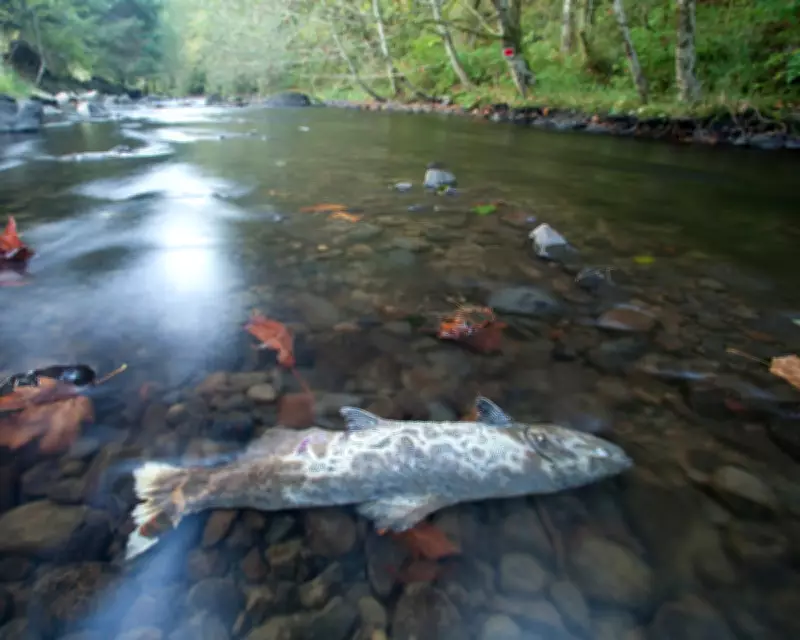
For years, scientists observed a disturbing phenomenon in the Pacific Northwest. Endangered coho salmon would return to their spawning streams only to perish suddenly after heavy rainfall. The fish exhibited bizarre behaviour before death, swimming erratically and gasping at the surface as if struggling for oxygen. Researchers termed this "urban runoff mortality syndrome" but struggled to identify the precise cause.
The breakthrough came in 2020 when Washington State University scientists published a study in the journal Science. Their research identified a toxic substance leaching from car tyres as the likely culprit. The chemical, known as 6PPD-quinone (6PPD-q), forms when 6PPD—a common tyre additive that prevents degradation—interacts with ozone in the atmosphere. This transformed chemical then washes into waterways during rainstorms with devastating consequences for aquatic life.

Fishermen Take Legal Action Against Tyre Manufacturers
The Institute for Fisheries Resources and Pacific Coast Federation of Fishermen's Associations, represented by environmental law group Earthjustice, initiated the lawsuit following multiple scientific studies linking 6PPD to salmon deaths. These commercial fishers argue that their livelihoods depend on healthy salmon populations, which are now threatened by chemical contamination.
"The use of 6PPD in tyres has been shown to harm vulnerable salmon populations," stated Glen Spain, legal counsel for the fishing groups. "Whether or not this should continue will be up to the court."
Scientific Testimony Presents Stark Evidence
During the three-day trial, Judge James Donato heard compelling testimony from Dr Edward Kolodziej, co-author of the groundbreaking 2020 study. Kolodziej explained that tyres represent the primary source of 6PPD-quinone in waterways, with road runoff containing dangerously high concentrations of the chemical.
The scientist presented startling calculations suggesting the scale of potential damage. "Four tyres contain enough of the chemical that, after interacting with ozone, could produce sufficient 6PPD-q to kill more than 11 million salmon," Kolodziej testified. His team identified a distinct mortality signature in water samples taken during fish die-offs, with most chemicals traced back to tyre rubber derivatives.
Defence Challenges Scientific Conclusions
Not all experts agree with the plaintiffs' conclusions. Defence witness Tiffany Thomas, a scientist from consultancy firm Exponent, argued that the research presented was based on laboratory conditions rather than real-world scenarios. She described the findings as "limited and speculative" and questioned whether 6PPD-q even reaches fish habitats in significant concentrations.
"The data available on 6PPD-q is inadequate to reliably predict the presence, phase, and concentration of 6PPD-q in the streams and rivers in the salmonid populations identified in the complaint," Thomas told the court.
Tyre Industry Defends Essential Additive
Representatives for the tyre companies maintain that 6PPD plays a crucial role in vehicle safety. Spokesperson Sam Singer emphasised that the chemical prevents tyre cracking and degradation, with "no suitable alternative" currently available. The industry questions whether the chemical actually reaches fish habitats in the specific locations mentioned in the lawsuit.
"The tyre companies remain committed to working with regulators and are actively participating in regulatory processes to identify a viable alternative to 6PPD," Singer stated. "Any alternative must meet established standards for safety."

Broader Implications for Environmental Protection
The judge must now determine whether tyre manufacturers are violating the Endangered Species Act by harming 24 protected fish populations, including coho salmon. The plaintiffs allege that the companies are knowingly contributing to the decline of these species through chemical pollution.
This landmark case extends beyond American borders, potentially setting precedents for how nations regulate chemical pollutants that migrate from urban environments into sensitive ecosystems. The outcome could influence environmental policies worldwide regarding tyre manufacturing standards and waterway protection measures.
As scientific understanding of chemical contaminants evolves, this trial represents a critical test of environmental legislation's ability to address emerging threats to biodiversity. The decision could reshape how industries consider the ecological impacts of their products throughout their entire lifecycle.