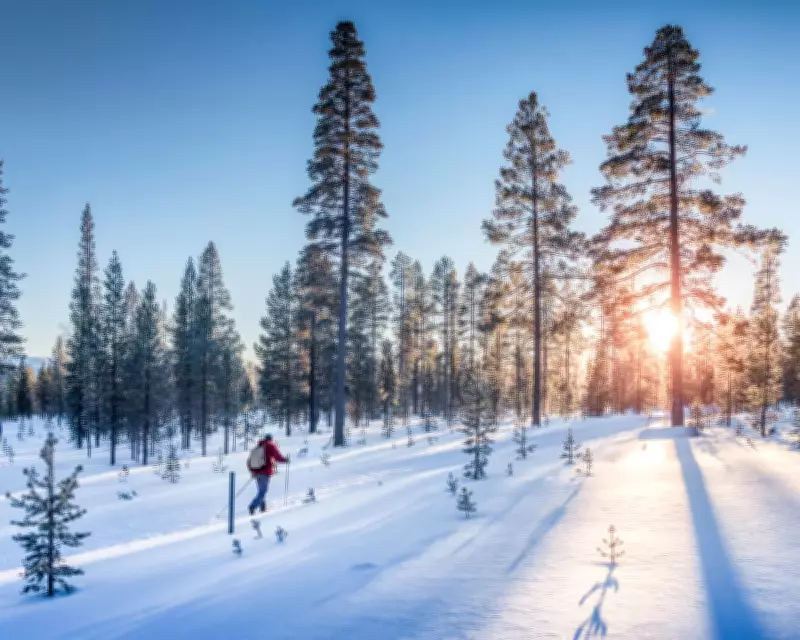
During the recent cold spell that gripped the northern United States, meteorologists issued unusual warnings about a natural phenomenon: exploding trees. This dramatic event highlights the complex and fascinating ways in which trees defend themselves against freezing conditions, employing strategies that range from cellular adaptations to structural vulnerabilities.
The Cellular Defence: Nature's Own Antifreeze
A tree's primary defence against freezing begins with its bark, which acts as an efficient insulating layer, much like a winter coat. However, the real magic happens at a microscopic level. As temperatures plummet, trees enter a state akin to hibernation, undergoing significant cellular changes.
Cells within the tree dehydrate, harden, and shrink, a process that naturally increases the concentration of sugars. This elevated sugar level serves as a botanical antifreeze, effectively lowering the freezing point of the cell sap and helping to prevent the formation of damaging ice crystals. This ingenious mechanism allows trees to withstand cold that would otherwise be lethal.

When Defences Fail: The Sudden Freeze and Frost Cracks
Despite these robust defences, trees can be caught off guard by rapid temperature drops. If a cold snap occurs before a tree has fully acclimatised, the outer layers of wood may still contain significant amounts of water. When this water freezes, it expands, exerting immense pressure on the tree's structure.
In severe cold, this pressure can become too great, causing the tree to split with a sudden, explosive sound. These deep vertical gaps are known as frost cracks. The phenomenon is particularly likely on sunny winter days when the bark, warmed by the sun, experiences a rapid temperature decline as night falls, creating thermal stress.
Historical Accounts and Modern Observations
The dramatic nature of frost cracking has been documented for centuries. In his Encyclopaedia of Gardening from 1822, the horticulturist John Loudon described how a severe winter left many trees "miserably split and cleft," with some literally breaking in two. He noted that these events were "attended with dreadful noises like the explosion of firearms," a description that resonates with modern accounts.
Today, witnesses to these events often report that the sudden, percussive sounds emanating from a dark forest can be deeply unsettling, adding an eerie dimension to the winter landscape.
Ecological Impact and Safety Considerations
While the spectacle of an exploding tree is dramatic, it is not typically dangerous to bystanders, as the cracks are usually contained within the tree itself. However, frost cracks can have significant ecological consequences for the affected trees.
These fissures create openings that may be exploited by insects and fungi, potentially leading to decay and long-term health issues for the tree. Understanding this process is crucial for arborists and conservationists working to protect woodland areas during extreme weather events.
The interplay between a tree's natural antifreeze mechanisms and the physical forces of freezing water underscores the delicate balance that exists in forest ecosystems, especially as climate patterns continue to shift and produce more unpredictable weather.