

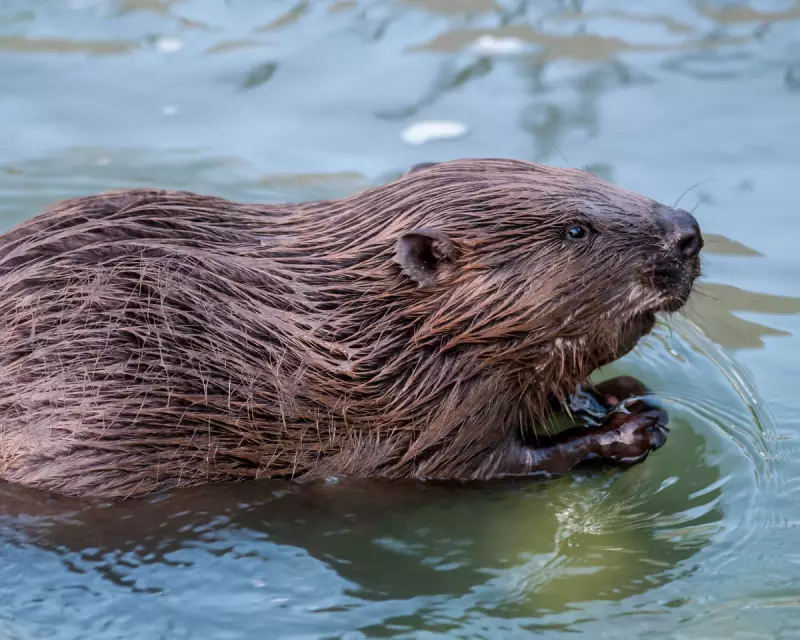
When winter arrives in the Swiss canton of Zurich, a unique kind of home renovation project begins. Not by human hands, but by the large, semi-aquatic rodents known as beavers. Their industrious work renovating lodges and building dams can unleash mayhem, leading to flooded land, sudden sinkholes, and felled trees.
The Frontline of Beaver Expansion
This seasonal activity has sparked a surge in calls to a specialist service: the Zurich Beaver Hotline. "I hate beavers," one distressed caller recently told the hotline, after a beloved oak tree she planted forty years ago was gnawed down. Her town in southern Zurich is on the frontier of beaver expansion, and her case is far from unique.
At this time of year, the hotline, run by ecologists from the Beaver Advisory Centre, receives around ten new enquiries each week. The potential cost of a single incident can be staggering, with damages reaching up to 70,000 Swiss francs (approximately £65,000).

First responder Caroline Nienhuis, a biologist with the consultancy Fornat, explains that a key part of her job is calming furious residents. "Some farmers are so angry you can hardly understand them, but they calm down when you go and see them," she says. The team provides practical advice, assesses damage, and evaluates compensation claims, such as recommending wire wraps to protect tree trunks.
A Boom in Numbers and a Unique Approach
Switzerland is experiencing a remarkable beaver boom. From a population of 1,600 in 2008, numbers soared to 4,900 by 2022, with further growth likely since. Unlike many European nations, Switzerland has taken a distinctive, non-lethal approach. No beaver has been legally killed in the country since their reintroduction in 1956.
This success is built on extensive state management. Switzerland allocates up to 1 million Swiss francs (£930,000) annually for beaver damage compensation and prevention—the largest such fund in Europe. Peter Roos, a municipal works employee in Hettlingen, calls the hotline up to 20 times a year to manage issues like dams threatening sewage systems or sinkholes appearing in car parks.
"It's about who's got more patience: man or beaver?" Roos muses. "Once you start manipulating their dams they get inventive and build new ones."
Prevention Over Culling: A Model for Coexistence
While countries like Bavaria and Poland cull significant percentages of their beaver populations annually, Swiss experts question the long-term effectiveness. "It's efficient to shoot a beaver – but only until the next beaver comes along," argues Nienhuis. "Then the same conflicts arise."
The Swiss model prioritises prevention and fair compensation. "It's important people feel they can control beavers and their activity so they accept them," Nienhuis states. She believes that reintroducing species like beavers, wolves, and lynx must be accompanied by systems to manage inevitable conflicts to prevent illegal killings.
The ecological benefits are a powerful justification for this managed coexistence. Cécile Auberson of the national Beaver Centre calls them the "most powerful force in river restoration". Beaver dams slow water flow, mitigating flash floods downstream and creating rich wetland habitats.
A Biodiversity Bonanza in Beaver Wetlands
The transformative power of beavers is vividly displayed in Marthalen, Switzerland's largest beaver wetland. Since a beaver family moved in and dammed a stream in 2011, they have converted four hectares into a thriving alluvial forest.
The biodiversity explosion has been dramatic. Researchers have found up to six times more species of fish, amphibians, and insects, and up to 60 times greater abundance in areas with beaver activity compared to similar rivers without. "The effects on biodiversity are just huge. No human-led projects would ever achieve those benefits," says Auberson.

Local communities are learning to adapt. In the village of Uhwiesen, after beavers caused sinkholes and felled trees, authorities installed an 8,000 Swiss franc netted beaver boundary, with costs shared between the municipality and canton. Now, many residents view their beaver neighbours, nicknamed Justin and Hailey, as an enrichment, noting the return of kingfishers and dragonflies.
"People see it as a bit exotic and unique that we've got beavers here," says local resident Andi Pfenninger. This shift in perception, supported by a robust management system, shows how proactive engagement can turn potential conflict into a story of successful rewilding.





