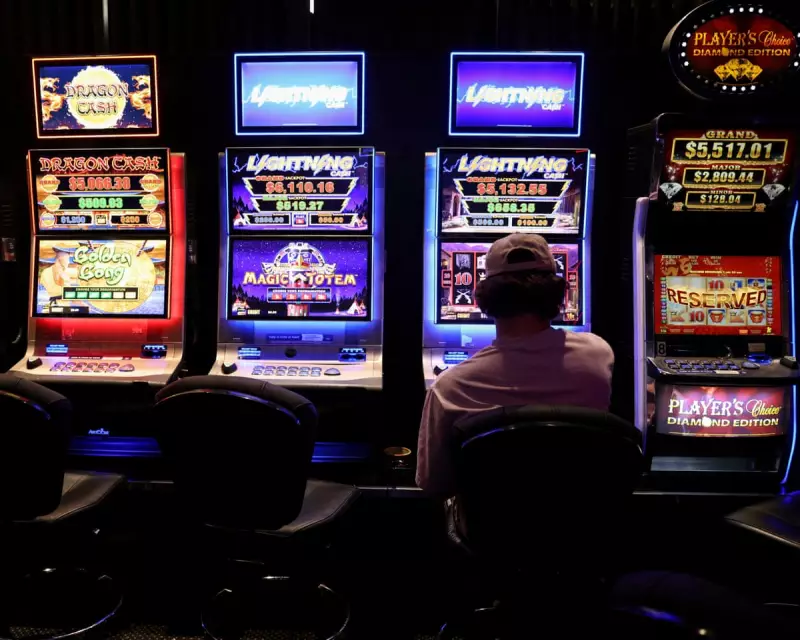
Australia holds the dubious distinction of being the global poker machine capital, housing a staggering 25% of the world's pokies despite having just 0.5% of the global population. This troubling reality has roots stretching back seven decades, when the machines first appeared in New South Wales amid significant public opposition.
The controversial beginning
The story of Australia's poker machine culture started in the post-war 1950s, as the public sought more sophisticated entertainment options. In 1954, the NSW Labor government responded by licensing hundreds of new not-for-profit clubs, with rugby leagues and RSL clubs leading this entertainment revolution.
After two years of intense lobbying, these clubs secured an exclusive deal: sole rights to install poker machines. This decision transformed clubs into wealthy, powerful institutions boasting tens of thousands of members and providing unprecedented access to lavish entertainment, cheap meals and palatial facilities.

Early warnings and public opposition
Despite their growing popularity, poker machines never enjoyed broad public support. A 1957 University of Sydney questionnaire surveying 1,000 people from the state electoral roll revealed that 60% of men and 70% of women opposed or strongly opposed to the machines.
During the late 1950s, a broad coalition including big city retailers, regional chambers of commerce, the housewives' association, and sections of the media and judiciary campaigned to ban pokies in NSW. Opponents expressed concerns about money being drained from the real economy and the social harm inflicted on individuals and families.
In 1961, this agitation culminated in a private member's bill introduced to the NSW parliament to enforce a ban. However, both Liberal and Labor parties opposed the legislation, resulting in its comprehensive defeat. This marked the final attempt to ban poker machines in the state, as clubs had rapidly evolved into a formidable political force that politicians dared not challenge.
Mounting evidence of harm
Despite political inaction, reports of social damage continued to surface. In February 1966, the Australian Women's Weekly published a four-page article titled "A poker machine addict," featuring a woman's account of living with her addicted husband as their lives spiralled downward.
By November 1970, a Canberra Times correspondent noted that most people in NSW knew of "at least one instance where substantial sums and even homes and businesses have been lost through this addiction."
A 1971 study in one of Sydney's large clubs uncovered even more disturbing findings: 25% of players couldn't recall whether they had won or lost, or how much money was involved by the end of an evening's gambling.
Throughout the mid-1970s, local welfare organisations in western Sydney raised alarms about increasing compulsive gambling, with some of the worst cases reported to the Parramatta Lifeline centre. In 1977, on the 21st anniversary of legalisation, the influential Bulletin magazine headlined an article: "The Great Poker Machine Menace."
The failed opportunity for reform
Successive NSW governments took no meaningful action to rein in pokies or address the mounting problems. The responsibility fell instead to churches and poorly funded non-government agencies, while governments continued to benefit from substantial tax revenue generated by the machines.
This pattern of neglect continued when state governments across Australia, with the exception of Western Australia, deregulated machines in the early 1990s. In what amounted to a global social experiment, 200,000 machines were dispatched into communities, snapped up by hotels, casinos, football clubs and even surf life-saving clubs.
Numerous studies since the 1990s have confirmed that poker machines are purposely designed to attract and retain vulnerable gamblers, with heavy concentration in lower socioeconomic communities where they continue to cause widespread misery.

The same laissez-faire approach has extended to casino approvals and online gambling. The damage caused by sport and online gambling linkages, along with mass industry advertising, was outlined in a 2023 parliamentary inquiry chaired by federal Labor MP Peta Murphy. The inquiry's main recommendation to limit harm involved phasing out gambling advertising, but the Albanese government has remained silent on implementation.
Today, online sports betting rivals pokies in causing widespread problem gambling. Just as hotel and casino lobbies propelled the mass release of poker machines decades ago, the online gambling industry now wields significant corporate power, ensuring history continues to repeat itself in Australia's troubled relationship with gambling.