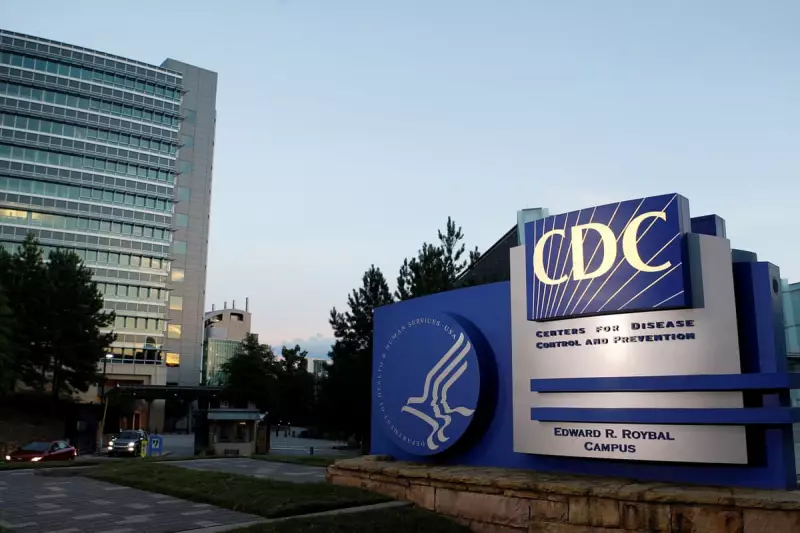
CDC Considers Banning 'Never Use Alone' Messaging for Overdose Prevention Groups
Officials at the Centers for Disease Control and Prevention (CDC) have indicated that organisations receiving federal funding for overdose prevention may no longer be permitted to promote the critical message to "never use alone". This development emerged from a meeting held this month, details of which were obtained by the Guardian, as part of efforts to align with executive orders issued by former President Donald Trump.
Executive Orders Drive Compliance Changes
The meeting aimed to bring recipients of the Overdose Data to Action (OD2A) CDC funding into compliance with Trump's directives, notably the July order titled "Ending Crime and Disorder on America's Streets". This order explicitly prohibits federally funded "harm reduction" and "safe consumption" initiatives, arguing that they "only facilitate illegal drug use and its attendant harm". Harm reduction encompasses a broad range of interventions designed to mitigate risks associated with activities such as drug use, including measures like condom distribution to prevent STIs, clean syringe programmes to curb HIV and hepatitis transmission, fentanyl test strips, and the overdose-reversal medication Narcan.
Confusion Over Definitions and Permissions
During the meeting, CDC officials clarified that while the executive order broadly condemns harm reduction, specific tools like Narcan and fentanyl test strips will continue to be allowed for funding recipients. This has created significant confusion regarding the administration's interpretation of what constitutes harm reduction. Dr Jennifer Hua, medical director for the Chicago Department of Public Health, highlighted this inconsistency, noting that in some states, test strips are still classified as illegal paraphernalia. She emphasised that "never use alone" is a fundamental component of harm reduction 101, alongside carrying Narcan and checking drugs for contaminants.

Expert Criticisms and Concerns
Leo Beletsky, a professor of law and health sciences at Northeastern University, criticised the administration's approach as "absurd" hair-splitting, pointing out that it allows certain harm reduction interventions while disparaging the overall concept. He explained that the philosophy behind restricting such messaging is rooted in the idea of "moral hazard"—the notion that reducing risks encourages risky behaviour. However, Beletsky argued that if threats like imprisonment do not deter drug use, factors like dirty syringes are unlikely to do so either.
He further stressed that isolation is a major driver of overdose fatalities, as individuals who overdose alone are less likely to receive timely assistance. The "never use alone" message, therefore, serves as a vital tool for fostering connection and support, which are essential for recovery and crisis resolution. Beletsky expressed concern that rolling back such proven strategies could reverse progress, leading to a resurgence in overdose deaths.
Impact on Overdose Prevention Efforts
Dr Hua provided anecdotal evidence from Chicago, where neighbourhoods with high rates of outdoor drug use saw significant declines in overdose fatalities in 2024, attributed in part to increased access to Narcan and community messaging. In contrast, areas with more indoor drug use did not experience similar improvements, underscoring the importance of having others present to administer life-saving interventions. This aligns with Beletsky's observation that overdose survival often hinges on social connection rather than just the occurrence of an overdose.

Broader Funding and Policy Issues
Andrew Kolodny, medical director of the Opioid Policy Research Collaborative at Brandeis University, noted that the debate over messaging distracts from larger issues, such as inadequate and short-term funding for overdose and addiction prevention. He pointed out that funding is typically awarded in two-year blocks, which hampers the development of a comprehensive substance-use treatment system. While President Joe Biden campaigned on bolstering treatment infrastructure, Kolodny remarked that promises to double treatment capacity have not been fulfilled, and under Trump, new funding streams are even less likely.
A spokesperson for the Department of Health and Human Services, which oversees the CDC, stated that the department is committed to implementing the President's Executive Orders, but did not address the specific concerns raised by health experts.