An estimated 70% of people in the UK will experience foot pain at some point in their lives, and for many, the worst pain occurs first thing in the morning. According to Harley Street podiatrist Marion Yau, the most common root cause is plantar fasciitis, a condition involving degeneration of the plantar fascia—a strong fibrous band of connective tissue running from the heel bone to the base of the toes.
What Is Plantar Fasciitis?
Plantar fasciitis occurs when the plantar fascia is overloaded or begins to break down, causing pain most typically at the heel. Yau explains that rather than inflammation, specialists find 'degeneration or breakdown of the collagen fibres in the plantar fascia.' Triggers include sudden increases in activity, direct injury, long hours on your feet, unsupportive footwear, over-pronation (where the foot rolls inward excessively), and tight calf muscles that limit ankle flexibility.
Signs and Symptoms
Pain from plantar fasciitis is most common at the heel but can occur anywhere along the sole, through the arch and toward the ball of the foot. Descriptions include a bruise-like ache, dull persistent soreness, or sharper stabbing sensations. A key indicator is that pain is 'worst with your very first steps in the morning or after a period of sitting, then eases after a few minutes of walking.' If burning, tingling, or radiating pain occurs, Yau suggests it may be a nerve issue such as tarsal tunnel syndrome.

Why Is Morning Pain So Sharp?
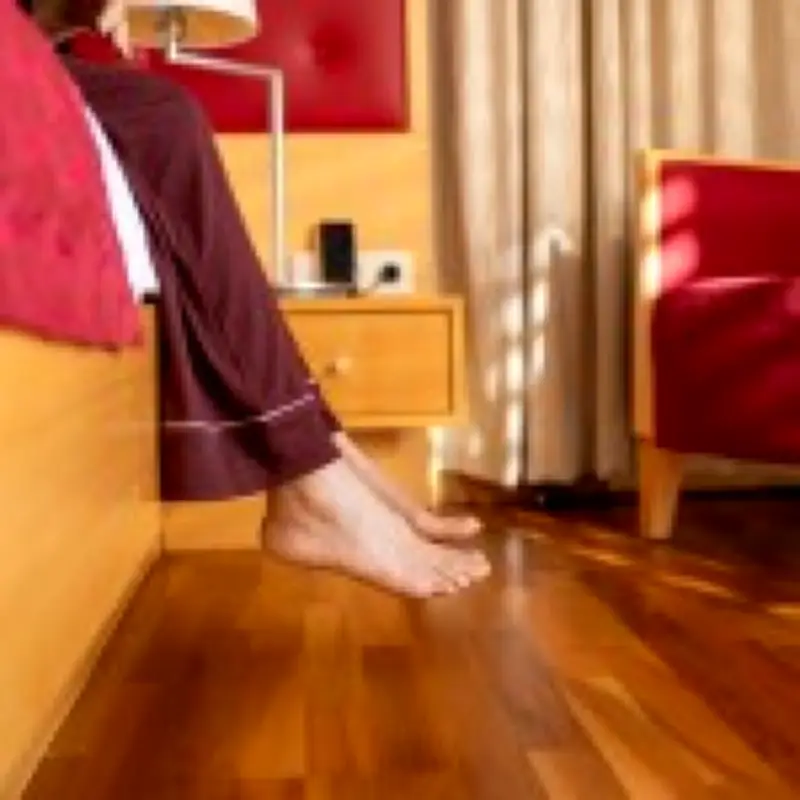
When you sleep, your foot naturally points downward, keeping the plantar fascia in a shortened, contracted position for hours. By morning, the tissue has tightened considerably. 'The moment you put your foot to the floor, the fascia is suddenly pulled from its shortened state into a full weight-bearing stretch, and that's what causes that sharp, “stepping on glass” pain with your very first steps,' Yau explains.
Treatment and Recovery
The vast majority of people improve by addressing both the pain and its cause. Simple measures include resting the feet, switching to supportive trainers, and taking anti-inflammatories like ibuprofen. Calf and plantar fascia stretching—such as morning ankle circles or gently stretching the calf while lying down—can help long-term. Yau also recommends 'rolling the arch of your foot firmly on a frozen water bottle or a golf ball before standing.' In mild cases, pain resolves within a few weeks, but it can take up to a year to fully settle. Persistent cases may require night splints, physiotherapy, shockwave therapy, or steroid injections. 'Surgery to partially release the fascia does exist, but it's genuinely a last resort and rarely needed,' Yau adds.