Asbestos Contamination Discovered in UK Children's Craft Sand
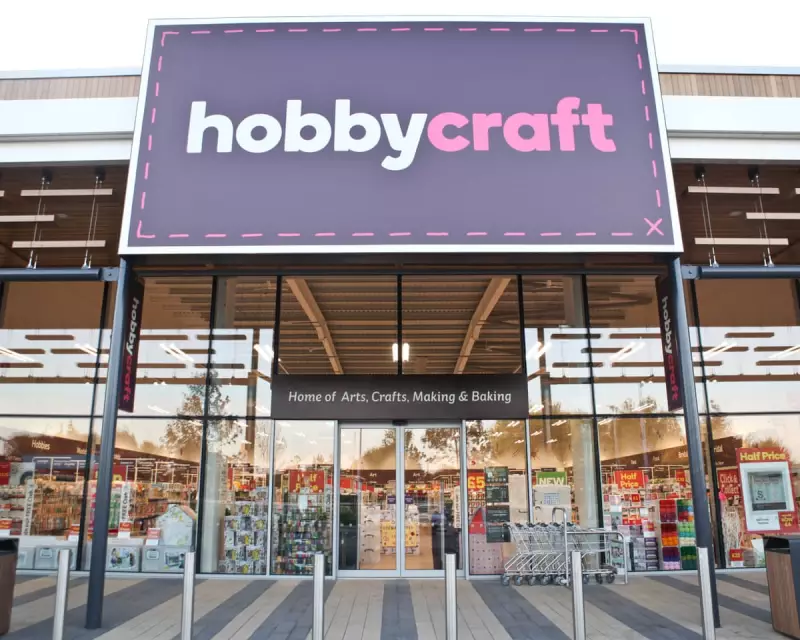
The craft retailer Hobbycraft has withdrawn bottles of children's play sand from sale after a concerned parent discovered the product was contaminated with asbestos fibres. The parent, who wishes to remain anonymous, raised the alarm after her children played with the coloured sand at a party, prompting her to send samples to an accredited testing laboratory.
Laboratory Tests Reveal Asbestos Contamination
The laboratory analysis confirmed that three out of five colours in Hobbycraft's Giant Box of Craft arts kit contained fibrous tremolite asbestos. The parent stated: "The bottles of coloured sand looked extremely similar to ones I had seen on a news report of play sand recalled in Australia. I was concerned enough to buy a set at Hobbycraft and send it to an accredited lab for testing."
This discovery follows similar incidents in Australia and New Zealand two months prior, where asbestos traces in play sand products prompted government recalls and the closure of educational institutions. All affected products are manufactured in China, where items containing less than 5% asbestos can legally be labelled asbestos-free, contrasting with UK regulations that recognise no safe exposure limit.

Hobbycraft's Response and Regulatory Criticism
Upon being alerted, Hobbycraft voluntarily removed the product from sale but declined to issue a formal recall notice. A company spokesperson explained: "As a precaution, we have voluntarily removed the product from sale while we carry out independent testing. We will update customers as soon as we are in a position to do so." The retailer emphasised that no UK authority had warned of specific risks and there was no evidence of harm to customers.
However, a government source criticised this approach, stating: "Parents are right to be concerned by this. Officials are investigating, but there's no good reason why Hobbycraft shouldn't recall this themselves, given the evidence."
Post-Brexit Regulatory Gaps Exposed
This incident highlights significant gaps in UK health and safety legislation following Brexit. The abolition of the precautionary principle in product safety laws means authorities cannot issue recalls without hard evidence of actual harm, creating what campaigners describe as a dangerous regulatory vacuum.
Professor Kevin Bampton, CEO of the British Occupational Hygiene Society, commented: "We know that there is no way that every product landing on British doorsteps can be tested individually for safety and the labels can't be made to tell the truth, so it was a missed opportunity for the government." He added that current environmental protections for wildlife exceed those for human health in some respects.
The Department for Business and Trade defended UK regulations, stating: "We have some of the most robust product safety laws in the world and any product being put on the UK market by businesses must meet our strict criteria."
Health Risks and Long-Term Concerns
While asbestos inhalation can cause cancer in later life, experts believe the immediate risk to children who played with the contaminated sand is relatively low due to small quantities present. However, Professor Bampton warned that long-term asbestos exposure risks remain poorly understood, stating: "This issue should be a wake-up call for regulatory change, so governments can be proactive, act fast and protect human health from risks before they protect profit."
The concerned parent expressed ongoing distress, saying: "I am getting increasingly upset thinking that kids are being exposed unnecessarily." This case raises fundamental questions about product safety oversight, import regulations, and consumer protection in post-Brexit Britain.