Colorectal Cancer Emerges as Leading Cancer Killer for Americans Under 50
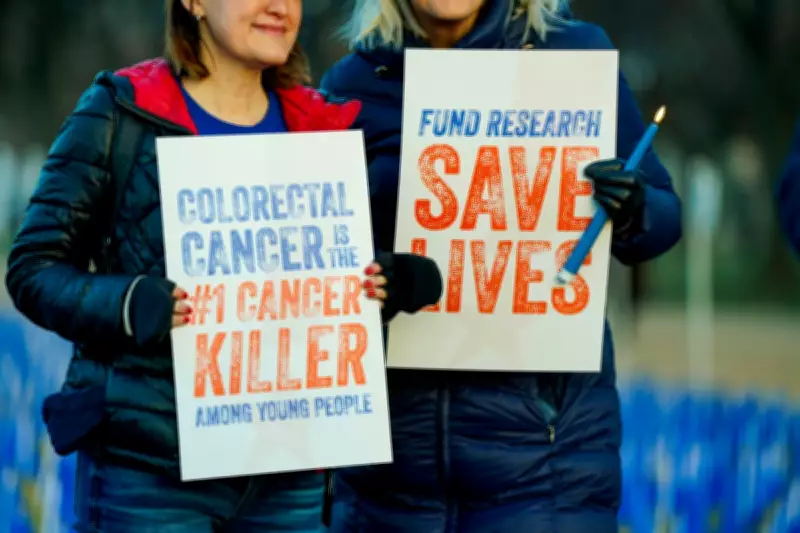
A startling new analysis from the American Cancer Society has revealed that colorectal cancer has now become the leading cause of cancer death in the United States for individuals under 50 years old. This dramatic shift from the fifth leading cause in the 1990s to the current top position has prompted urgent warnings from both medical experts and younger survivors who emphasize the critical importance of recognizing and addressing symptoms early.
Personal Stories Highlight the Growing Crisis
Becca Lynch, a 29-year-old cybersecurity professional from Denver, Colorado, represents what experts describe as a "very common story" among younger colorectal cancer patients. Diagnosed with advanced stage 3B colon cancer last year, Lynch initially dismissed her symptoms as stress-related. "I chalked it up to stress," she recalled, noting that her symptoms included pencil-thin bowel movements occurring five to six times daily, eventually progressing to thick, dark blood with each movement.
Lynch only sought medical attention after viewing an Instagram video by Cass Costley, who described similar symptoms that turned out to be colon cancer. Despite this warning, Lynch delayed her colonoscopy for several months—a delay that proved costly. Now cancer-free following surgery but under close monitoring, Lynch has become vocal about her experience, even posting an AMA on Reddit about her cancer journey. "That's part of why I agreed to an interview about my poop," she explained, emphasizing her commitment to helping others recognize warning signs.

Alarming Statistics and Screening Gaps
Rebecca Siegel, an epidemiologist and senior director of cancer surveillance research at the American Cancer Society who led the analysis, reports that approximately three-quarters of people under 50 already have advanced colorectal cancer at diagnosis. "Because they haven't been screened through regular colonoscopies, and they don't take their symptoms seriously, because they think they're too young," Siegel explained.
This contrasts sharply with trends among older Americans, where colorectal cancer rates continue to decline rapidly by more than two percent annually for those over 65. The dramatic increase among younger populations represents what Siegel calls the "birth cohort effect," suggesting that individuals born after the 1950s face heightened risk due to environmental or lifestyle factors introduced in the mid-20th century.
Addressing Unique Needs of Younger Patients
The rising incidence among younger adults necessitates significant changes in medical approaches. Siegel emphasized that doctors accustomed to treating older patients must adapt to address concerns specific to younger populations, including fertility preservation and sexual function. "Doctors are used to treating people in their 70s who aren't concerned about fertility," Siegel noted. "There are so many surveys that report that young survivors find out that they can't have children after their treatment is already finished."
She stressed the importance of discussing fertility preservation options before treatment begins, highlighting a critical gap in current cancer care for younger patients.
Potential Environmental Factors and Disparities
While the exact causes remain unclear, researchers point to potential environmental factors, including increased consumption of processed foods, processed meats, and foods packaged in plastic. "We now know microplastics can cross the blood-brain barrier, so the colon is clearly being exposed," Siegel observed, though she cautioned these are possible rather than proven contributors.
The analysis also revealed significant disparities, with Alaska Natives experiencing the highest documented colorectal cancer mortality rates globally. However, Siegel noted that limited funding for studying this population hampers understanding of these extreme rates. "If there could just be some funding dedicated to that topic, I think it would be pretty easy to figure that one out," she suggested, adding that insights from studying Alaska Natives might help explain the broader increase among younger Americans.

Beyond Traditional Risk Factors
Known lifestyle factors like inactivity, obesity, and alcohol consumption do not fully account for the spike in diagnoses among young people. Prosanta Chakrabarty, a 47-year-old evolutionary biologist from Baton Rouge, Louisiana, exemplifies this paradox. Despite living what he described as "a pretty clean, healthy life" and receiving annual colonoscopies, Chakrabarty was diagnosed with advanced colon cancer in 2024. After undergoing 24 rounds of chemotherapy across two treatment courses, he still has a floating tumor and continues treatment.
"There are so many things I didn't realize were options," Chakrabarty reflected, including the possibility of ongoing chemotherapy. Like Lynch, he has become publicly vocal about his experience, recently posting a video of himself walking through a giant, inflatable colon on Bluesky to raise awareness.
Urgent Recommendations for Action
Siegel urges anyone experiencing rectal bleeding for more than two weeks to consult a doctor immediately. For those hesitant about colonoscopies, she recommends stool tests like Cologuard and the FIT test as effective screening alternatives. Both Lynch and Chakrabarty emphasize overcoming the embarrassment that often delays diagnosis, with Lynch carefully describing her symptoms in detail "not because they're fun to talk about, but because I don't want other people to miss the signs."
As colorectal cancer continues its alarming rise among younger Americans, the combined voices of experts and survivors create an urgent call for increased awareness, earlier screening, and tailored medical approaches for a demographic increasingly affected by what has become America's leading cancer killer for those under 50.