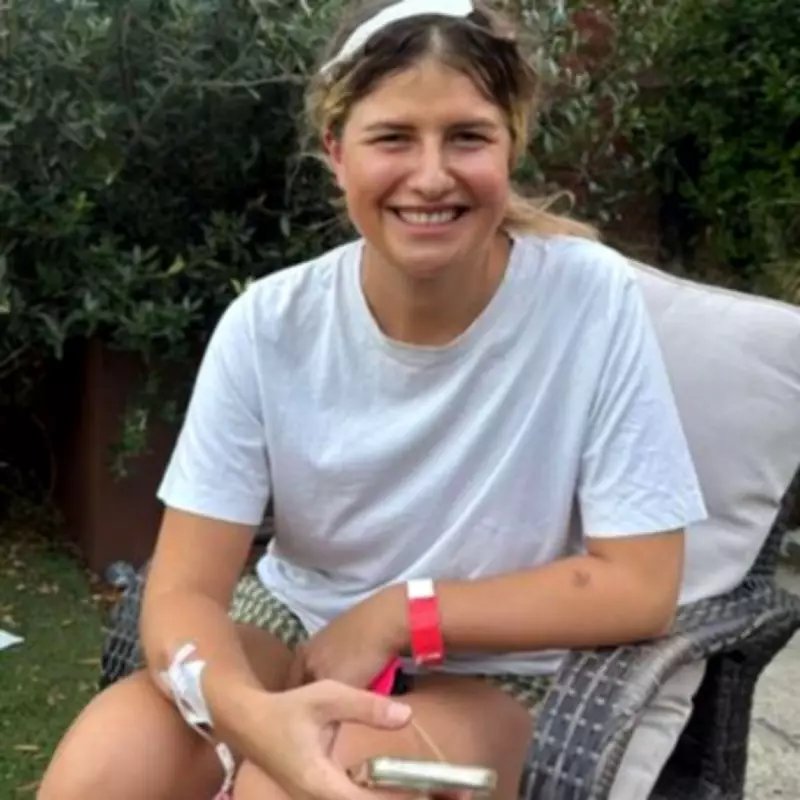
Drunken Freshers' Week Fall Leads to Devastating Brain Tumor Diagnosis
A seemingly minor accident during university orientation has unveiled a life-altering medical crisis for one young student. Alice Chawner, now 25, initially believed her tumble down 15 concrete steps while intoxicated had merely resulted in a concussion. The reality, however, proved far more grave when subsequent hospital tests exposed an incurable brain tumor.
From Concussion Concern to Cancer Discovery
During her Freshers' week at a Manchester university, Chawner consumed significant alcohol before slipping and falling in her residence hall. "I was really drunk when I fell down the stairs and smacked my head," she recalls. Assuming she had concussion based on prior experiences with sports injuries, she delayed seeking medical attention until a fellow student urged her to visit the hospital days later.
Medical professionals conducted an MRI scan that revealed a low-grade glioma—a type of brain tumor that had likely been developing silently for five to eight years without symptoms. "This was all a bit of a shock," Chawner admits. "I didn't even register it at first. I went into survival mode."

Years of Treatment and Temporary Normalcy
Between 2021 and 2024, Chawner underwent five separate surgeries to manage tumor regrowth and infections. Remarkably, she maintained a relatively normal lifestyle throughout this period, even completing her degree in religion and theology while managing regular hospital visits and occasional seizures.
"I'm grateful that drunken fall happened because it might have prolonged my life," she reflects. "It's crazy to know I probably had the tumor for five years with no symptoms whatsoever. It was a completely accidental finding."
Rapid Progression and Exhausted Options
The situation took a dramatic turn in June 2025 when scans revealed her tumor had progressed to grade four, requiring immediate surgery. Despite undergoing 33 rounds of radiotherapy and two chemotherapy cycles, doctors delivered devastating news: a new tumor had developed in a different brain region.
"What was years to live has now become months," Chawner explains. "There are very few established treatments left for me to try in the UK." After completing emergency radiotherapy, she finds herself without conventional treatment options in her home country.
Fundraising for International Alternatives
Facing this dire prognosis, Chawner has established a GoFundMe campaign to explore treatment possibilities abroad, including immunotherapy vaccines available in Germany. "We're raising money to give me options," she says. "It's just about improving the quality of the rest of my life, which is really a sad thing to say, but there's not much choice here."
The London resident, who previously operated an event startup business, now advocates for more regular brain scans and earlier exploration of treatment alternatives. "I want to encourage people that as terrifying as it may seem, it's so important to look at these options early," she emphasizes. "There are so many people who find a brain tumor when it's grade four and it's too late."
Chawner's experience highlights the unpredictable nature of brain tumors and the importance of thorough medical investigation following head injuries, even those that initially appear minor. Her story serves as both a cautionary tale about delayed diagnosis and an inspiration for proactive health advocacy.