Living in the Long Middle: The Uncharted Reality of Stage Four Cancer
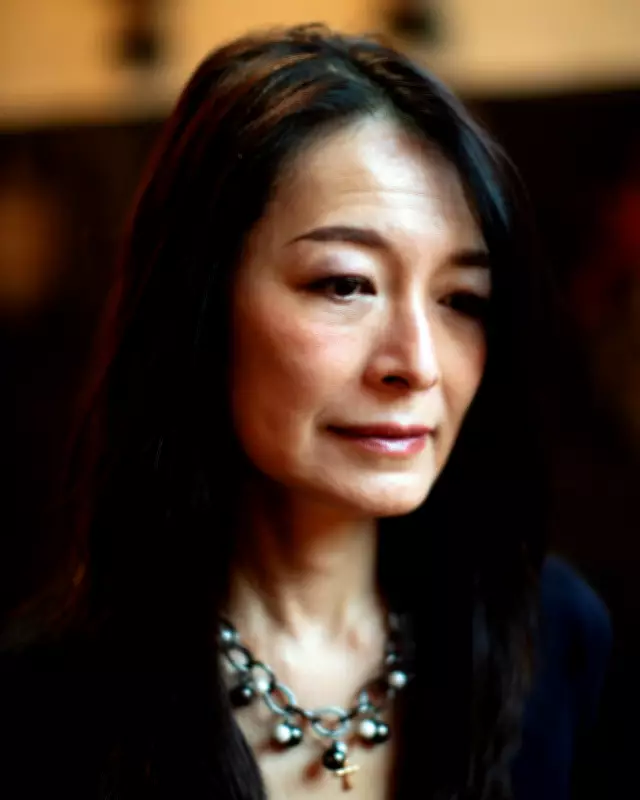
Janis Chen, a psychologist diagnosed with stage four lung cancer, describes a life no longer measured in weeks but calibrated in decades. In her own words, she has stopped viewing time through frantic increments and embraced the audacious task of planning for the long haul. This shift reflects a profound existential change brought about by medical advancements that have transformed metastatic cancer into a manageable chronic disease for some.
The New Demographic: The Chronically Terminal
Chen occupies what she calls the long middle, a rarely charted territory where the body remains fragile, treatment is constant, and life stubbornly persists without moving forward in a traditional sense. This liminal state is a distinctly modern byproduct of a medical revolution. In the UK, barely a decade ago, a stage four lung cancer diagnosis was a grim cliff edge, with long-term survival rates in single digits due to traditional chemotherapy. Today, clinical progress driven by immunotherapy and targeted therapies has levelled that precipice into a vast, uncharted plateau.
Median survival is now measured in years rather than months, with super-responders navigating their second decade post-diagnosis. This progression has inadvertently birthed a new demographic: the chronically terminal. These individuals stand in the spectre of what is destined to take them, yet they remain burdened with the responsibility of being within the world. This surreal duality compels them to face their finitude while tending to the unsentimental task of deciding which relationships are still worth the oxygen they require.

The Survivorship Gap and Social Challenges
While science rebrands metastatic cancer as a manageable chronic disease, social and psychological maps have failed to update. This progress has carved out a profound survivorship gap. When you are cured, the world cheers; when you are dying, it mourns. But when you are simply maintaining, the world is at a loss. Patients navigate the scanxiety of quarterly CT scans and the eerie hum of MRIs, planning for a future that medicine hands back one prescription at a time.
This absence of a final whistle necessitates a new, tempered kind of stamina. Strength here is rarely about the fight. Military metaphors such as battling and warrior become a leaden weight for those who cannot win in the traditional sense. Fatigue in the long middle is not mere tiredness; it is a heavy, systemic gravity that shortens patience and magnifies anxiety.
Personal Reflections and Relationships
Diagnosed in 2022 at age 51, Chen was a statistical outlier in a demographic where most UK patients are diagnosed between 70 and 74. Initially given a prognosis of 11 months, she turned away from sterile percentages and looked to the lived reality of peers who were still present a decade post-diagnosis. This perspective allowed her to recalibrate her life in decades rather than weeks.
In the sharpening light of the long middle, relationships undergo intense scrutiny. Chen shares that her own engagement eventually buckled and broke, as she could no longer afford the emotional cost of a partnership requiring her to perform a version of herself that no longer existed. Ending a future while fighting for a present became a harrowing act of integrity, a refusal to spend her finite currency on a narrative that had lost its truth.
Conversely, she observes radical acts of hope among peers, such as marriages that render the diagnosis a secondary character. These bonds testify to the instinct to stay present in a body constantly trying to retreat.
Psychological Shifts and Cultural Demands
Chronic illness eviscerates the scaffolds of an achievement-oriented culture, forcing a merciless reorientation from a life of doing into a life of being. Chen, with a background in cross-cultural psychology, had to rebuild her definitions of worth in the dark, often while simply fighting to catch her breath. This process involves cultivating an almost clinical coldness to protect one's peace from well-meaning but exhausting attentions.

She highlights the invisibility of this existence, where friends assume she is fine because she looks luminous, unaware of the hours of rest required or the mental negotiations needed to finish a sentence. This camouflage is common among peers, with symptoms masked by style or agency.
Community, Grief, and Time Perception
In patient support groups, individuals bound by a shared diagnosis develop a radical intimacy that makes conventional friendship feel superficial. However, mortality is a capricious auditor, and as original cohort members fall away, newer patients join with wide-eyed terror. Chen notes that in the long middle, grief isn't a detour from life; it is the terrain itself.
This state demands a migration from chronos, the quantitative time of clocks and plans, to kairos, a qualitative time measured by the rightness of moments. Time becomes a medium in which to dwell, not a resource to be spent. Philosopher Martin Heidegger's concept of being towards death resonates here, serving as a catalyst for an authentic life by evaporating ego vanities.
Faith and Existential Searches
For some, like Chen, faith offers a vocabulary for hope and a different architecture for endurance. For others, such as her peer Samuel, the diagnosis feels like a divine breach of contract, leading to resentment and abandonment. This schism underscores the diverse internal landscapes within the chronically terminal demographic, where individuals search for ways to exist amid absurdity.
The Essence of Meaning
The long middle brutally sharpens discernment, leaving only the essential. Meaning resides in the quality of attention—walking through a park, watching sunlight catch a river, or hearing children's laughter. These are no longer background noise but the destination itself.
Chen concludes that strength in this context is not about productivity or recovery narratives. Instead, it is found in staying present within a life that no longer fits frantic success stories. In a culture that fetishises loud bounce-backs, choosing to live gently, attentively, and on one's own terms is an act of quiet defiance. The long middle is not a waiting room or a preamble to a finish line; it is a demanding, vibrant, and profoundly human place to be alive.