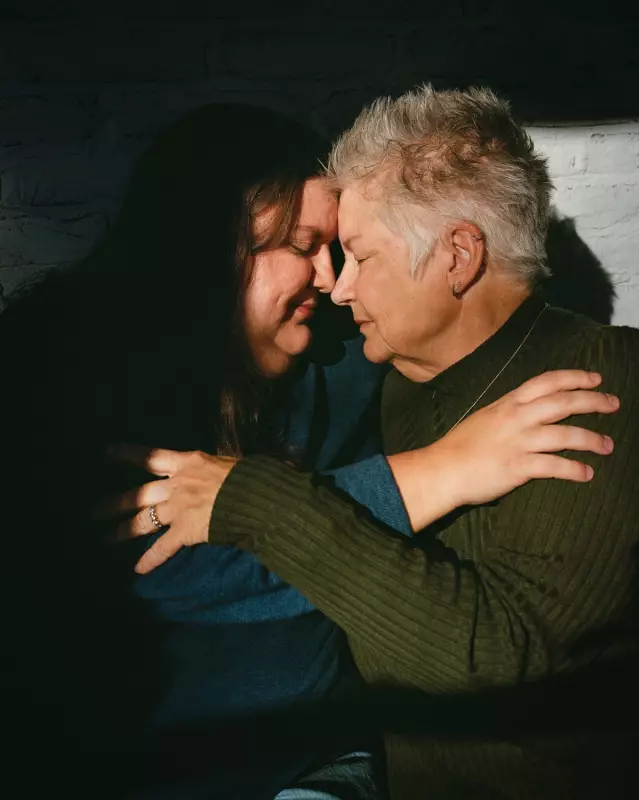
When Julie Newman was about to complete her final round of radiation for breast cancer in November 2022, her family gathered to celebrate. But her daughter, Genna Newman Freed, carried a heavy secret. Spurred by her mother's diagnosis, the then 30-year-old had undergone a mammogram which revealed a suspicious spot.
The Shock of a Shared Diagnosis
Just weeks after celebrating her mother's treatment milestone, Genna Freed received her own devastating news. On 9 December 2022, she was diagnosed with ductal carcinoma in situ (DCIS), an early form of breast cancer. Telling her mother was agonising. "I just remember being like, I don't want to give her this news, but I also cannot keep this from her," Freed recalls.
For Julie Newman, then 67, the revelation just three months after her own diagnosis was a profound blow. "It was like a kick in the stomach," she says. "I couldn't believe it." Their roles immediately pivoted. Newman transitioned from patient to caregiver, helping Freed's husband with their two-year-old daughter during Freed's recovery from a double mastectomy. Soon after, Newman required a second lumpectomy, and the caregiving duties reversed.

Understanding the Genetic Link and Family Impact
While most breast cancers occur in women with no family history, having a first-degree relative like a mother or daughter with the disease almost doubles an individual's risk. Dr Nan Chen, a breast medical oncologist, explains that only 5-10% of cases are directly hereditary, caused by a mutated gene like BRCA1 or BRCA2 passed from parent to child. A further 15-20% are considered "familial," with a family link but no specific identified gene mutation.
Freed discovered she carries a BRCA-2 mutation inherited from her father's side. A woman with such a mutation faces a 45% to 85% lifetime risk of developing breast cancer, starkly higher than the average 13%. This knowledge brings anxiety for her five-year-old daughter's future. "Am I borrowing all of this worry from tomorrow for nothing?" she wonders.
This pattern is echoed in other families. Janet Parks, 62, was three weeks into recovery from her own double mastectomy when she learned her 36-year-old daughter, Alicia Schlossberg, had breast cancer. "That was harder than my own diagnosis," Parks says. "As a mother, your job is to protect your child at all costs, and I couldn't do that." Schlossberg inherited the BRCA-2 mutation from her mother.
Different Generations, Divergent Experiences
Although the diagnosis may be the same, undergoing breast cancer in your 30s versus your 60s is "emotionally and psychosocially a completely different experience," according to Dr Chen. Younger women often face more aggressive cancer subtypes and later-stage diagnoses, alongside unique challenges like fertility concerns.
Lindsey Baker was 35 and single when diagnosed in December 2020. The week of her double mastectomy in 2021, her mother, Shelley Pozez, then 66, was also diagnosed. Baker, a BRCA-1 carrier, made the difficult decision to remove her ovaries, sacrificing her fertility. She worked as a chief operating officer throughout 16 rounds of chemotherapy. Her mother, retired and with a long-term partner, had a starkly different journey.
Generational attitudes towards openness also differ. Freed is candid about her experience, even discussing her aesthetic flat closure reconstruction openly. Sylvia Morrison, 61, initially mirrored her own mother's stoic silence after her 2011 diagnosis. It was only when her daughter, Monisha Parker, was diagnosed at 28 and started a blog that Morrison saw another way. "I'm still dealing with the mental part of breast cancer," Morrison admits now.
The Complex Balance of Grief and Connection
For families, a dual diagnosis creates a relentless cycle of anxiety and role-switching. Dr Neha Goyal, a clinical psychologist, notes it creates "a sense of loss of control" that affects entire support networks. However, weathering the storm together can forge powerful bonds.

Allison Mertzman, 40, was undergoing radiation in spring 2022 when her mother, Susan Pearlman, 66, was diagnosed. "We almost became teammates," Mertzman says, trading advice and encouragement. For Janet Parks, there is a painful duality: her own cancer led her daughter to get an MRI that detected cancer earlier than a standard scan would have. "I see it as a blessing, honestly," she reflects.
Genna Freed captures this conflicting reality perfectly. She grieves her losses but is grateful for early detection and her mother's shared strength. "It's two very diverging feelings," she says. Her mother's ordeal, though harrowing, ultimately illuminated her own path to treatment—a bittersweet silver lining in a shared fight for survival.