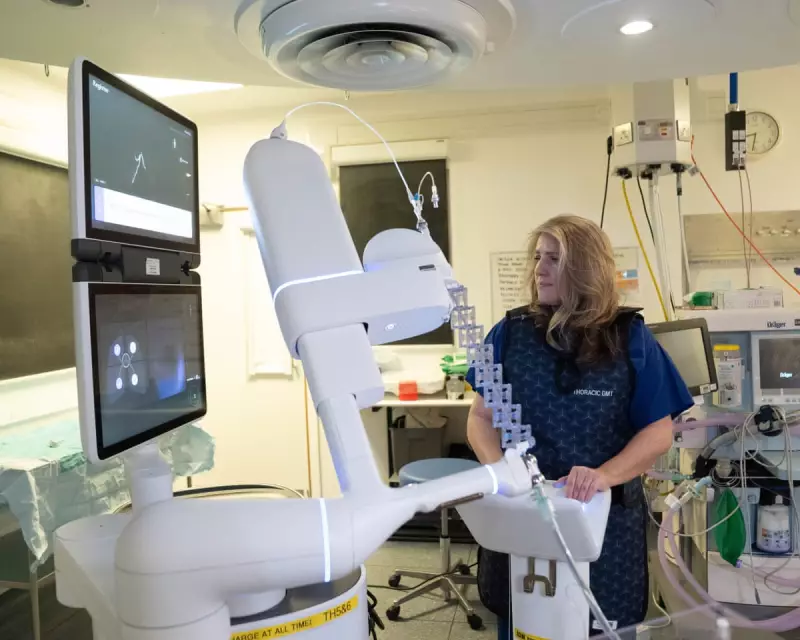
NHS England Pioneers AI and Robotic Technology for Lung Cancer Diagnosis
NHS England is embarking on a groundbreaking trial that integrates artificial intelligence and robot-assisted care to enhance the detection and diagnosis of lung cancer, the United Kingdom's deadliest form of cancer. This innovative pilot coincides with a significant pledge from the health service to offer comprehensive lung cancer screening to all current and former smokers by the year 2030.
Addressing a Critical Health Challenge
Lung cancer remains a paramount concern within the government's forthcoming national cancer plan for England, as it is responsible for claiming approximately 33,100 lives annually across the UK, equating to about 91 deaths each day. This high mortality rate is largely attributed to historical smoking prevalence, making it a focal point for public health initiatives.
The disease also highlights stark health inequalities, disproportionately affecting individuals from poorer backgrounds. It contributes significantly to the nine-year life expectancy gap between England's most and least deprived areas, underscoring the urgent need for improved diagnostic methods.

Technological Advancements in Cancer Detection
The trial, set to take place at Guy's and St Thomas' NHS Foundation Trust in London, represents a forward-looking approach to cancer care. Professor Peter Johnson, NHS England's national clinical director for cancer, described it as "a glimpse of the future of cancer detection."
In this pilot, AI software will meticulously analyse lung scans, alerting medical professionals to the presence of minuscule nodules—some as small as 6mm, comparable to a grain of rice—that are most likely to be cancerous. Following this, a robotic camera will guide miniature tools to perform precise biopsies, enabling tissue samples to be examined in laboratories with greater accuracy than current techniques allow.
Potential Benefits and Real-World Impact
If proven effective, this technology could revolutionise lung cancer diagnosis, particularly as the NHS screening programme identifies more individuals with tiny nodules that might otherwise go unnoticed until later stages. For many patients, this could mean replacing weeks of repetitive scans and procedures with a single, half-hour biopsy, thereby reducing prolonged uncertainty and avoiding more invasive surgical interventions.
The research team has already conducted around 300 robotic biopsies, leading to cancer treatment for 215 individuals, demonstrating promising early results.
Expert Perspectives and Future Outlook
Michelle Mitchell, chief executive of Cancer Research UK, emphasised the importance of early detection, stating, "Lung cancer is the leading cause of cancer death in the UK, but diagnosing it at an earlier stage can significantly improve people's chances of survival." She added that new technologies like this hold immense potential and should be tested swiftly to ensure they are accurate and beneficial, facilitating quicker access for all patients.
By expanding screening and leveraging advanced technologies, NHS England estimates that this initiative could lead to the diagnosis of approximately 50,000 lung cancers by 2035, with 23,000 detected at an early stage, potentially saving thousands of lives and marking a significant step forward in the fight against this devastating disease.