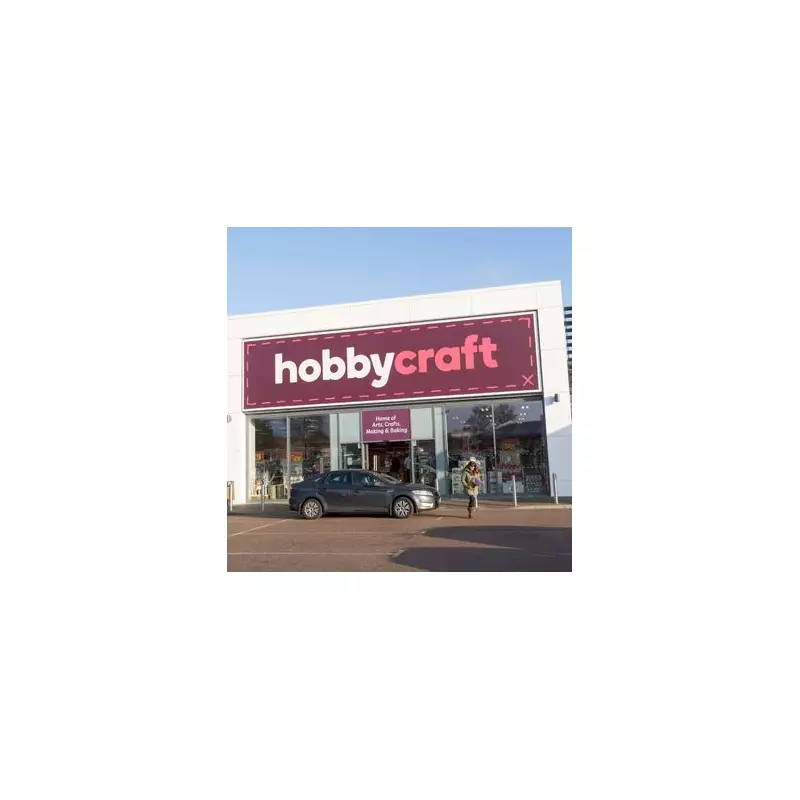
Urgent Asbestos Alert for Parents as Hobbycraft Withdraws Children's Play Sand
Parents across the UK are being issued an urgent warning after laboratory tests confirmed the presence of asbestos in children's play sand stocked by the popular retailer Hobbycraft. The company has taken immediate action by voluntarily removing the product from sale at all its stores, including branches in London locations such as Wimbledon, Greenwich, Chingford, Croydon, and Greenford.
Parent-Led Discovery Triggers Safety Concerns
The alarming discovery was initiated by a vigilant parent who noticed a striking resemblance between Hobbycraft's coloured sand bottles and similar products recently recalled in Australia due to asbestos contamination. Acting on this concern, the parent purchased a set from Hobbycraft and submitted it for independent testing at an accredited laboratory.
The results were deeply troubling: three out of the five colours tested positive for fibrous tremolite asbestos, a hazardous material known to pose serious health risks. The parent expressed profound distress, stating, "I am getting increasingly upset thinking that kids are being exposed unnecessarily."

Hobbycraft's Response and Ongoing Investigation
In response to the findings, a Hobbycraft spokesperson announced, "As a precaution, we have voluntarily removed the product from sale while we carry out independent testing. We will update customers as soon as we are in a position to do so." This move comes amid growing pressure from both consumers and government officials.
A government source emphasised the seriousness of the situation, telling the Guardian, "Parents are right to be concerned by this. Officials are investigating, but there's no good reason why Hobbycraft shouldn't recall this themselves, given the evidence."
Broader Context of Asbestos in Consumer Products
This incident is not isolated. The Faculty of Asbestos Assessment and Management (FAAM), the UK's professional body for asbestos analysts, had previously flagged a play product available in the UK containing asbestos. This follows similar concerns in Australia and New Zealand, where multiple play sands were found contaminated, alongside recent legal actions over asbestos in talcum powder.
Professor Kevin Bampton, CEO of the British Occupational Hygiene Society, highlighted systemic issues in product safety, noting, "We know that there is no way that every product landing on British doorsteps can be tested individually for safety and the labels can't be made to tell the truth, so, it was a missed opportunity for the government."
He further criticised the disparity in protections, adding, "We do have the precautionary principle for the environment, which means that bats and newts in some ways have better protection than people working in Britain and, potentially, our children."
Implications for Consumer Safety and Regulation
The discovery raises critical questions about the adequacy of safety testing for children's toys and consumer goods in the UK. With asbestos exposure linked to severe health conditions, including respiratory diseases and cancer, the incident underscores the need for more robust regulatory frameworks and proactive corporate responsibility.
Parents are advised to:
- Check any recent purchases of play sand from Hobbycraft.
- Discontinue use immediately if the product matches the description.
- Stay informed through official updates from Hobbycraft and regulatory bodies.
As investigations continue, this case serves as a stark reminder of the importance of vigilance in product safety, particularly for items intended for vulnerable groups like children.