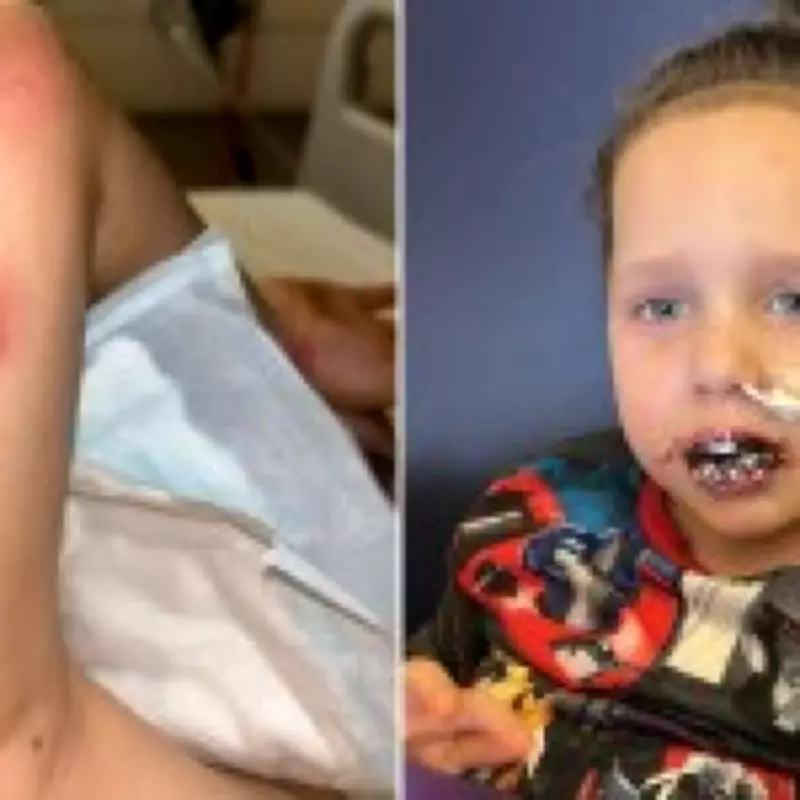
In a heart-wrenching account of maternal perseverance, Elaine Adams shares the story of her five-year-old son Mylo's battle with a rare and severe illness, marked by repeated medical misdiagnoses and a mother's unwavering instinct. Published on March 7, 2026, this narrative underscores the critical importance of trusting parental intuition in healthcare settings.
A Mother's Worst Nightmare Unfolds
It all began in November 2024 when Mylo woke up with alarming blisters on his hands and mouth. Initially, a doctor diagnosed it as Hand, Foot and Mouth disease, a common childhood ailment, and recommended standard treatments like paracetamol and fluids. However, the situation quickly escalated. The following day, Mylo's eyes swelled, and the blisters in his mouth became so painful that he refused to drink, prompting an urgent hospital visit.
During his first hospital admission, lasting three nights, doctors suspected a 'super infection' known as Gingivostomatitis alongside Hand, Foot and Mouth. Mylo received IV fluids and antiviral medication, showing temporary improvement. Yet, upon returning home, his symptoms flared up again, with his lips and eyes swelling once more, leading to a second hospitalization.

The Terrifying Diagnosis and Recurrence
This time, a doctor raised the possibility of Stevens-Johnson Syndrome, a serious skin disorder often triggered by infections. Elaine, despite warnings, researched the condition online and was horrified by its potential severity, including risks of blindness from corneal damage. Mylo was monitored daily by eye specialists, with Elaine struggling to maintain composure in front of her son while breaking down in private. After five days, the swelling subsided, and they returned home, hoping the ordeal was over.
Fast forward to December 2025, Mylo developed a cough and cold, followed by the appearance of a blister on his lip. Despite reassurances from doctors that a recurrence was unlikely, Elaine's fears were reignited when more blisters appeared inside his mouth. Returning to the hospital, she faced frustration as doctors initially sent them home, only for Mylo's temperature to spike that night, necessitating another urgent trip back.
A Severe Relapse and Final Diagnosis
This relapse proved far more severe. Mylo tested positive for chickenpox, which doctors believed triggered the reaction. His lips swelled and blistered to the point where he couldn't drink water, even with a straw, and blisters covered his eyes and genitals. He was placed on morphine and a nasal NG tube for feeding, with Elaine and her partner Chris providing constant care, communicating through nods and thumbs-up due to his inability to speak.
After extensive evaluation, Mylo was diagnosed with Reactive Infectious Mucocutaneous Eruption (RIME), a condition that mimics Stevens-Johnson syndrome and is typically triggered by infections. Doctors suspected he had likely suffered from RIME the previous year as well. At one point, they considered surgical intervention to remove dead skin tissue, but thankfully, after six days, Mylo began to show small improvements, eventually drinking liquids again and returning home.
Ongoing Uncertainty and Recovery
Despite his recovery, Mylo remained covered in lesions, requiring careful cleaning and steroid treatments for his eyes until January, with weekly hospital monitoring. The family is scheduled for genetic testing in April to determine if Mylo carries genes that make him more susceptible to this condition. For now, Mylo has resumed his normal life, playing football and attending school with no lasting damage, but the fear of recurrence looms large.
Elaine emphasizes the importance of vitamins to support his immune system, yet they live with uncertainty, worried that even a minor cold could trigger another episode. She reflects on the ordeal, urging other parents to trust their instincts, as no one knows their child better. Her persistence in seeking medical help, despite being sent home repeatedly, ultimately saved Mylo from worse outcomes.

This story serves as a powerful reminder of the challenges in diagnosing rare illnesses and the vital role of parental advocacy in healthcare. As Elaine concludes, while she remains nervous about future health scares, she is grateful to have her happy, healthy boy back, emphasizing the need for awareness and trust in one's own judgment during medical crises.